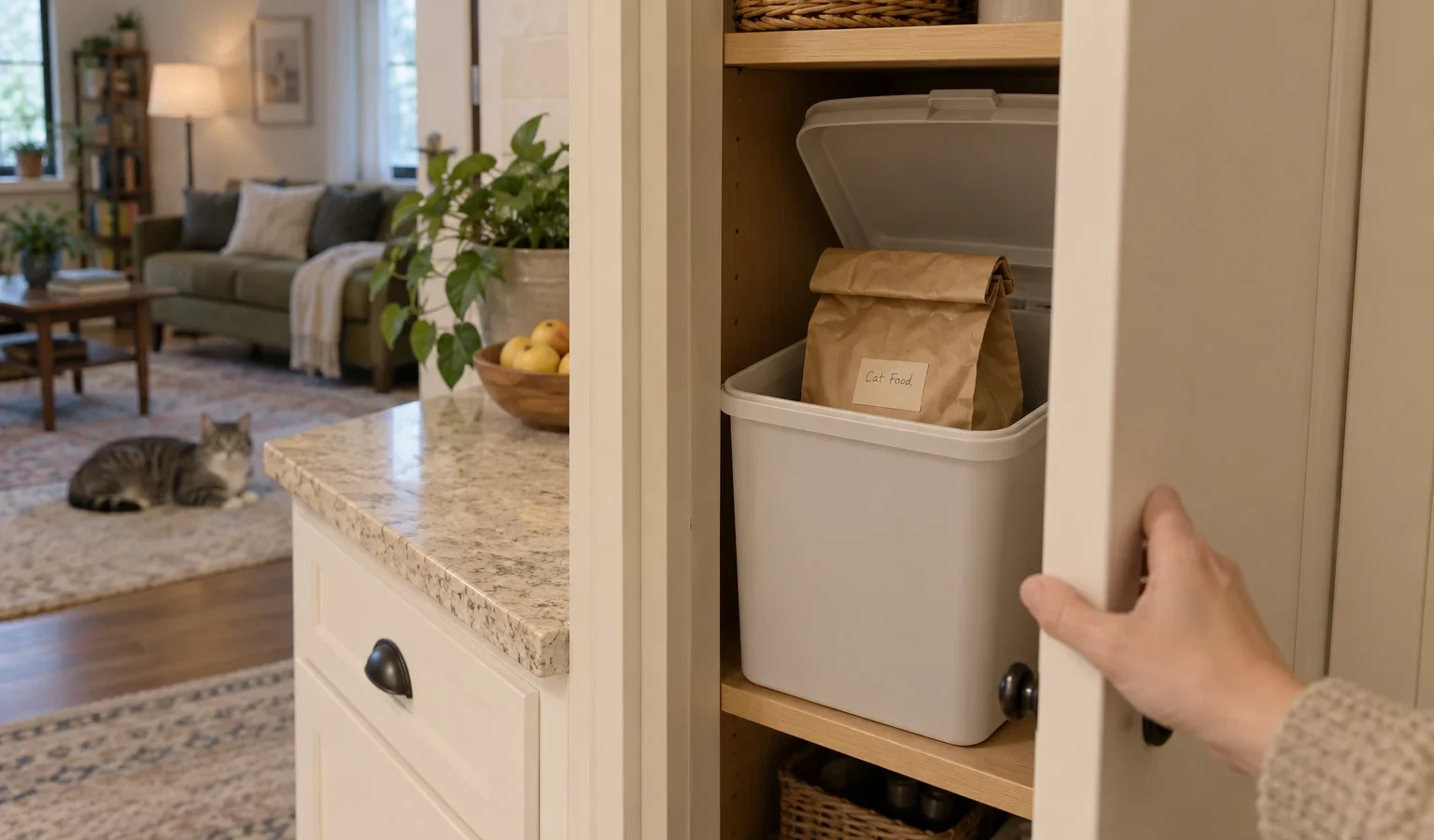
In a small apartment, cat-food storage is a chain of handoffs: the labelled bag arrives, a portion may move to a container, wet food may be opened, and someone must know what to clean and where the record went. A useful plan keeps those decisions visible without turning the feeding station into a warehouse. The goal is a repeatable household check, not a new food product or a promise that one container suits every home.
The FDA storage guidance says to keep food and treats in the original bag or preserve the bag’s identifying details if a secondary container is used. It also covers cool, dry placement, cleaning and drying a container between bags, promptly refrigerating or discarding unused opened canned or pouched food, and securing storage from overeating. The FDA handling guidance adds package checks, handwashing, and washing bowls and scoops. Follow the product label and your household’s professional advice where they are more specific.
Give the original label a permanent place
Choose one dry, cool storage zone that does not block a normal walkway and is separate from the place where meals are served. Before opening a bag, write down or photograph the product name, lot details, best-by information and the location of the retained bag or label. If food moves to a container, keep the complete original bag or its identifying record with the container. A decorative outer box can hide the record, so mark the record location in the worksheet.
Keep the storage decision separate from the access decision. A low cupboard may be convenient for a person but easy for a cat to investigate; a high shelf may be difficult to reach safely while holding a heavy bag. Use the actual door, latch and household routine as the check. Do not treat a labelled container, a closed door or a particular height as a universal access guarantee.
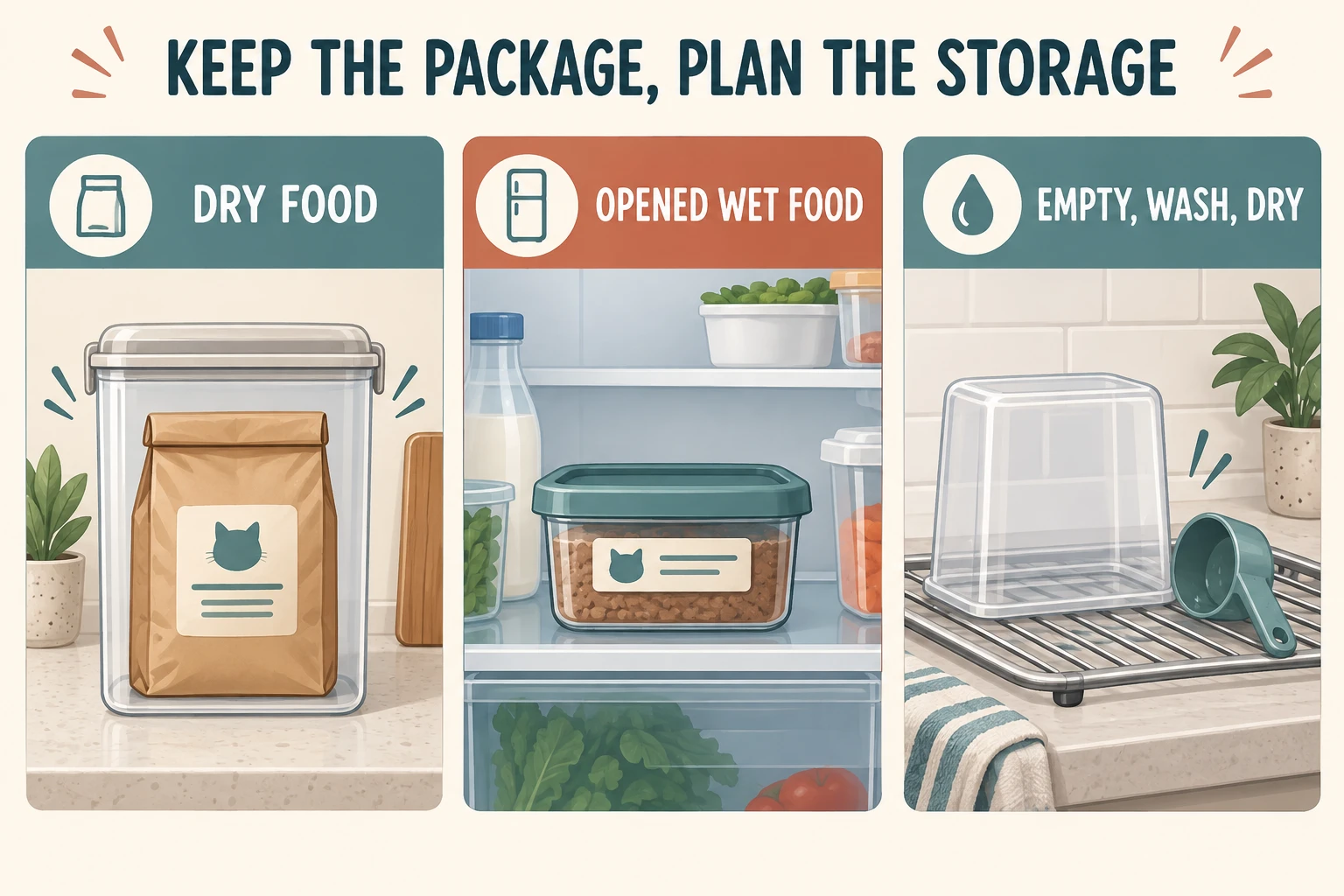
| State | Record and stop rule |
|---|---|
| Dry food arrives | Record product, lot, best-by and retained bag or label: ___. Checked by: ___ Stop: Do not transfer until the identifying record is preserved. |
| Food is opened | Record opening date and label instruction: ___. Checked by: ___ Stop: Follow the package instruction before serving. |
| Storage is closed | Record container, cupboard and access check: ___. Checked by: ___ Stop: Move food to a confirmed secure temporary place the cat cannot access until storage access is resolved. |
| Container is reset | Record empty, washed, fully dry and ready: ___. Checked by: ___ Stop: Do not add a new bag to an unclean or damp container. |
Handle opened wet food as its own state
Dry-bag and opened-can decisions should not share one vague “food storage” label. When a can or pouch is opened, write the opening time or date in the place your household actually checks, tightly cover the unused portion, and promptly refrigerate it or discard it, following the FDA guidance and package directions. Keep the opened item away from the cat and from unrelated household containers. The worksheet is a memory aid; it does not create a new holding time.
At the serving point, keep a clean scoop or utensil with the food routine and record where it returns. Wash hands after handling pet food and wash bowls and scoops as part of the ordinary reset. If the package is damaged, the label is missing, or you cannot tell what an opened item is, stop and resolve the identification and label question before using it. Do not infer freshness from smell, appearance or a guessed number of days.
Fit the plan to one small room
Map three places: the storage zone, the preparation surface and the serving location. They can be close, but they should have different jobs. In a studio, a closed cupboard beside the kitchen may hold the retained bag while the feeding station stays in its established spot. In a one-bedroom apartment, the food record can live inside the cupboard door while the wet-food state is checked in the refrigerator. These are planning examples, not universal layouts.
Ask four questions before you settle the location: Can the person who serves the food reach it without moving furniture? Can the household prevent the cat accessing stored food during ordinary access? Can the original record stay with the food? Can the container be emptied, washed and fully dried without blocking the next meal? If an answer is unknown, write “unresolved,” move the food to a confirmed secure temporary place the cat cannot access, and keep the storage arrangement provisional.
Use the feeding-station layout plan to separate serving from storage, and add the storage zone to the cat room planner. The toy storage plan can help a household assign one drawer for records and scoops; the laundry access checklist is useful when cleaning supplies and food storage share a tight utility area. Keep food and cleaning chemicals in their own clearly checked locations.
Make the reset a human-only task
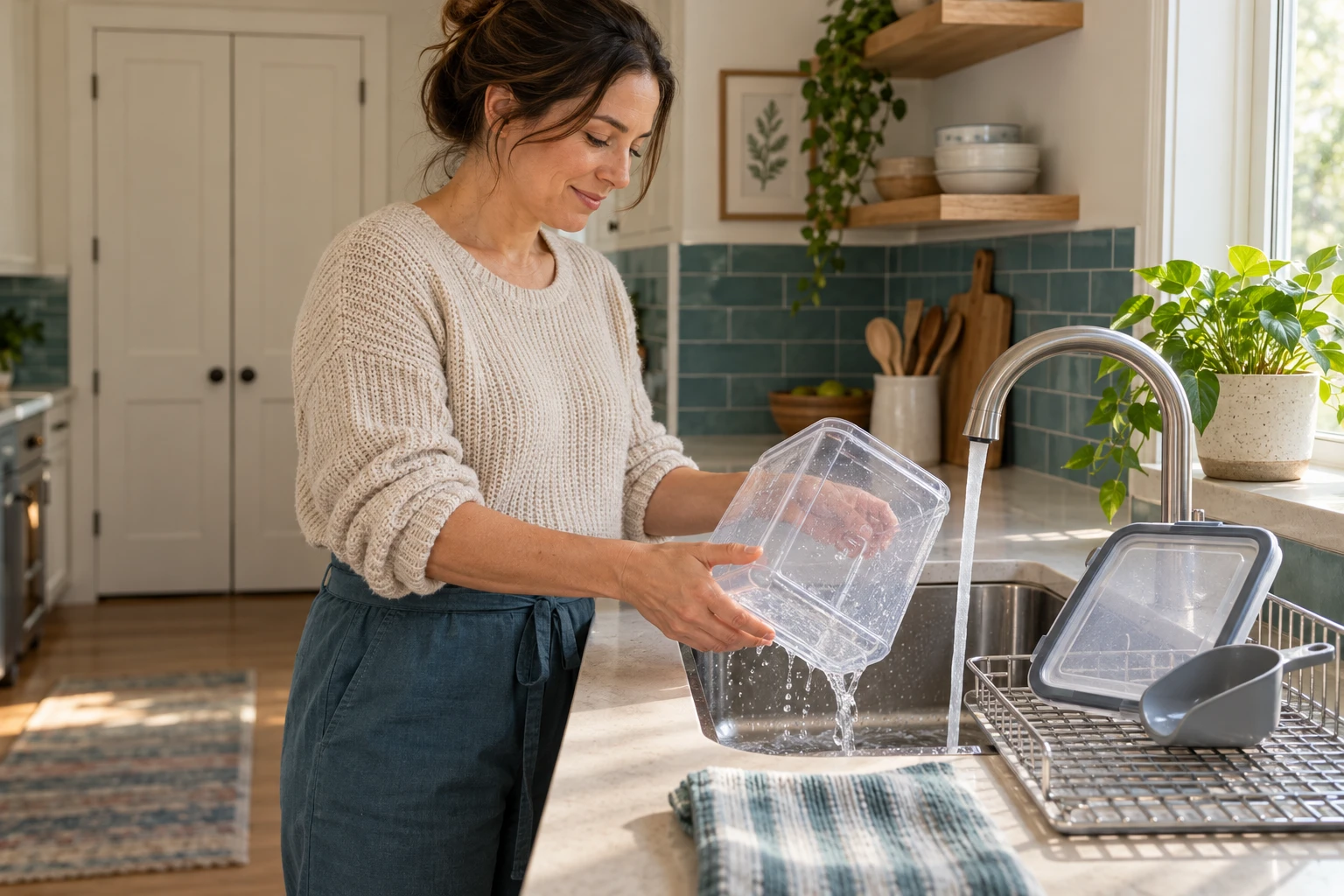
- Move the cat away from the preparation and cleaning area using the household routine; do not make the cat supervise the reset.
- Empty the container and keep its original label or bag record visible.
- Wash and fully dry the container according to its care instructions before the next bag is added.
- Return the retained bag or label record to the recorded place, then close the storage zone.
- Check that the scoop, bowls, wet-food cover and opened-food record are where the next person expects them.
The FDA complaint guidance explains why the original packaging and exact product and lot details matter when a pet-food concern needs to be reported. Keeping that record does not diagnose a problem or establish that food is suitable; it simply leaves the useful identification information available.
If the bag, can, label or lot information is missing, pause the workflow and ask the appropriate veterinary or manufacturer contact how to proceed. Do not fill the gap with a guessed brand, a guessed opening date or a home remedy. For apartment planning, the hideaway placement guide can help identify a calm place for the cat while food and containers are being reset.
Sources and scope
- FDA: Proper Storage of Pet Food and Treats — original records, cool and dry storage, container reset, opened-food handling and access.
- FDA: Tips for Safe Handling of Pet Food and Treats — package, hand, bowl and scoop handling.
- FDA: How to Report a Pet Food Complaint — product and lot records for reporting context.
The worksheet, room examples and handoff sequence are original editorial planning aids. Images are AI-generated illustrative concepts, not tested storage arrangements, veterinary assessments or safety certifications.