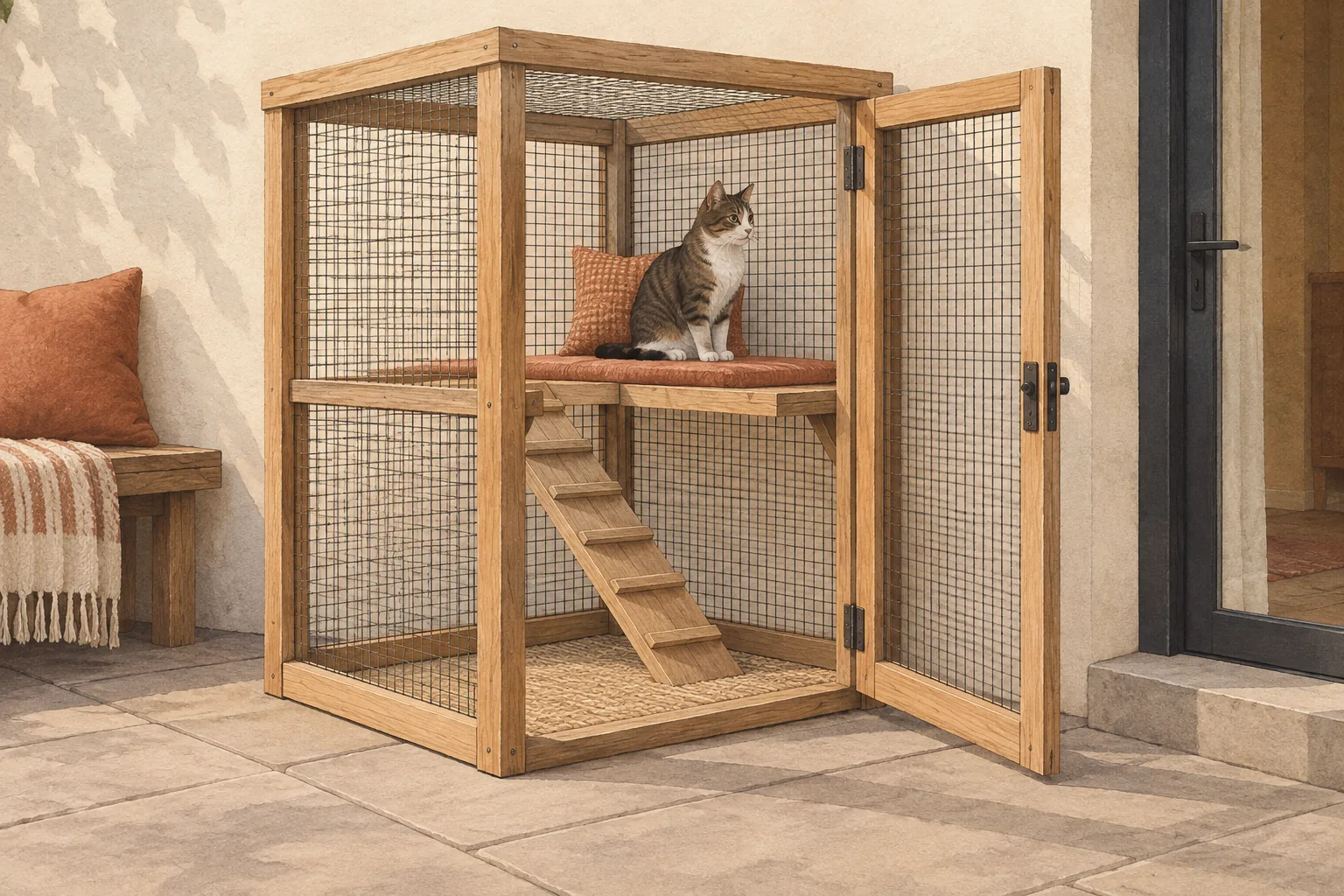
DIY catio ideas can look deceptively simple online. A finished photo rarely shows the decisions that came first: whether the property allows the change, whether the structure connects to the house, how the cat will enter, and who can verify the parts of the work that exceed your skills. The best first project is not the most impressive one. It is the concept whose constraints you can name before you buy materials.
The Feline Veterinary Medical Association includes outdoor enclosures among controlled-access options for cats. That supports the idea of an enclosure as a welfare option; it does not certify a DIY plan, a material choice, or a particular site. Treat the project as a home-improvement decision with a cat-centered use case.
Choose scope before style
Start with one sentence: “I am considering a ___ that connects to ___ and will be maintained by ___.” If you cannot finish that sentence, the project is too vague to price, permit, or build. A window-adjacent concept, a small attached enclosure, a balcony concept, and a freestanding yard enclosure have different approval paths and different consequences if the plan changes.
Compare project concepts honestly
| Concept | Potentially manageable when | Bring in help when |
|---|---|---|
| Window-adjacent concept | You can confirm the window and exterior conditions with the right professional | The plan alters a window, exterior wall, or support |
| Small attached enclosure | Permission, access, and the connection to the building are resolved in writing | It affects the wall, roofline, drainage, or building envelope |
| Balcony concept | The property manager has approved the exact approach | Any attachment, railing change, or emergency-access question remains open |
| Freestanding yard concept | The site, transfer routine, and local requirements are clear | The project needs foundation, utility, or boundary decisions |
The table is a project-screening tool, not engineering advice. It deliberately avoids dimensions, load assumptions, mesh specifications, and fastening instructions because those depend on the actual home, product instructions, local rules, and qualified review.
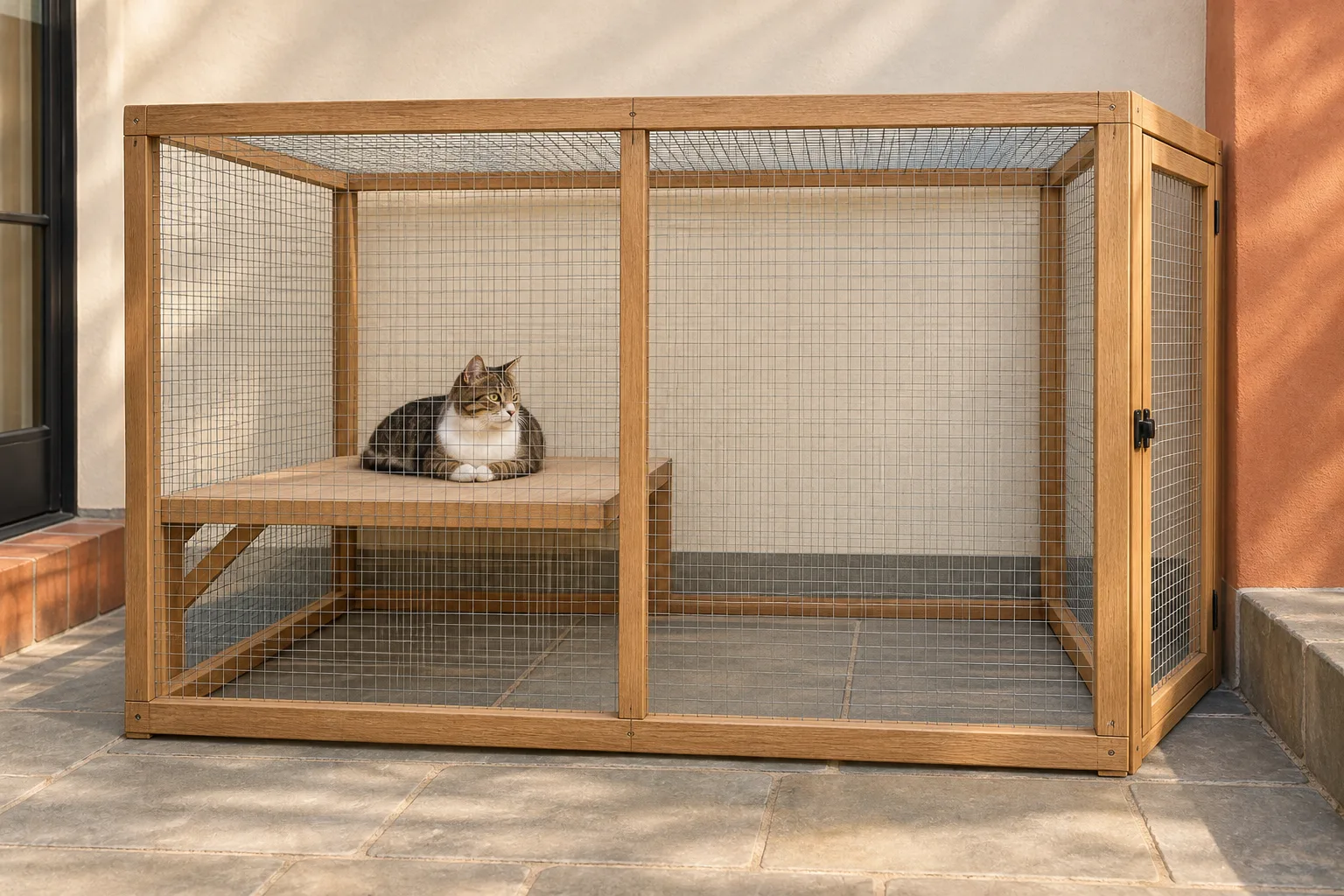
Use a skills-and-permission filter
Make two lists. On the skills list, write the tasks you can complete accurately using current manufacturer instructions and the tools you already know how to use. On the permission list, write every person or organization that may need to approve the project: a landlord, property manager, homeowners’ association, building authority, or neighbor where a shared boundary is involved. A blank space on either list is a reason to pause, not to improvise.
Plan the cat’s route and the human routine
Draw the route from the indoor room to the proposed enclosure. Include the normal path of people, other pets, doors, and cleaning supplies. Then draw your own route for inspection and maintenance. If either route is unclear, the layout needs more work. A catio should not create a daily obstacle that makes it hard to clean, observe, or respond when the cat needs to return indoors.
FelineVMA guidance describes the value of safe places, elevated options, and separated resources. Use that as a prompt to leave a quiet resting area and a clear way back inside, rather than filling every surface with equipment. Indoor food, water, litter, and resting arrangements should remain suitable for the household.
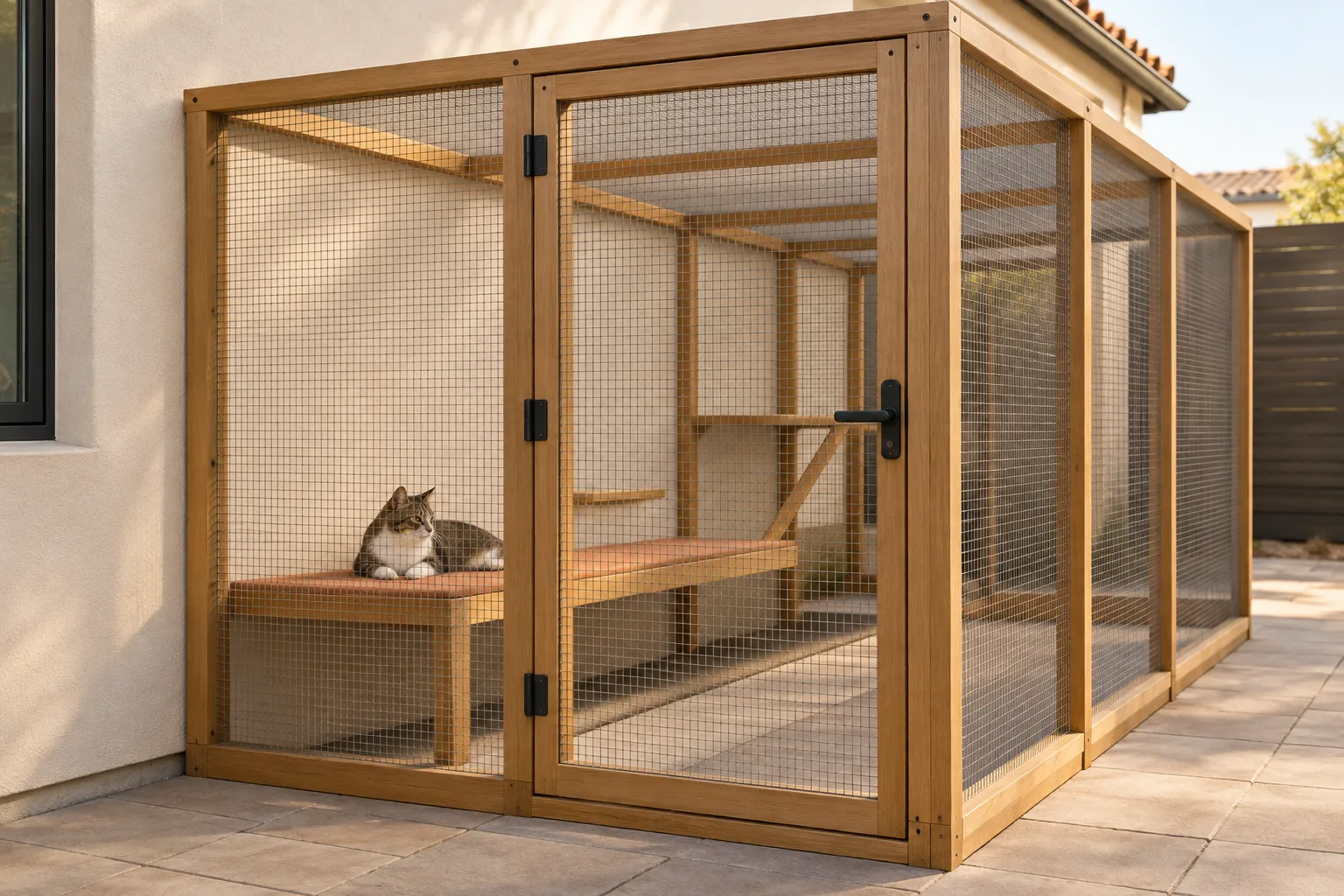
Build a decision board before a shopping list
A useful decision board has five columns: access, permissions, building conditions, cat use, and maintenance. Under access, name the interior opening and the person who uses it. Under permissions, record what is written and what still needs confirmation. Under building conditions, list the surfaces that a qualified person should assess. Under cat use, note the likely resting and observation areas. Under maintenance, list how you will inspect, clean, and remove items during weather or repairs.
This board prevents a familiar DIY problem: buying materials because they are on sale before knowing whether the project can be approved or maintained. It is also an easy document to share with an installer or property manager.
Keep the first concept reversible
A reversible first phase makes learning easier. Avoid permanent changes until access, permissions, and the site have been confirmed. If you are renting, do not assume that a removable-looking concept is permitted; get written confirmation. If the cat appears worried by an unfamiliar outdoor setting, slow the introduction and keep familiar indoor resources available.
There is no need to claim a perfect design on day one. A small, clearly scoped concept can reveal whether the location works for the household before you consider a larger project.
DIY project checklist
- I can describe the access point and the daily care route in one sentence.
- I have checked the relevant property, building, and local requirements.
- I know which tasks are within my skills and which need qualified review.
- I have not selected materials based only on a photo or a generic plan.
- I have a way to keep the project clean, inspectable, and reversible during planning.
- The cat retains familiar indoor resources and a clear route back inside.
- I will stop if the site, permission, or structural question cannot be answered.
Choose a project you can explain
The best DIY catio idea is the one you can explain without hand-waving: where it goes, how it is accessed, who approves it, which part needs expert input, and how it will be maintained. That is a stronger starting point than a detailed materials list copied from a different home.
Once those decisions are written down, visual style becomes easier. You can compare concepts on their actual fit with the house rather than on how convincing a finished photo looks.
If a balcony project involves a landlord, installer or building rules, start with the balcony pre-access worksheet and keep the door closed until every question is resolved.