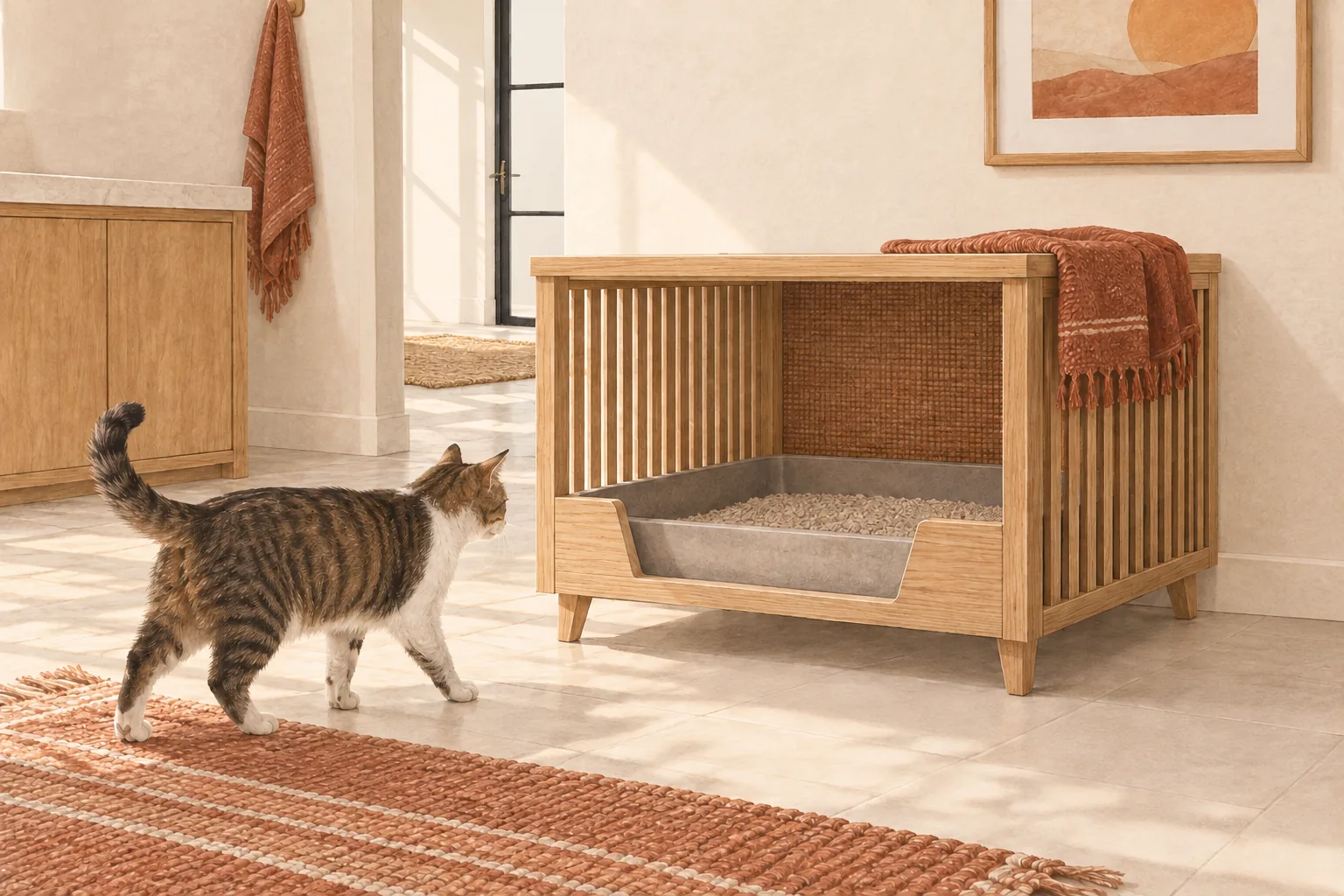
Hidden litter boxes can make a room look calmer, but concealment is only one part of the decision. A cabinet, bench, or closet must still give the cat easy access, a comfortable way out, and a tray you can inspect and clean. Compare the setup as a daily piece of furniture rather than as a decorative box.
Use a four-part test
Before choosing a hidden setup, check four things: entry, exit, air, and maintenance. The entry should be easy to find and large enough for the cat to move normally. The exit should not lead into a dead end where another pet or a closing door can block the route. Air should move through the enclosure rather than leaving a damp, strongly scented compartment. Maintenance means you can scoop, lift, wash, and replace the tray without dismantling the furniture.
AAHA recommends quiet, accessible litter-box locations and notes that cats may avoid boxes where they feel trapped or that are difficult to reach. A hidden box can work for some homes, but the cat’s response is the evidence you should follow.
Compare three common hiding options
| Option | Measure or inspect | Keep only if |
|---|---|---|
| Cabinet | Opening, tray removal, cut edges | The tray lifts out easily |
| Bench | Lid movement and interior height | The lid cannot fall or close |
| Closet nook | Door, noise, chemical storage | The route stays open |
Use this before purchase or conversion. Measure the tray and the usable interior, then test the door and cleaning motion. An attractive exterior does not pass if the tray cannot be reached.
Cabinet conversion
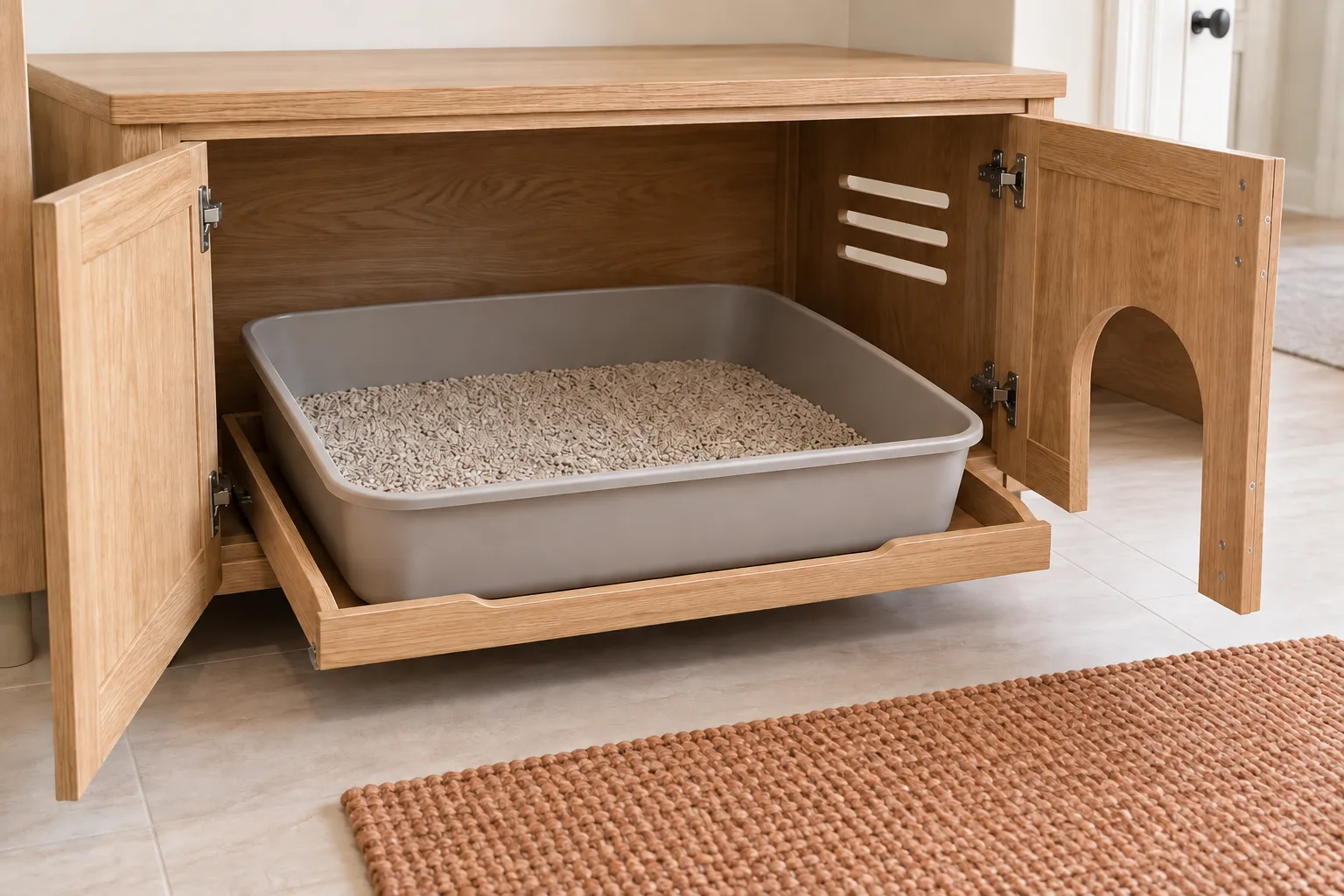
A cabinet conversion can hold a tray while matching the room. Remove or modify only what is safe and permitted, and smooth every cut edge. The opening should not force the cat to brush against a sharp corner. Keep the tray removable and leave room for your hand and scoop.
Do not seal the cabinet completely. Airflow, odor, and humidity are practical concerns. If the cabinet smells stronger than the room or the cat spends less time near it, treat that as a signal to improve the layout or return to an open option.
Bench or storage seat
A bench can hide a tray beneath a seat while providing human storage. Check that the lid cannot fall or close while the cat is inside. Use a hinge or support that prevents sudden movement, and keep blankets, bags, and cleaning supplies from blocking the entry.
Measure the full tray before choosing the bench. Product dimensions often describe the outside of the furniture, not the usable interior. The tray should slide out for cleaning without lifting the whole bench.
Closet or utility nook
A closet can offer separation, but a closed door is a failure point. If the cat needs the box throughout the day, the route must stay open or use a safe opening designed for the arrangement. Keep the box away from noisy appliances and household chemicals. Do not treat a closet as automatically quiet or ventilated.
Keep food, water, and litter separate
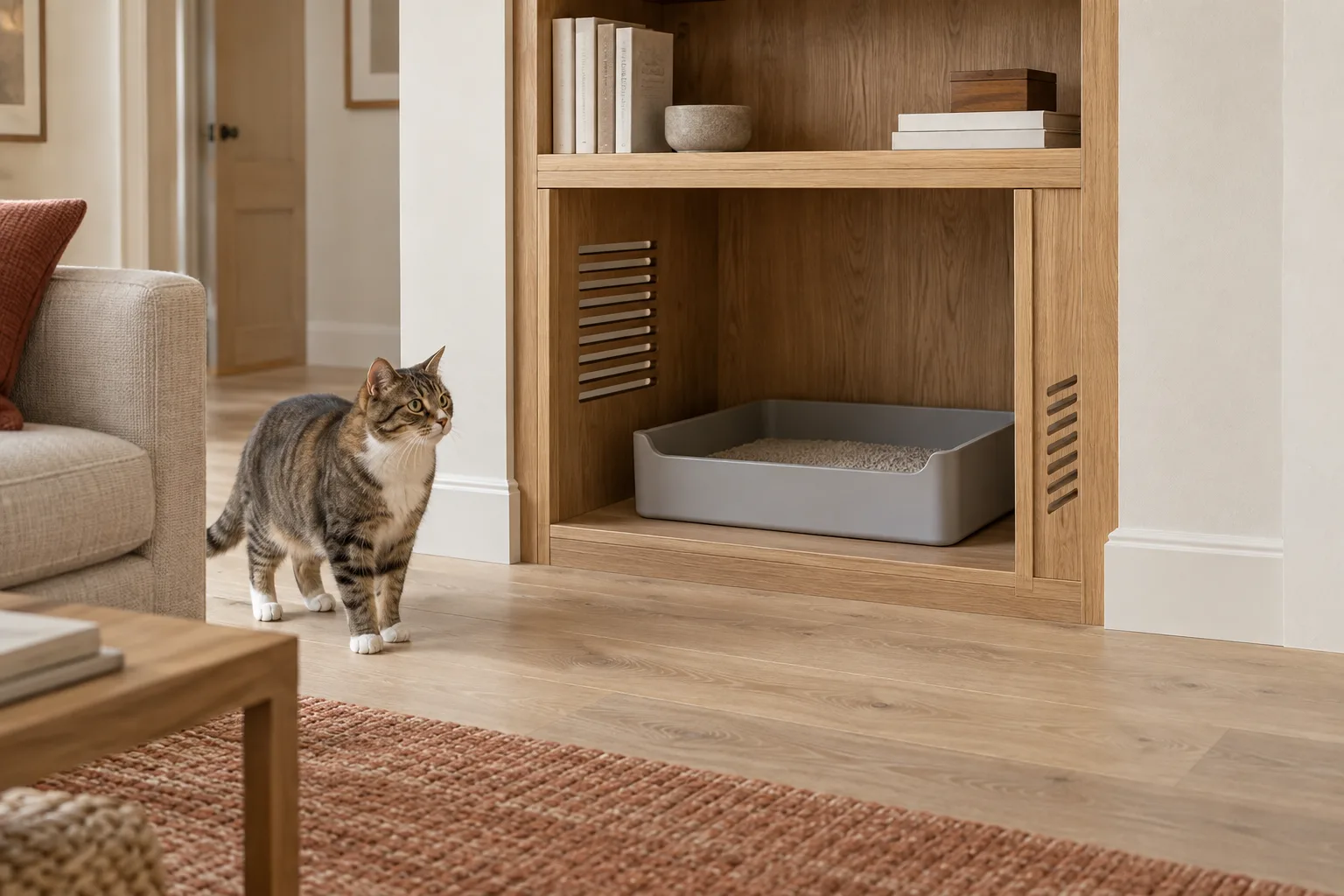
Place food and water away from the litter area. FelineVMA environmental-needs guidance recommends separating resources as far as the space allows, and its litter-box guidance advises keeping trays away from food, water, busy thoroughfares, and noisy appliances. These principles are especially important when furniture makes a room feel visually compact: a neat cabinet should not compress every resource into one corner.
Introduce a hidden box gradually
Do not remove the familiar open box on the same day you introduce a cabinet. Put the new arrangement beside or near the old one when practical and observe whether it is used. Keep the entrance obvious and the door open during the transition. Once the cat consistently uses the new place, you can reassess the old box according to your household’s needs and veterinary advice.
If the box must move, the ASPCA suggests moving it only a few inches per day. A gradual change is easier to monitor than a sudden relocation. Record what changes: location, litter, cover, noise, access, and cleaning frequency. That record is more useful than guessing which feature caused a problem.
Make inspection part of the design
Choose an opening that lets you see the tray without crawling behind furniture. Keep a scoop and bags nearby, but outside the cat’s reach. Use unscented cleaning products appropriate for the surface and follow the product label. The ASPCA advises daily scooping and warns against ammonia, deodorants, and scents that can contribute to litter aversion.
Check the enclosure weekly for dampness, loose hardware, sharp edges, and blocked vents. Open the furniture fully during cleaning. If the tray is difficult to lift out, the design is not practical enough, regardless of how well it matches the room.
Know when furniture is the wrong solution
New litter-box difficulties need veterinary advice, because a layout change cannot identify an underlying medical or behavioral cause. The ASPCA explains that elimination problems can have medical, behavioral, litter, conflict, or location causes. A hidden cabinet should never be used to hide a symptom.
In multi-cat homes, add the access question: can one cat watch or block the entrance? Boxes should be distributed so each cat can reach a resource without passing through a conflict point. More furniture cannot compensate for a single narrow route.
Choose the least complicated setup that works
Start with the simplest arrangement that meets access and cleaning requirements. If an open tray works, a hidden cabinet is optional. If you use furniture, leave it reversible: keep the original tray available, avoid permanent changes to a rental, and make it easy to return to an open layout.
The most successful hidden litter box is rarely the most elaborate one. It is the one the cat can reach comfortably and the household can keep clean every day.