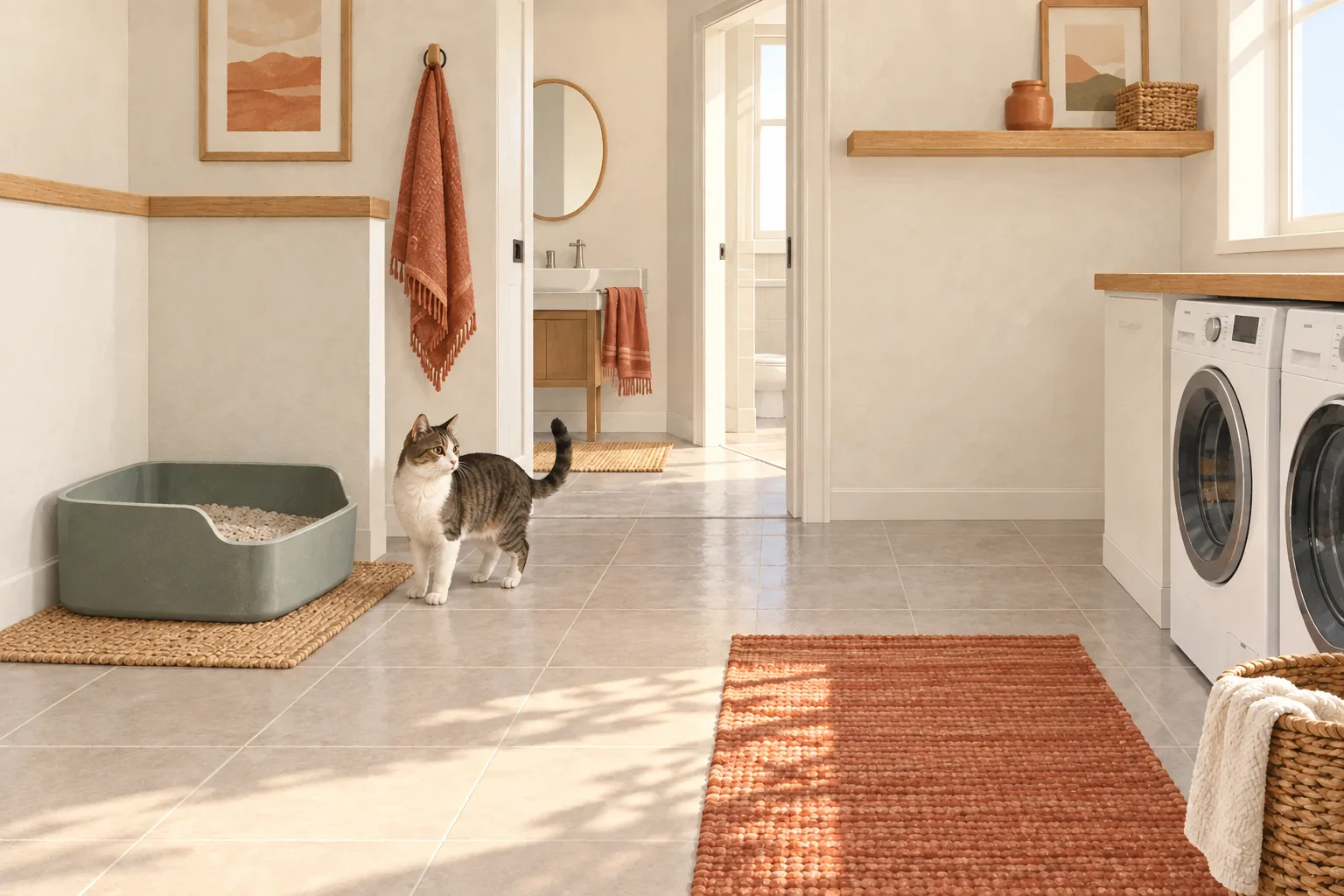
A litter box can fit into a small home without becoming an inaccessible afterthought. The best layout starts with the cat’s route and your cleaning routine. A box hidden behind a door is only useful if the door stays open, the cat can leave easily, and you can inspect the tray every day.
Start with access, not concealment
Map the route from the cat’s resting area to the litter box. Avoid placing the box behind a washer, at the end of a narrow passage, or beside a door that can close. AAHA recommends quiet, accessible litter-box locations and says cats should have a way to see approaching people or animals and leave without feeling trapped.
In a multi-level home, consider a box on each floor. The ASPCA also recommends one box for each cat plus one extra. Space may make that difficult, but the constraint should change the layout you choose rather than quietly remove access. Discuss persistent problems with a veterinarian instead of responding by moving the only box farther away.
Four layouts for a compact home
| Layout | Best when | Do not use when |
|---|---|---|
| Open corner | You want easy inspection | Traffic constantly passes |
| Furniture gap | The tray can slide out | The cat must squeeze in |
| Ventilated cabinet | The opening and airflow stay clear | The tray is sealed or trapped |
| Utility nook | Appliances are quiet | Noise startles the cat |
Pick the first layout that passes all three checks: reach, exit, and cleaning. Style is the tie-breaker.
1. The open corner
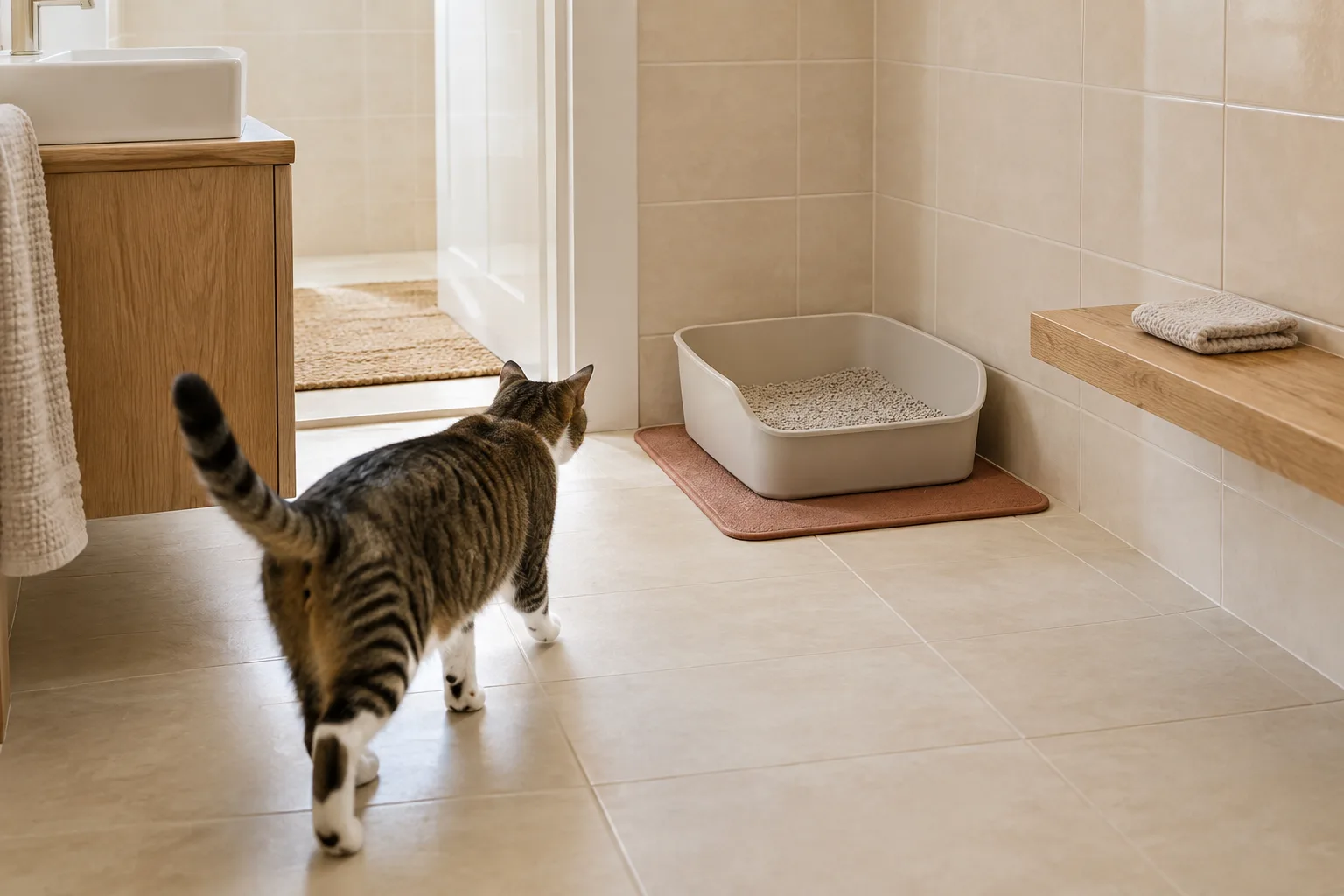
An open corner beside a bathroom or utility area is often the simplest choice. Leave enough clearance to remove the tray and scoop without moving furniture. Use a washable mat outside the box and keep food and water elsewhere. This layout is easy to inspect and is a good starting point when you are unsure what your cat prefers.
2. The furniture gap
A gap beside a cabinet can work when it is wide enough for the full tray, the cat’s entry, and your hand. Measure the tray including any rim. Do not push it so far back that the cat has to squeeze through a narrow opening or cannot turn around. Secure the cabinet so it cannot tip if the cat rubs against it.
3. A ventilated cabinet
A cabinet can reduce visual clutter, but it should be treated as furniture around a litter box, not an airtight container. Keep the entrance large enough for easy movement and the interior free of sharp edges. Make the tray removable. If odor or dampness accumulates, the enclosure needs better airflow or a different location.
4. A separate utility nook
A utility nook can be convenient if the appliances are quiet when the cat uses the box and the nook remains open. Do not place the tray directly beside a washer or dryer if sudden noise could startle the cat. Keep cleaning chemicals closed and away from the litter.
Leave working space for cleaning
Daily scooping is easier when the box is not wedged between two walls. Measure the space for the scoop, a waste bag, and your arm. Use a tray you can lift out without scraping the doorway. The ASPCA advises scooping solid waste at least once a day and cleaning the box regularly with mild, unscented products.
Unscented does not mean odor-free forever. A small room needs a cleaning plan rather than stronger fragrance. Empty waste promptly, wipe nearby surfaces, and check the mat. Avoid ammonia-based cleaners; the ASPCA warns that ammonia can attract a cat back to a soiled location.
Do not hide a change in behavior
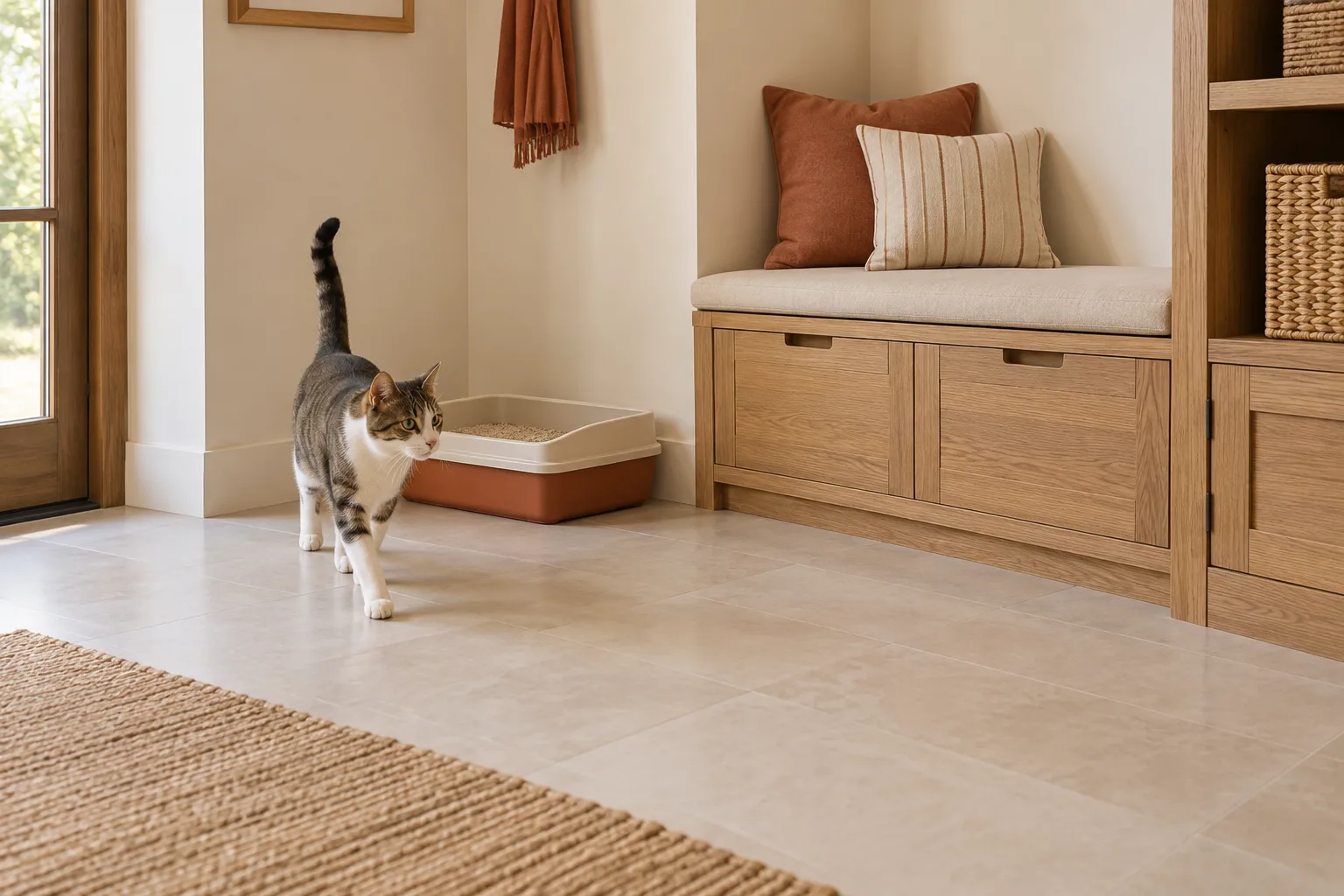
If a cat begins urinating or defecating outside the box, first consider medical causes and contact a veterinarian. The ASPCA notes that elimination problems can be related to medical conditions, conflict, litter preference, box size, or location. A new cabinet or a prettier tray may not solve the reason for avoidance.
For a location change, move the box gradually when possible. Keep the old route available during the transition and watch whether the cat uses the new spot. If the cat appears unable to enter a high-sided box, an older or mobility-limited cat may need a lower entry; ask your veterinarian for advice on an individual situation.
Plan for more than one cat
In a multi-cat home, do not line every box up in one room if another cat can guard the doorway. Distribute boxes across accessible areas and preserve more than one way out where possible. FelineVMA guidance also emphasizes separating key resources and avoiding situations where cats can interfere with one another.
Use a simple floor plan to check whether one cat can block a corridor, doorway, or stair. A box that is technically present but practically guarded is not a reliable resource.
A five-minute layout check
- Can the cat reach the box without passing a loud appliance?
- Can the cat enter, turn, and leave without squeezing?
- Can you scoop and remove the tray without moving the room?
- Are food and water separated from the litter area?
- Can another pet or a closing door block the route?
Use these questions before adding an enclosure. In a small home, a plain open tray in the right place is often more useful than a hidden tray that is difficult to reach. Make access, cleanliness, and observation the fixed requirements; let the furniture style be flexible.