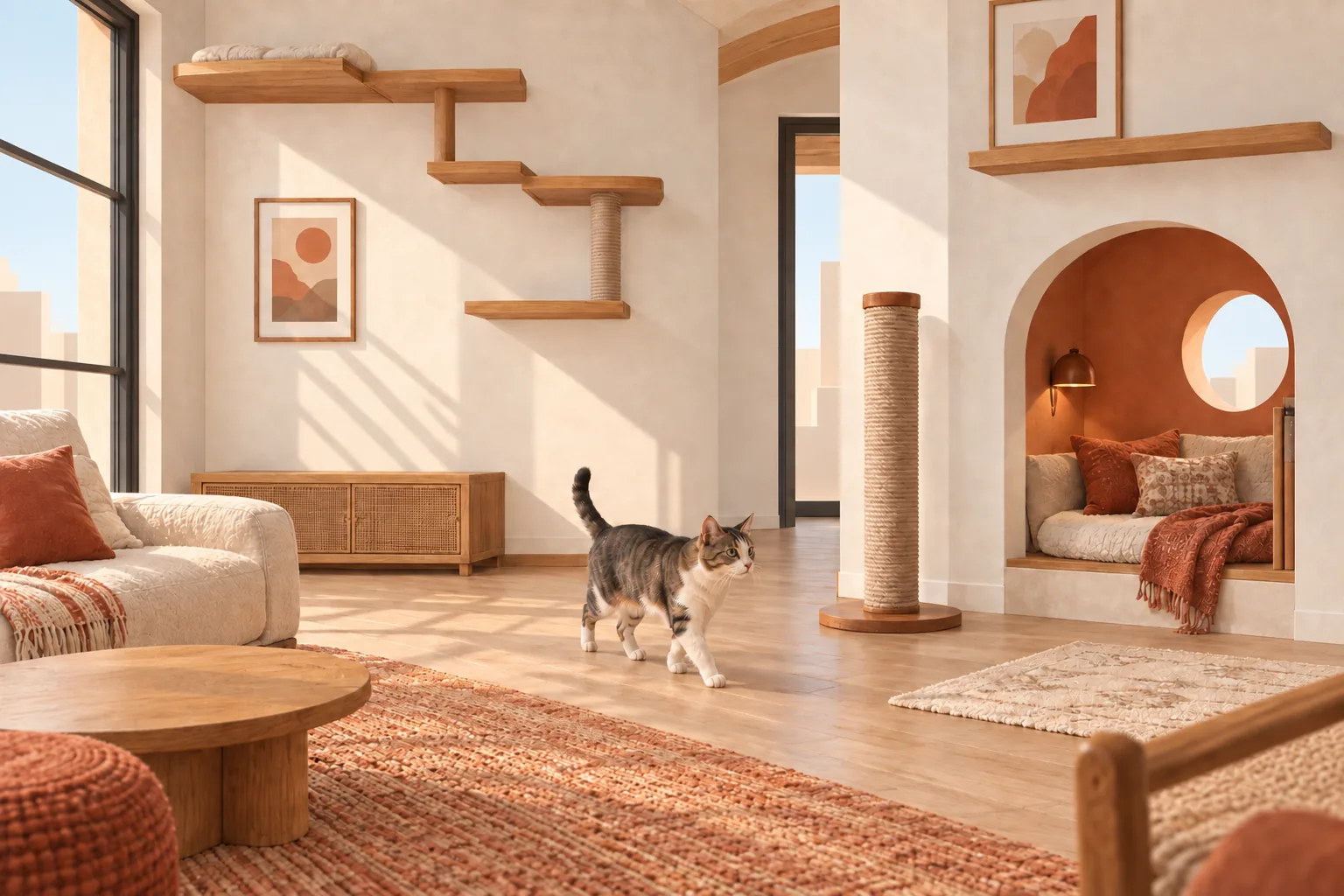
A cat room does not need to be a large, separate room. It can be a spare bedroom, a section of a home office, a hallway wall, or a carefully arranged corner of a studio apartment. The useful question is not how many cat products fit in the space. It is whether your cat can rest, move, scratch, play, and reach essential resources without feeling cornered.
Start with the room as it already works for people. Mark doors, windows, heating vents, electrical outlets, and the busiest walking paths. Then choose the quietest usable area for a resting zone. Keep a clear route between the entrance and the places your cat is most likely to use. A beautiful arrangement becomes frustrating if a chair, storage bin, or open door blocks the route every day.
Build the room around separate zones
| Zone | Place it near | Check before keeping it |
|---|---|---|
| Rest | Quiet wall or raised lookout | Two easy ways out |
| Litter | Quiet, accessible location | Separate from food and water |
| Scratch | Sleep spot or doorway | Does not wobble |
| Play | Clear floor | No loose cords or breakables |
| Storage | Outside the resting route | Easy to reach without blocking access |
Use this table as a room-planning worksheet: mark one proposed location for each zone, then remove any option that shares a blocked route.
A simple plan uses five zones: rest, resources, scratching, activity, and storage. They do not have to be separated by walls. A low shelf, a rug, a piece of furniture, or a change in height can make the purpose of each area obvious.
The rest zone can include a washable bed, a blanket, and a hiding option such as a box with a wide opening. Place it away from the loudest appliance and away from a doorway that opens repeatedly. If your cat prefers a high lookout, a properly secured shelf or the top level of a stable cat tree can provide a second rest option. Offer choice rather than forcing one bed to serve every mood.
Keep food and water away from the litter area. FelineVMA environmental-needs guidance recommends separating key resources as far as the space allows, while the ASPCA advises keeping litter boxes in quiet, accessible locations. These are useful planning principles for a room layout, not a guarantee that every cat will prefer the same arrangement.
Use height without creating a risky route
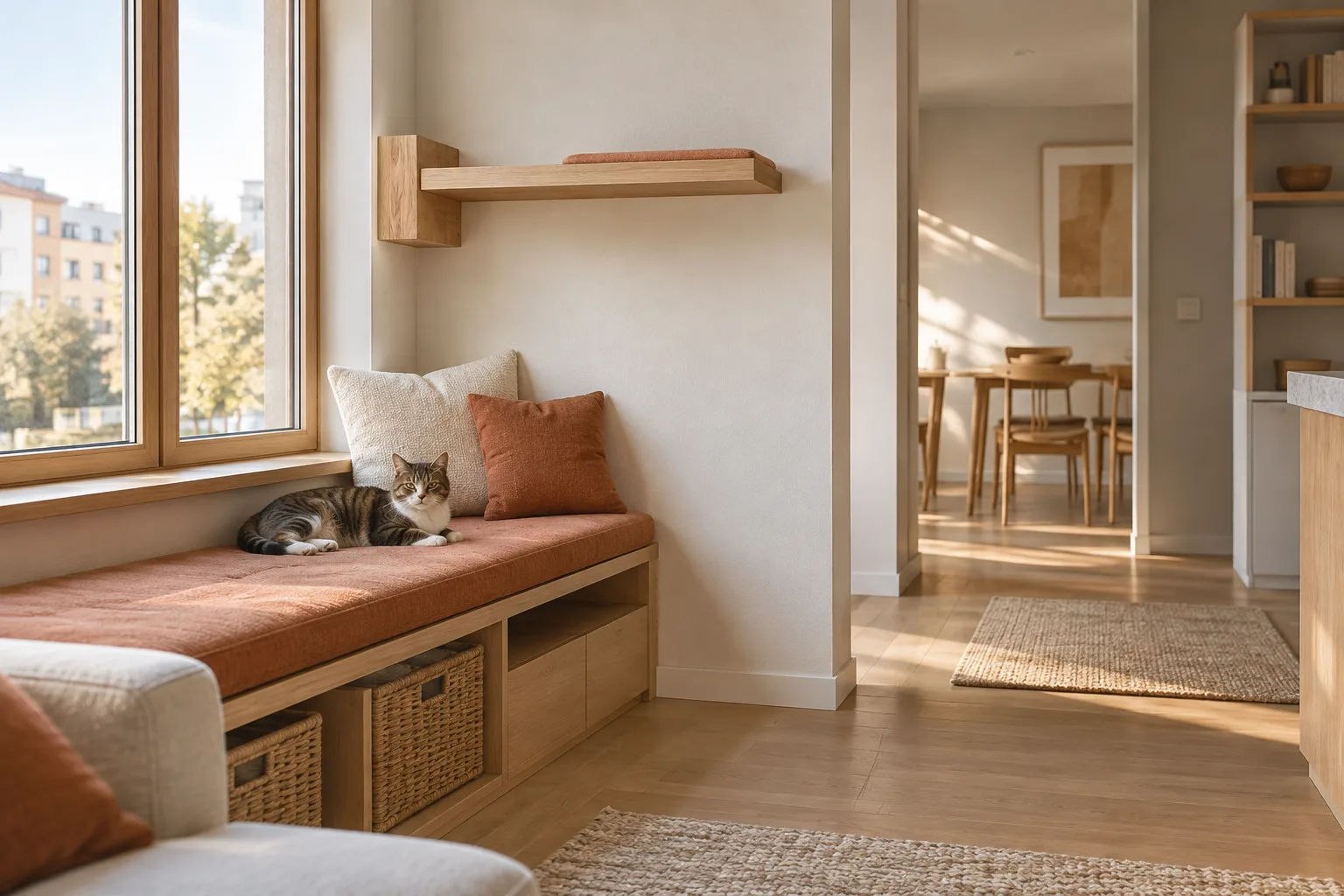
Vertical space can make a small room feel larger to a cat, but height only helps when the route is stable and easy to leave. Before mounting a shelf, check the wall type, use hardware rated for the material, and inspect every fixing after installation. Leave enough landing space for a normal turn rather than placing shelves edge to edge.
A practical route might move from a low scratcher to a middle shelf and then to a resting platform. You do not need to build a complete wall of steps. Two or three well-spaced surfaces can add choice while keeping the room easy to clean. Keep the route away from fragile décor, dangling cords, and windows that do not have secure screens.
Make scratching and play easy to start
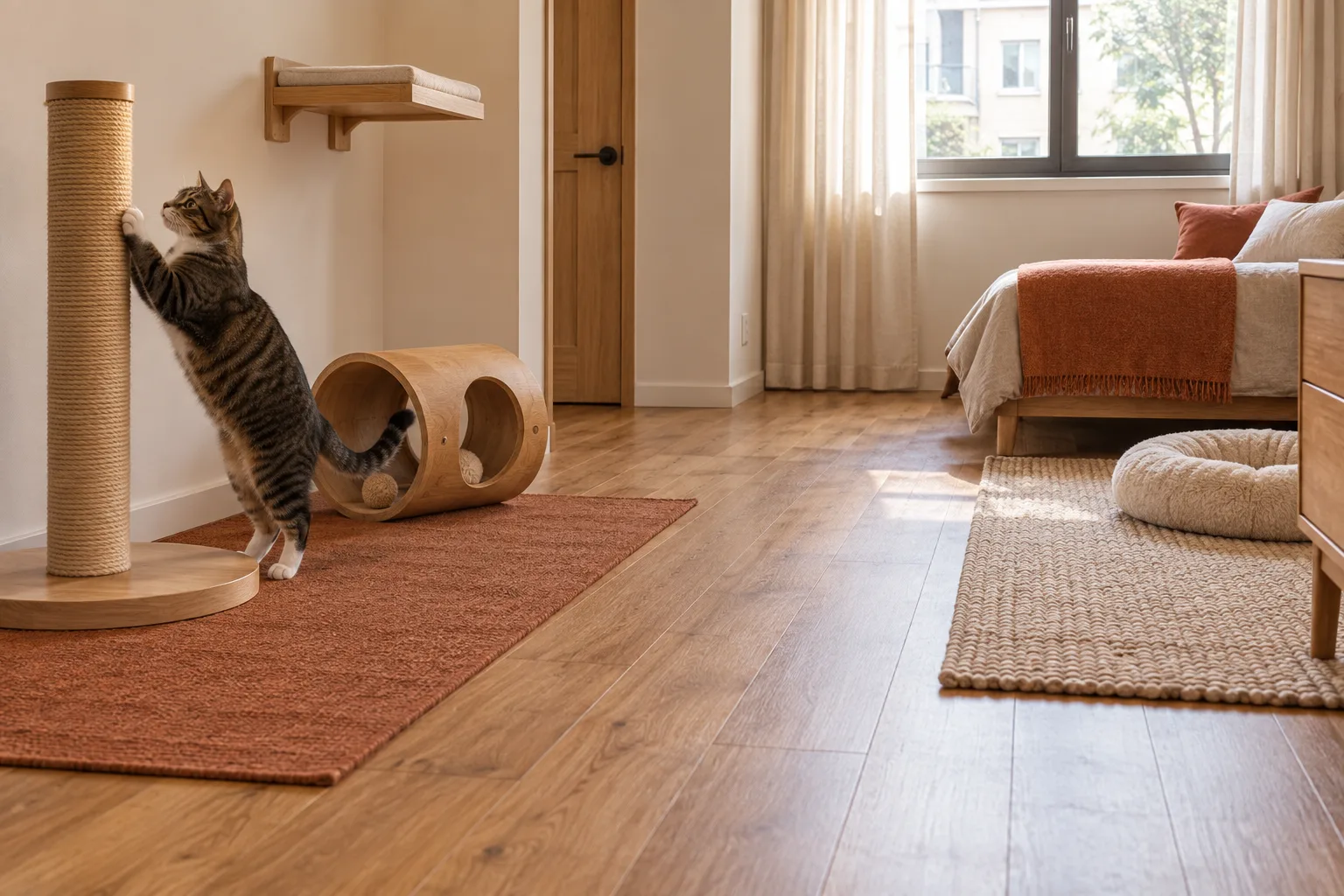
Place a scratching surface near a sleeping area, a doorway, or another location your cat already visits. The ASPCA recommends a sturdy scratching post that does not wobble. For a planning guide, the key point is stability: a post that moves when touched is less useful and may be ignored.
Use a small basket for toys instead of scattering them across the floor. Rotate a few items so the room remains usable and you can see what your cat actually chooses. Leave a clear floor area for play and avoid tying string or wand toys where they can be reached without supervision. Store them after interactive play.
Design for cleaning from the beginning
Choose washable covers, wipeable surfaces, and furniture with enough clearance for a vacuum or brush. If a litter box sits inside the room, leave working space around it for scooping and cleaning. Avoid designing a box enclosure so tightly that the door, liner, or tray cannot be removed without moving half the room.
Keep a small cleaning caddy outside the cat’s resting area. It can hold a scoop, disposable bags, a cloth, and the product you normally use. Do not use strongly scented cleaners around a litter area without checking that they are appropriate for cats. The ASPCA’s litter-box guidance specifically cautions against ammonia, deodorants, and scents that may create an aversion.
Check the plan from your cat’s point of view
Walk through the room at floor level. Can a cat reach the litter box without passing a noisy appliance? Is there a way to leave a high perch? Can another pet block the only route? Are cords, blind pulls, plants, and small gaps secured? The ASPCA recommends pet-proofing cords, windows, doors, and plants when preparing a home.
Change one part of the room at a time and watch what is used. If a new bed is ignored, do not assume the cat needs more furniture. The location, texture, noise, or access may be the issue. If litter-box use changes, accidents appear, or your cat seems uncomfortable, contact a veterinarian; a layout article cannot diagnose a medical or behavior problem.
The best cat room is a flexible system: clear routes, separated resources, stable vertical options, and surfaces you can maintain. Begin with one useful corner, observe how it functions, and expand only where the room gives you evidence that more would help.