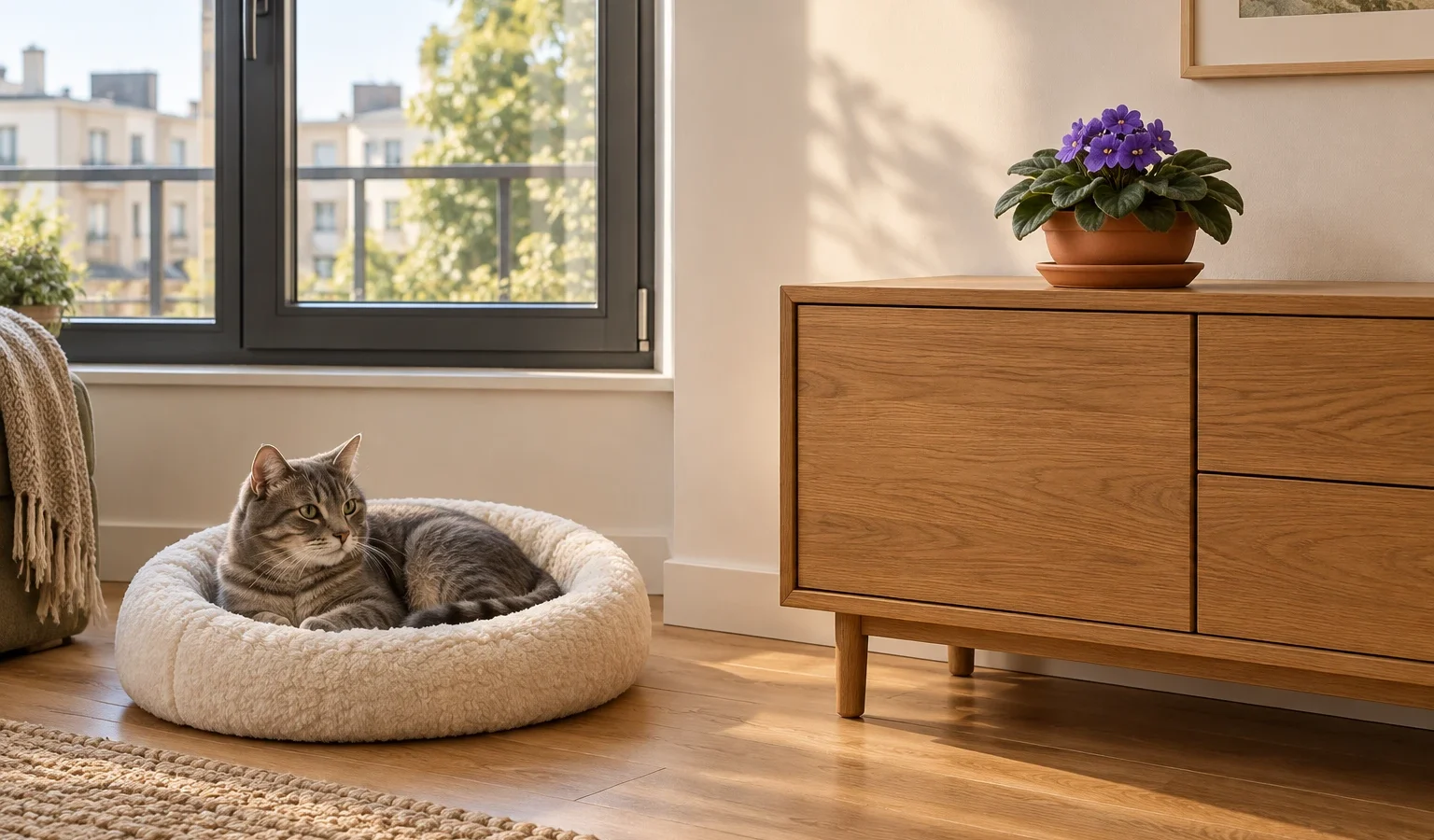
In a small apartment, a cat-safe houseplant decision has two separate parts: identifying the plant and fitting the real object into the room. A plant photo, a shopping title or a familiar common name cannot answer both questions. Use this label-to-layout checklist to record what you know, stop when identity is uncertain and accept a no-plant outcome when the room cannot support the setup.
This is household planning guidance. It is not a toxicity guarantee, botanical identification service, veterinary assessment, fertilizer guide or DIY mounting plan. Any plant material can cause stomach upset, and the ASPCA plant database says its list is incomplete, appearances vary and the exact name should be checked. An absence from the database is not proof of safety.
Start with the label record
Copy the exact plant name from the seller label, receipt or nursery record. Keep the botanical name, common name, source and date together. Botanical photos and identification apps can help you gather leads, but they do not establish identity. If the label is missing, the plant has several conflicting names or you cannot match it to a reliable record, stop. Keep it away from the cat until a qualified person confirms what it is, or choose the no-plant outcome.
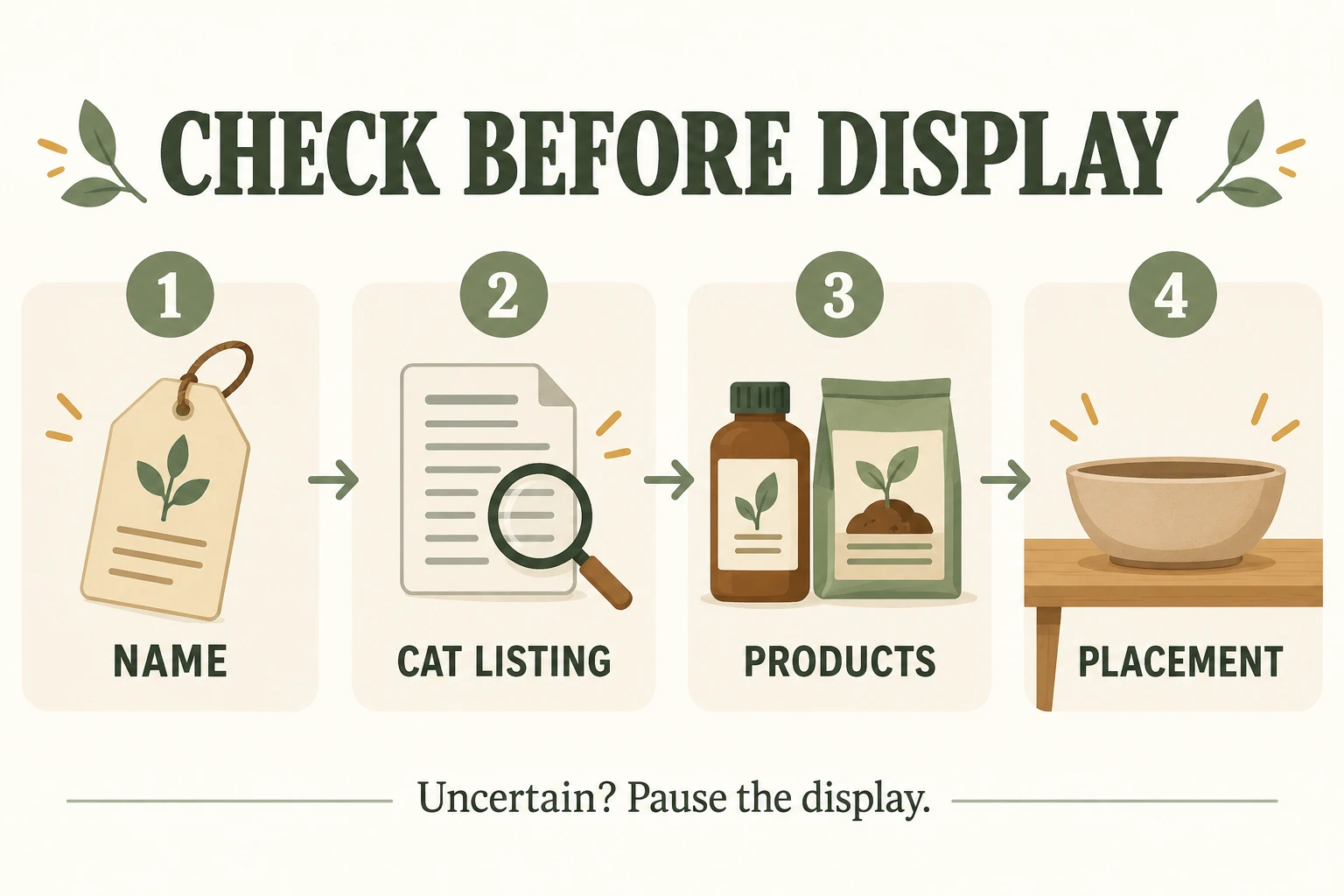
| Stage | Record | Stop state |
|---|---|---|
| Name and source | Exact label, botanical name, seller or nursery, date: ___ | Identity is missing, conflicting or unconfirmed |
| Cat listing | Exact matching record and URL: ___ | No matching record, or the record’s limitations are unclear |
| Products | Fertilizer, pesticide or other product labels kept in original packaging: ___ | Product identity, label or storage state is unknown |
| Placement | Room, pot, surface, cat route and cleanup plan: ___ | The pot can tip, spill or obstruct a needed route |
Use an exact cat listing
For three examples with exact ASPCA records, parlor palm (Chamaedorea elegans), African violet (Saintpaulia spp.) and Phalaenopsis orchid (Phalaenopsis sp.) are listed as non-toxic to cats. These are examples for a record-checking process, not a broad claim that all palms, violets or orchids are safe. Match the exact plant and read the listing’s limitations.
Keep true lilies out of the home and garden. Cats Protection advises avoiding toxic plants altogether and warns that every part of a lily, including pollen, can be dangerous if ingested. If you suspect exposure, contact a veterinarian immediately. Do not wait for a visual symptom or try a home remedy; seek professional poison advice when available.
Check products as a separate decision
A plant’s toxicity listing does not assess fertilizer, pesticide, soil treatment or a spill. Keep every product in its original packaging, follow its label and ask the manufacturer or a veterinarian about cat exposure. Do not pour an unlabelled mixture into a new container or treat “natural” as a safety category. If product exposure may have happened, use professional veterinary or poison advice rather than improvising treatment.
Test the layout before the plant arrives
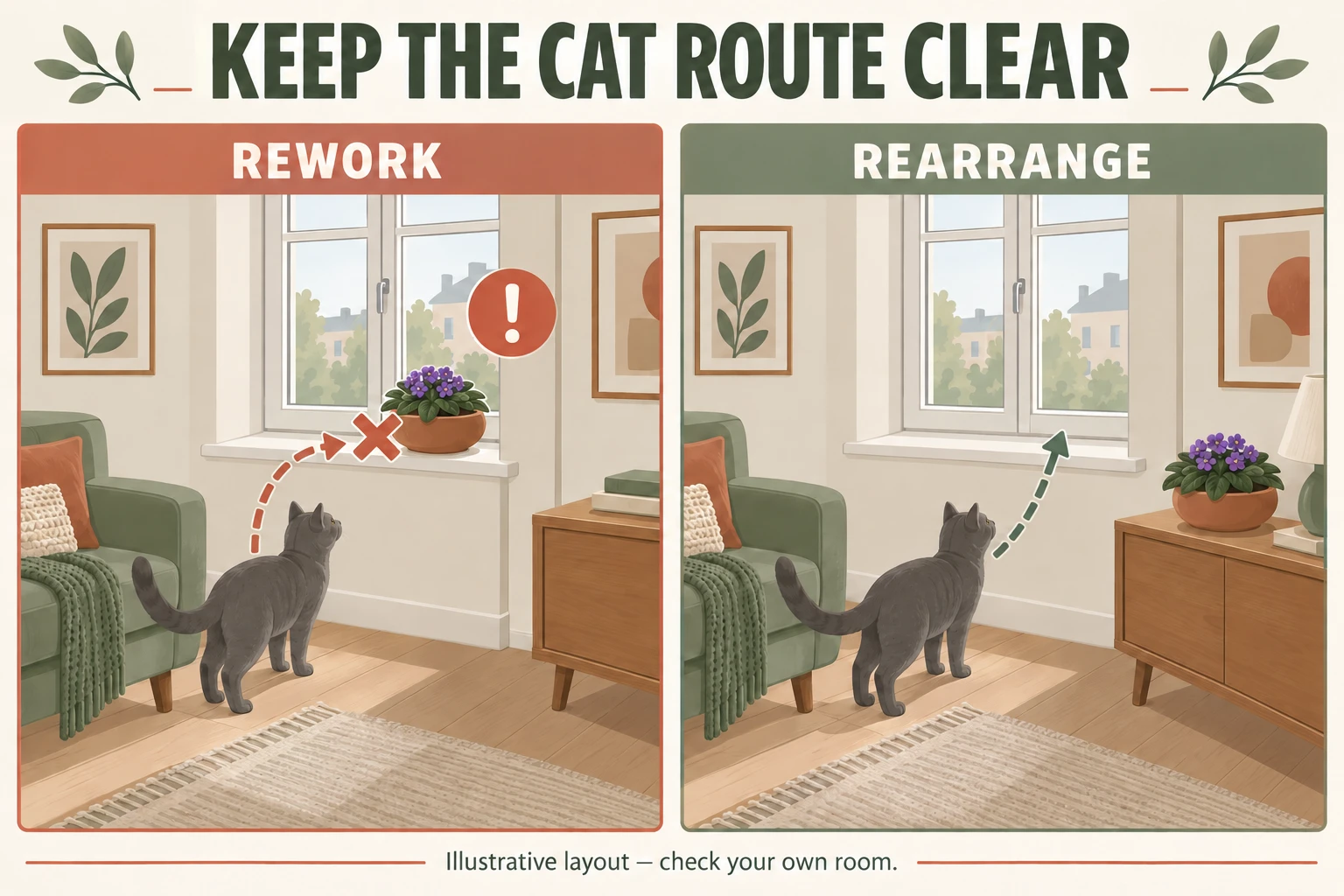
Place a placeholder object where the pot would sit and walk the cat’s ordinary route through the room. Check the surface, pot stability, trailing leaves, water spill path and cleanup access. A high shelf is not a guarantee: it may be reachable, may drop soil or may block a route when the cat jumps nearby. Do not suspend a toxic or uncertain plant. If chewing, digging or tipping continues and you cannot prevent it with a workable room arrangement, choose no plant. Keep plant-care products and loose supplies inaccessible to the cat.
| Room question | Write the observed answer | Start state |
|---|---|---|
| Cat route and landing | Where does the cat walk, jump or rest? ___ | Clear route and landing |
| Pot and surface | What keeps the pot stable and catches water? ___ | Stable, dry, reviewable surface |
| Cleanup | How are leaves, soil and spills noticed and removed? ___ | Cleanup route is available |
| Decision | Plant in place / move it / no plant: ___ | Use no plant if any stop state remains |
Turn one candidate into a decision
For example, suppose a shop offers a small flowering plant for the end of your sideboard. Before buying, record its botanical name and ask the nursery to clarify any mismatch between the tag and receipt. A matching non-toxic cat entry clears only the plant-record stage. You still need to know which treatments were applied and whether you can store the supplies away from the cat.
Now mark the intended pot footprint with an empty tray. If that position narrows a window landing, choose a different surface and repeat the route check. If the room offers no practical place, leave the purchase for another time. This is a planning example, not a tested installation; one candidate and one reviewable location are easier to assess than a whole display bought at once.
Recheck after gifts, moves and changes
Repeat the worksheet after receiving a plant as a gift, repotting, moving furniture, changing products or bringing the cat into a new room. Recheck the label and the layout together. If the source record no longer matches the plant, return to the uncertain-identity stop state. If the pot now sits beside a window landing or blocks a retreat, move it only after the new placement passes the same checks, or keep the room plant-free.
For room planning, use the cat room planner to map the plant beside ordinary routes. The window perch safety checklist can help you review a landing near a plant, while the hideaway placement guide keeps retreat access visible. If plant supplies compete with stored toys, compare the toy storage rotation plan.
Sources and scope
- ASPCA Toxic and Non-Toxic Plants database and the exact parlor palm, African violet and Phalaenopsis orchid records.
- Cats Protection: Dangerous plants — avoid toxic plants, lily risk and immediate veterinary action for suspected ingestion.
Images are AI illustrations, not plant identification photos, tested arrangements or safety certifications. This article does not provide chemical instructions, construction advice, clearance ratings or guarantees.