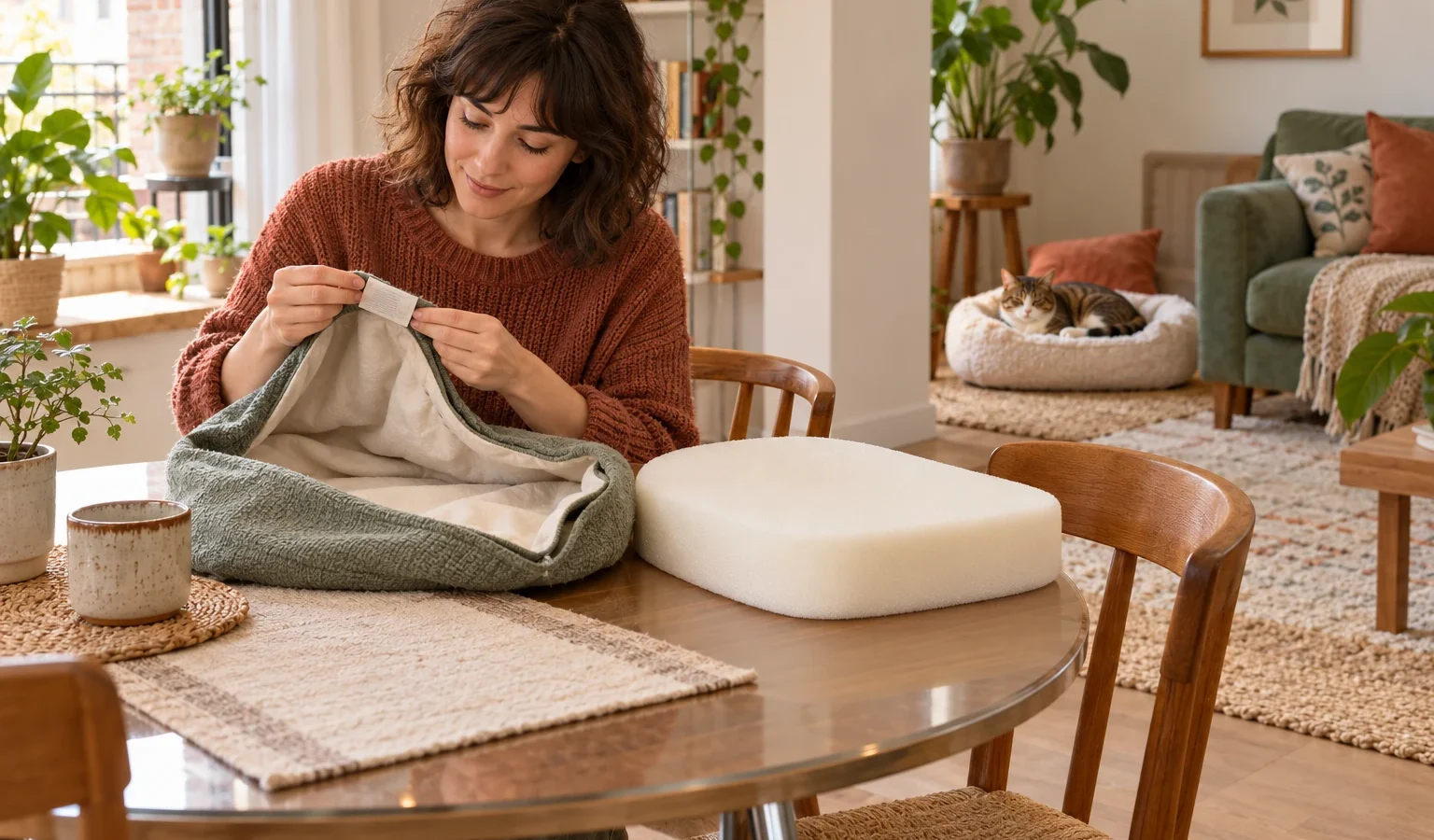
In a small apartment, washing a cat bed is a sequence of decisions, not just a trip to the machine. The sewn label may cover the cover but say little about a loose insert, a waterproof layer or an unknown heating element. You also need a dry place for the bed and an ordinary place for the cat to rest while the bed is away.
Use this label-to-return plan for a non-electric bed you can identify. It is an editorial household worksheet. The bed’s care label and manufacturer instructions control the actual handling; a veterinary team or manufacturer should answer questions about illness, contamination, infestation or a special or heated bed.
Start by separating the components
Take a photo or write the exact wording from each sewn label before removing anything. Treat the cover and filling as separate items when they separate. If a label is missing, unreadable or contradictory, stop rather than borrowing instructions from a similar-looking bed. An electrical, heated or powered bed is outside this routine: keep it out of the wash plan until its manufacturer gives you the correct procedure.
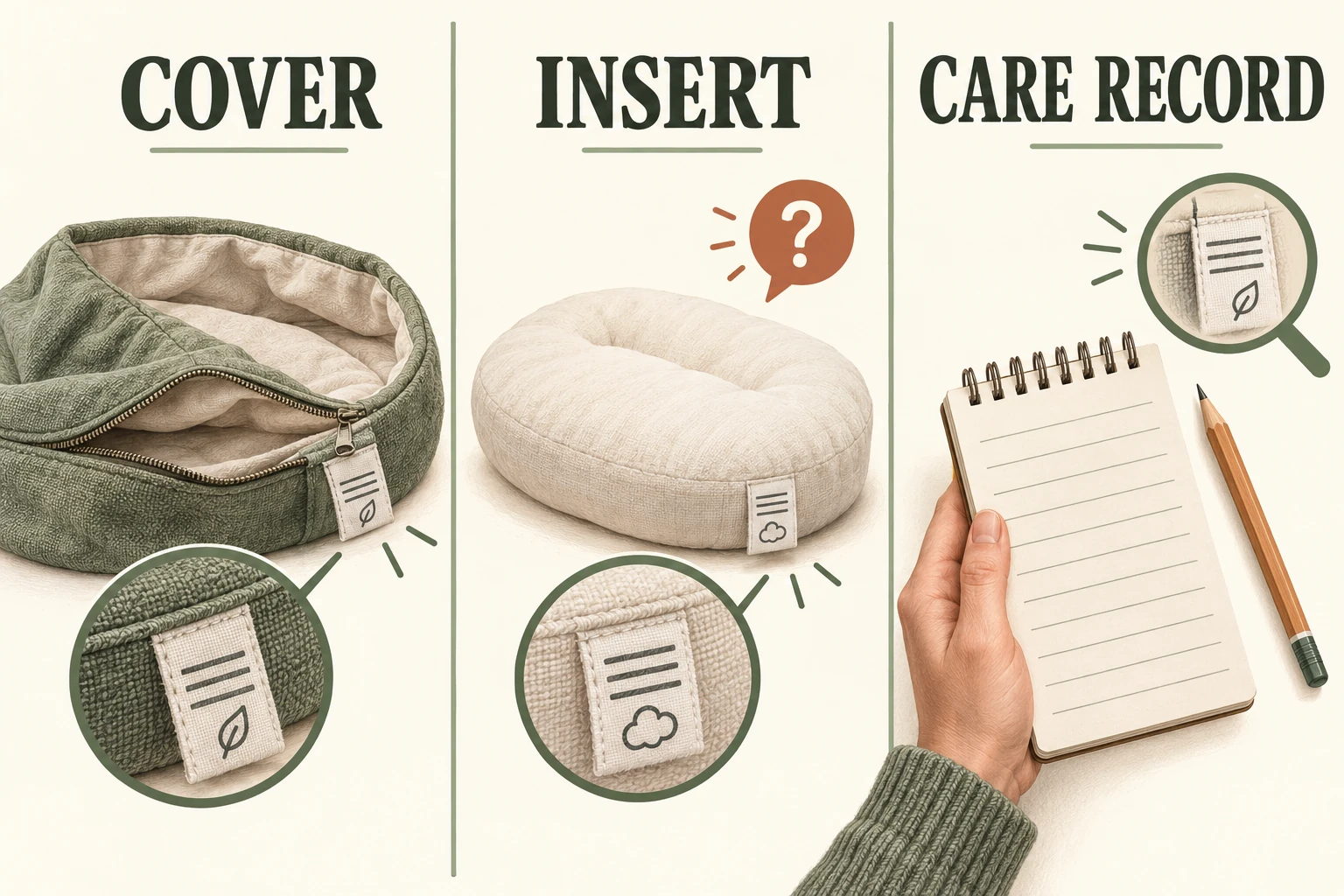
| State | Record and stop rule |
|---|---|
| Cover | Record the sewn label, closure and whether the cover is removable. Checked by: ___ Stop: label or closure condition is unknown, damaged or inconsistent with the planned handling. |
| Insert or filling | Record its material and label separately; note whether it can be removed without tearing seams. Checked by: ___ Stop: the filling has no usable instructions or cannot be separated for the planned care. |
| Unknown or electrical | Record the maker and model if present, then ask the manufacturer. Checked by: ___ Stop: do not wash, soak, heat or dismantle while the correct route is unresolved. |
Reserve the apartment before you start
Choose an ordinary alternate rest spot before the bed leaves its usual place: for example, a clean spare blanket on a stable bed or a familiar open resting area. Keep that option available without forcing the cat into it. ASPCA’s general cat-care guidance recommends a clean, dry resting place and washing bedding often; the practical planning question here is where that dry option will be while this particular bed is unavailable.
Then reserve a real drying footprint. Measure the surface or rack position you will use, keep it clear of the normal walking path, and decide where a dripping or damp cover can wait without blocking a door, litter route or food and water access. Do not begin if the only available place leaves wet bedding across a required route.
Follow the label, not a generic recipe
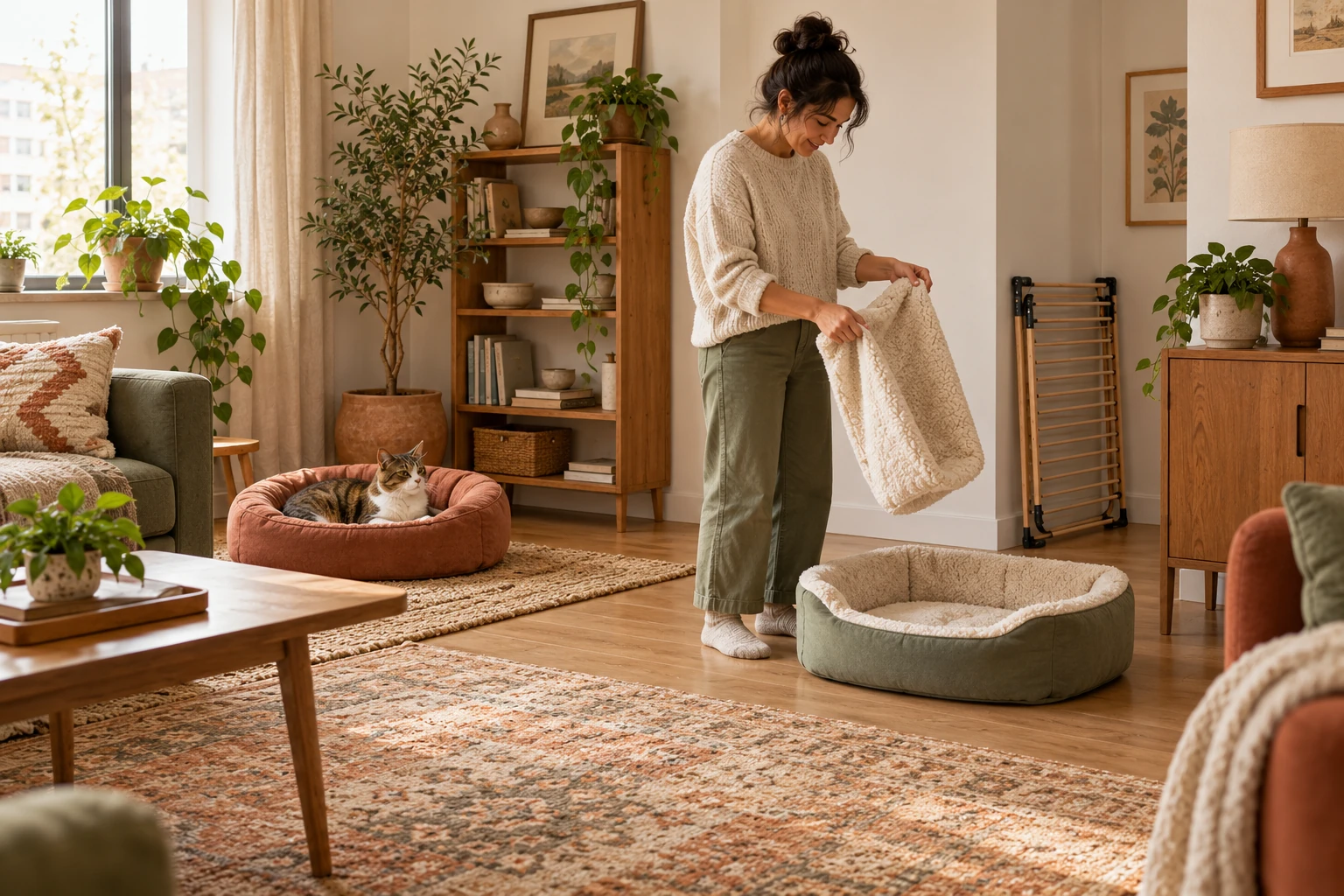
Remove loose debris according to the product instructions, separate the recorded components and follow each label. The care label for this bed overrides a generic internet tip about cycles, temperatures, detergent or drying. Do not invent a recipe when the label is absent. If the cover is washable but the insert is not, plan for the cover only and keep the rest out of the cat’s sleeping area until its own route is resolved.
Keep laundry products inaccessible while you work. ASPCA Poison Control lists risks from detergent pods or liquid detergent, dryer sheets and fabric softeners. Follow the product label and the household storage plan; do not leave a pod, sheet, softener or open container beside a machine. If exposure is suspected, contact a veterinarian or poison-control service immediately rather than trying a home remedy.
Handle an interrupted load as a new decision
Write the load state on the care record: “washing,” “awaiting drying,” “dry,” or “return checked.” If the cycle stops, someone changes the plan, or the drying space becomes unavailable, leave the cat on the alternate rest option and move the bed only when you can follow the label. Do not return a partly dry cover because the cat is waiting or because the apartment needs its rack moved.
Before return, inspect the assembled bed and confirm every washed component is completely dry. Check the planned resting nook is still unobstructed, put the bed back in its normal shape, and mark the record “return checked” with the person and date. If any component is damp, damaged, smells unusual or has an unresolved label question, keep it out of the cat’s resting area and ask the manufacturer or veterinary team what to do next.
Make the plan fit the room
In a studio, mark the only clear route before washing and postpone if the drying rack would obstruct it. In a one-bedroom apartment, use another suitable area for the alternate rest spot only if the cat can access it normally and the drying setup does not create a barrier. Do not carry a damp bed through a resting area without a plan.
For the wider apartment boundary, use the laundry access and storage checklist. For a bed that belongs in a retreat, see the small-apartment hide placement guide and preserve the cat’s existing suitable option while the bed is unavailable. The room-planning overview can help map the drying footprint around normal furniture, while the cat room planner is useful for recording the alternate location. If another person will manage the load, link the written return check to your cat-sitter handoff checklist.
Copy this label-to-return card
| State | Record |
|---|---|
| Components | Cover label ___; insert label ___; electrical or unknown? ___; checked by ___ |
| Alternate rest | Ordinary dry option ___; cat can reach it normally? ___; checked by ___ |
| Drying footprint | Rack or surface ___; clear route maintained? ___; checked by ___ |
| Return | Every component completely dry and assembled? ___; return checked by ___ on ___ |
| Stop state | Keep the cat on the alternate rest option and ask the manufacturer or veterinary team if any label, contamination or damage question remains. |
A wash plan is ready when the components are identified, the label instructions are available, the alternate rest spot is ordinary and reachable, and the drying footprint does not obstruct the apartment. It is complete only after the assembled bed is completely dry and the return record is checked.
When a bed returns from washing, use the winter day-and-night bed placement check to record its ordinary location before the room changes after sunset.
Sources and further reading
- ASPCA: General Cat Care — clean, dry resting place and regular bedding care.
- Cats Protection: Cat owner’s guide to keeping a clean home — multiple sleep options and washing a blanket while it is not in use.
- ASPCA Poison Control: Poisonous Household Products — laundry-product exposure boundaries.
- ASPCA: Household products and cleaning agents — label-following and keeping pets away until areas are dry.
The worksheet and examples are original editorial planning aids. Images are AI-generated illustrative concepts. They do not test a bed, certify a product or replace its care label, manufacturer instructions or case-specific veterinary guidance.