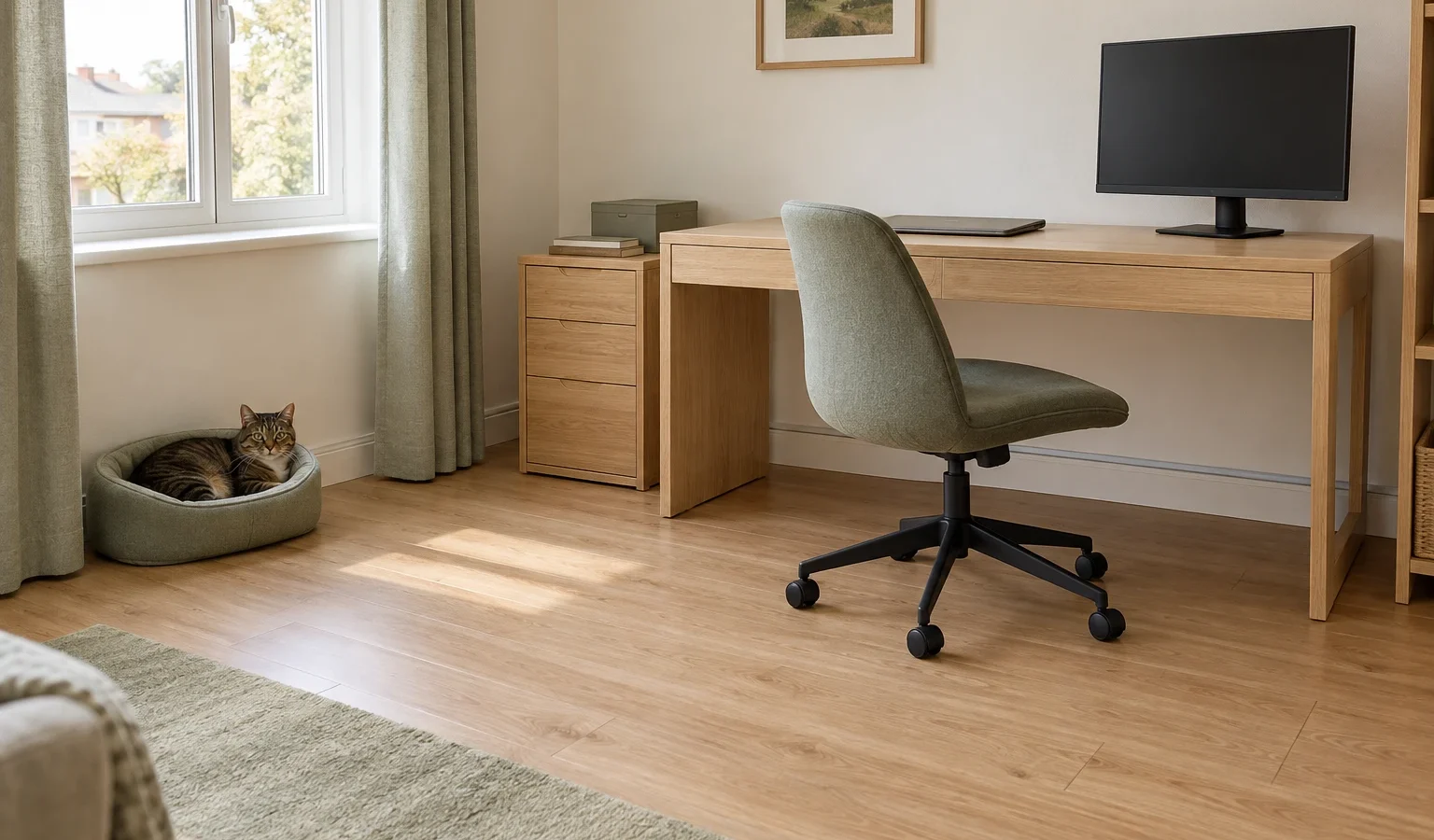
A cat-friendly home office in a small apartment starts with what moves. Your chair rolls back, a drawer opens, a door swings and the room may become dining or living space after work. A resting spot that fits an empty corner can still conflict with those ordinary movements.
This plan helps you check an existing desk area before buying another bed, shelf or organizer. It is a room-planning exercise, not a behavior treatment or an electrical installation guide. It cannot promise that your cat will stay off the keyboard. Keep familiar resting choices available and let the cat choose whether to use a new arrangement.
Map the chair before choosing the cat’s spot
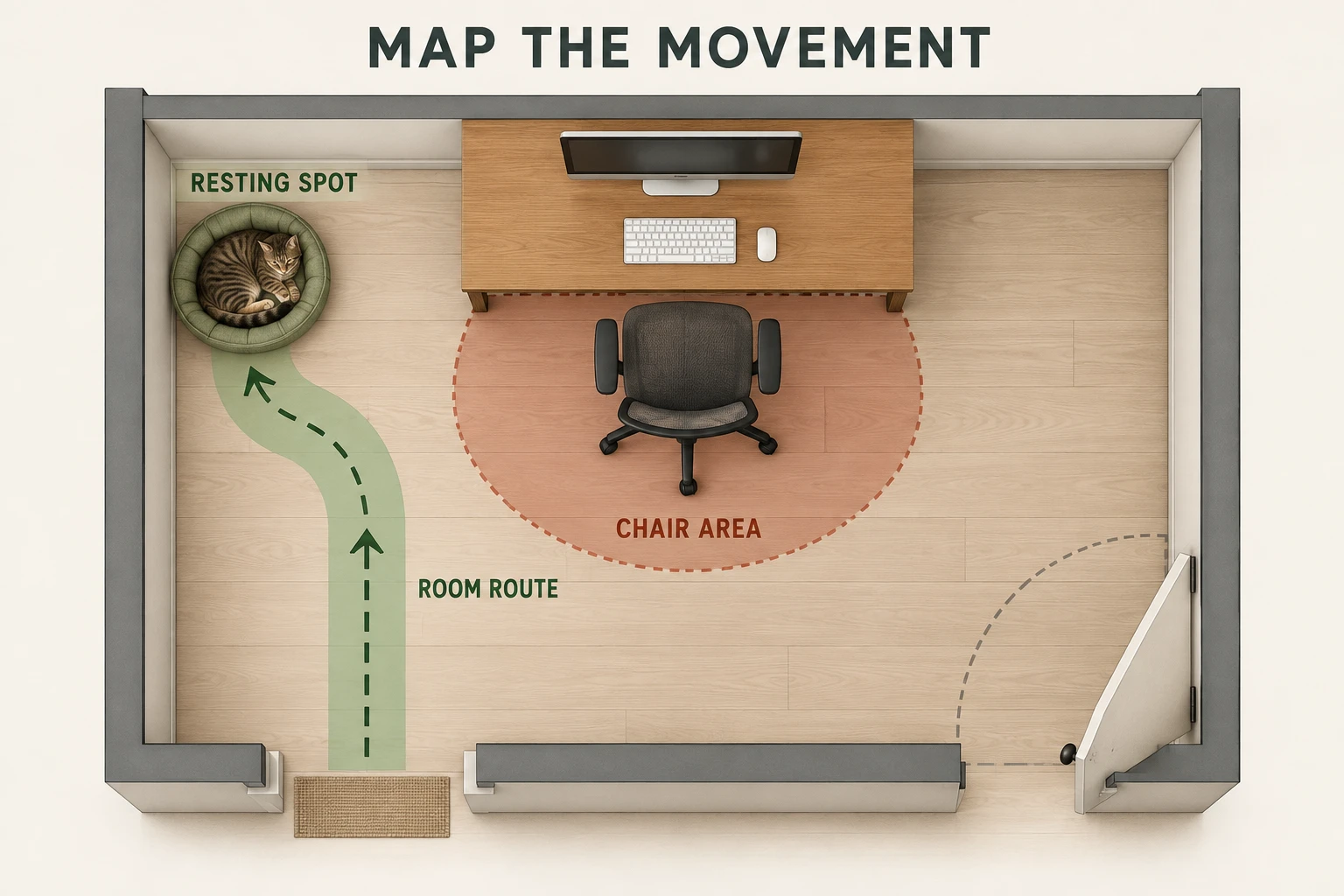
With the cat elsewhere, sit at the desk and carry out your normal movements: pull the chair out, turn to the side, stand up and open the drawers you actually use. Sketch the area the chair and your feet occupy across those actions. Include the space you need to reach a bag or printer; an unused-looking strip can be part of the working area.
Then mark the room’s route to the doorway and the existing cat resources. Use your furniture and room dimensions rather than a universal distance from an online diagram. Our cat room planner can help record the surrounding room, but its drawing is not a safety certification.
Preserve a resting choice beyond the desk
The FelineVMA’s environmental guidance describes a protected retreat, separated resources and interactions that reflect the individual cat’s preferences. A spot near your work is an optional addition, not a replacement for those wider needs. Leave access to the cat’s existing retreat and everyday resources available.
Start with a familiar, suitable resting place in the room. If considering a low bed, rule out the chair’s rolling area, the space under moving furniture and any route people must step through. A position beside the desk is only a candidate if it passes those checks. Do not surround the cat with furniture so that proximity becomes confinement.
A floor-level example is shown here because it avoids needing a new mount. It is not a claim that every cat prefers the floor. For an existing elevated resting option, follow its product instructions, support requirements and access limitations; this article does not specify brackets, loads or installation. A cat with mobility difficulties may need veterinary guidance on access.
Keep a more secluded option available, too. Our hideaway placement guide addresses that separate purpose. Sharing your work corner does not mean that every resting location must face your desk.
Check one candidate in three room states
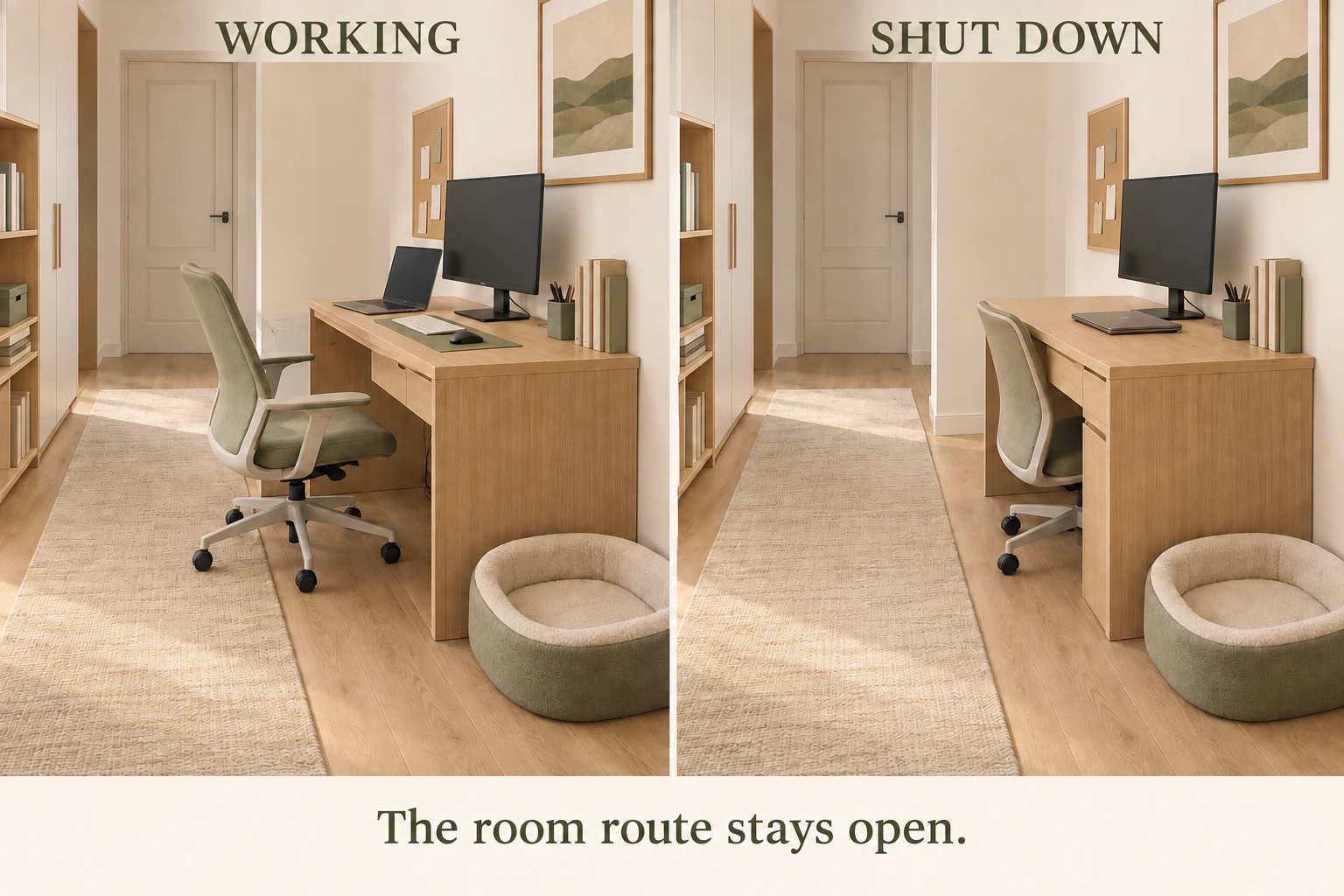
Compare the same proposed location during work, during a break and after shutdown. Do the empty-room layout check before inviting the cat near it. Reject a candidate if it only works when a drawer stays closed or someone stops using the normal doorway.
- Working: Can you sit, turn, stand and reach supplies without rolling toward or stepping across the resting place? Does a desk-side bed prevent the chair from returning to its normal position?
- Taking a break: When you push back the chair and leave, does the route stay open? Does a bag temporarily placed on the floor become an obstacle?
- Shut down: If the room returns to another use, can you put away work items while leaving the resting spot and resource access available? Check the door and any storage you use in the evening.
Illustrative decision: a bed under a desk return appears to save floor space, but the chair crosses it when you stand. A bed beside a cabinet may avoid the chair yet block its evening-use drawer. Either candidate fails its room-state check. A third position might work, or the useful answer may be to retain the existing resting place and add no furniture. This is an example, not a tested apartment.
Make a desk-side hazard list
The ASPCA’s home pet-proofing advice includes tucking away electrical cords, securing window screens and removing poisonous plants. Apply that check to the workspace rather than treating a tidy appearance as proof that it is safe.
Inspect where cables are reachable when the chair moves. Follow equipment instructions for routing, ventilation and any accessory you use. Do not describe a sleeve or cable box as chew-proof, and do not modify mains wiring as part of a room makeover. If a cord is damaged or an electrical issue is suspected, stop using the affected equipment and seek appropriate qualified help.
Put away small stationery and loose work materials when they are not needed. Keep drinks and hot equipment out of the resting area. Do not use the laptop as the cat’s warming surface or add scents to make a location more appealing. Secure window access according to appropriate product and building instructions; our window perch checklist deals with the separate questions raised by an installed perch.
Keep a short observation record
Once the layout checks pass, observe ordinary room use without placing or holding the cat in the chosen spot. Change one arrangement at a time so you can describe what actually happened. There is no prescribed trial duration or pass rate: this record is a household planning note, not a behavior experiment.
| Write down | What it helps you decide |
|---|---|
| Room state and action: working, standing up, leaving or closing down | Which movement needs another layout check |
| Cat’s chosen place, including choosing somewhere else | Whether the proposed spot is being used voluntarily |
| Physical conflict: wheel path, doorway, drawer or blocked resource | What must be corrected before continuing that arrangement |
| One next change, or no new furniture | Which specific decision to revisit rather than buying several products |
If the cat rests in a chair’s path, do not proceed as if the diagram solved it. Pause movement, allow the cat to leave and revise the arrangement. Stop the trial if access is blocked or the cat appears uncomfortable. Seek veterinary advice for a persistent change in behavior or concerns about pain; furniture planning is not a diagnosis.
Keep the office part of the whole room
Food, water and litter do not all belong beside a desk simply because they fit there. Check the rest of the apartment using our shared-room planning guide. Keep play supplies in their own storage arrangement; the drawer-based toy rotation plan covers that job.
The useful outcome is a documented layout decision: where the chair moves, which resting choice remains accessible, what happens at shutdown and what you still need to resolve. The cat may continue choosing another spot. An open route and a workable room matter more than completing a picture-perfect desk scene.
Sources and editorial scope
- FelineVMA / Cat Friendly Homes: environmental resources, retreats and individual interaction preferences
- ASPCA: home pet-proofing considerations
The movement audit, three-state check and observation record are original editorial planning aids. Images are AI-generated concepts. We have not tested the pictured furniture or room, and we make no claim about productivity, interruption reduction, electrical safety certification or cat behavior outcomes.