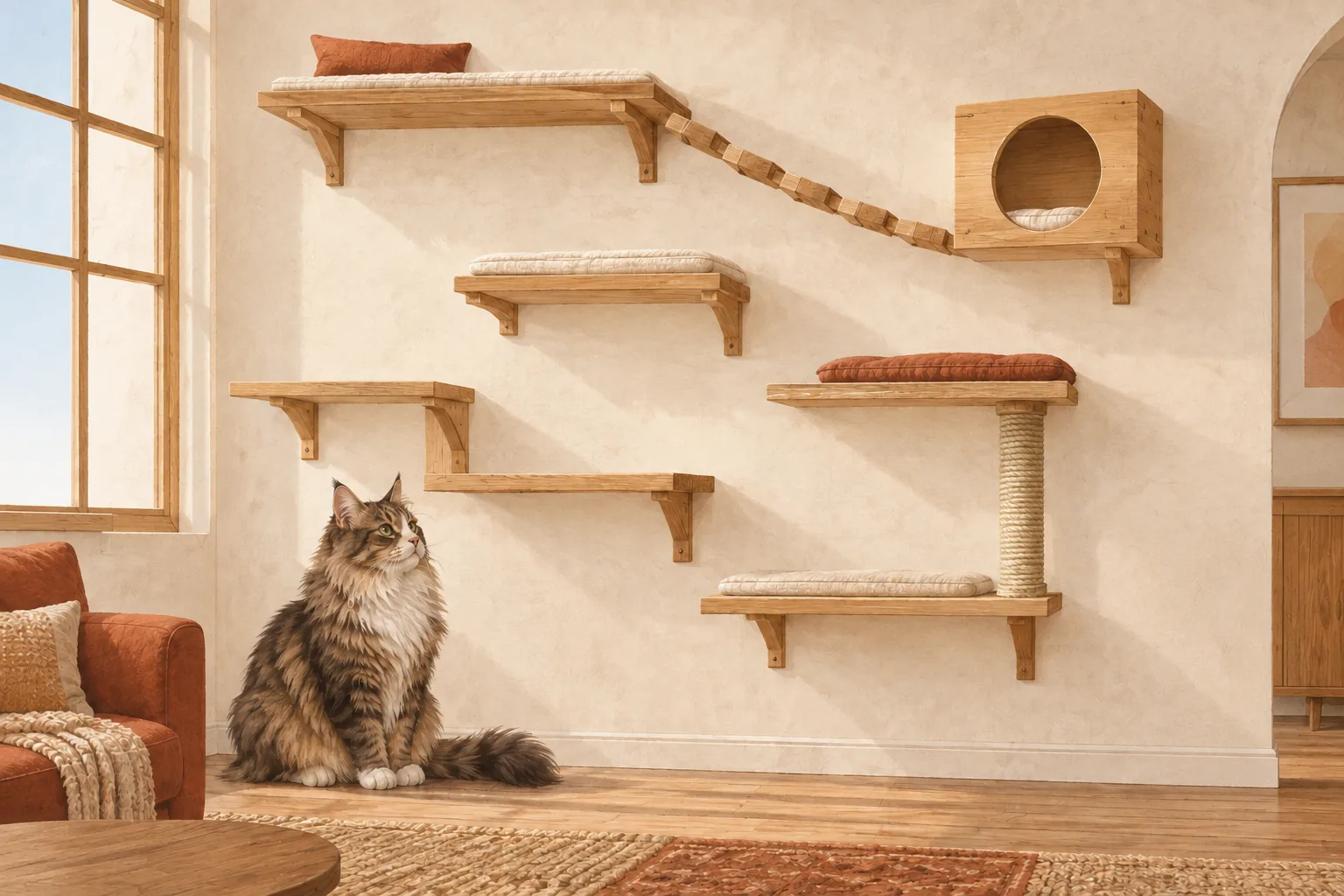
Cat wall shelves can add a resting place above the floor, but a larger cat changes the buying conversation. The useful question is not whether a shelf looks substantial in a product photo.
The Feline Veterinary Medical Association describes elevated options and hiding places as important parts of a cat-friendly environment. Start with observation, then use the product page and an appropriate installer to answer the structural questions.
Begin with your cat’s normal route
Watch where your cat already chooses to rest, look out, and move through the room. A shelf beside a window may be appealing if the route to it is calm and the window arrangement remains secure. A shelf at the far end of a busy hallway may be less useful even if the style is perfect. Look for a route that begins and ends on stable, familiar surfaces rather than asking the cat to make one dramatic jump.
For a larger cat, pay attention to body position as well as ambition. Does the cat use a broad chair arm, a low bookcase, or a wide windowsill? Does the cat pause before jumping? Those observations can help you choose the platform shape, the spacing conversation to have with an installer, and whether a lower option belongs in the plan.
A pre-purchase comparison table
| Question | What to look for | Pause the purchase if |
|---|---|---|
| Product rating | A clear rating for the complete shelf or system | The listing uses vague terms such as “sturdy” without specifications |
| Platform | A usable resting surface, not only a narrow step | Your cat could not settle or turn comfortably |
| Route | A calm path from and back to familiar furniture | The route ends at a dead end or above a doorway |
| Wall and fitting | Instructions that identify compatible wall types and hardware | You cannot confirm the wall type or installation method |
| Care | Removable or cleanable covers and accessible surfaces | Dust and hair will collect where you cannot reach |
Use the manufacturer’s current instructions as the source for compatibility, load information, and maintenance. If the instructions do not answer those questions, ask before ordering. Do not turn a marketing photo into a structural claim.
Choose a resting shelf before choosing a climbing course
A wall course can be visually striking, but one dependable resting perch may be more useful than a long sequence of small steps. Include a place where the cat can pause, lie down, and observe without being forced to continue along the route. This also gives you a simpler first purchase: you can learn whether the cat uses the location before expanding the system.
Consider the room from the cat’s level. A shelf over a loud appliance, a frequently opened door, or a crowded work desk may create interruption rather than refuge. The FelineVMA environmental-needs guidance emphasizes safe places and opportunities for control within the home. Put the first resting platform where the cat can leave it easily and where people will not need to reach through the cat’s space.
Read the listing like a project brief
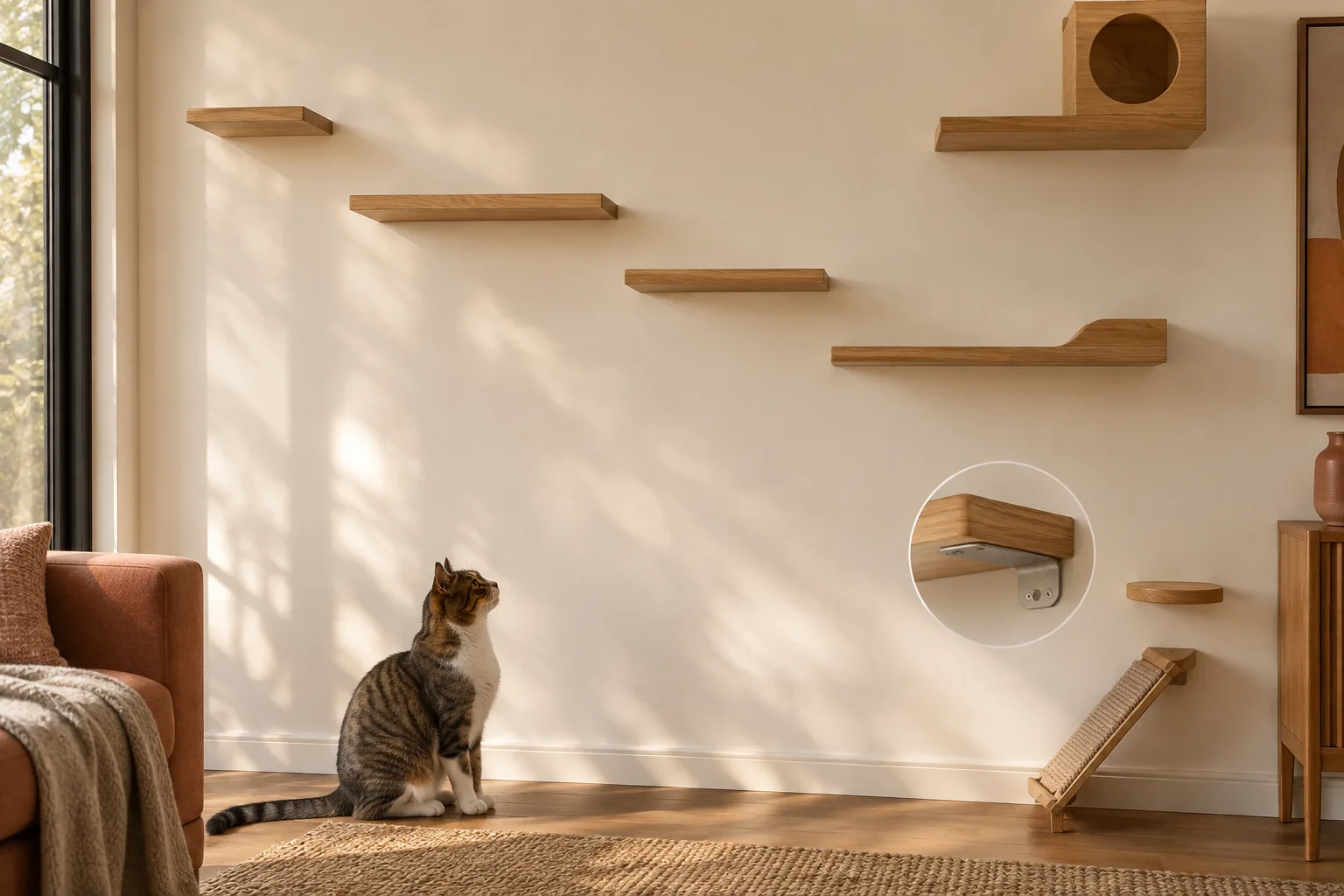
Before comparing colors or finishes, save the product instructions. Check the intended wall type, included hardware, installation sequence, care instructions, replacement parts, and support route. Confirm whether a rating applies to one component or to the installed configuration.
If you rent, check the lease and ask permission before making wall changes. If you own the home but cannot identify the wall construction or existing services behind it, consult a qualified professional. This is not a shortcut step; it is how the purchase stays connected to the building it will occupy.
Plan a route with exits
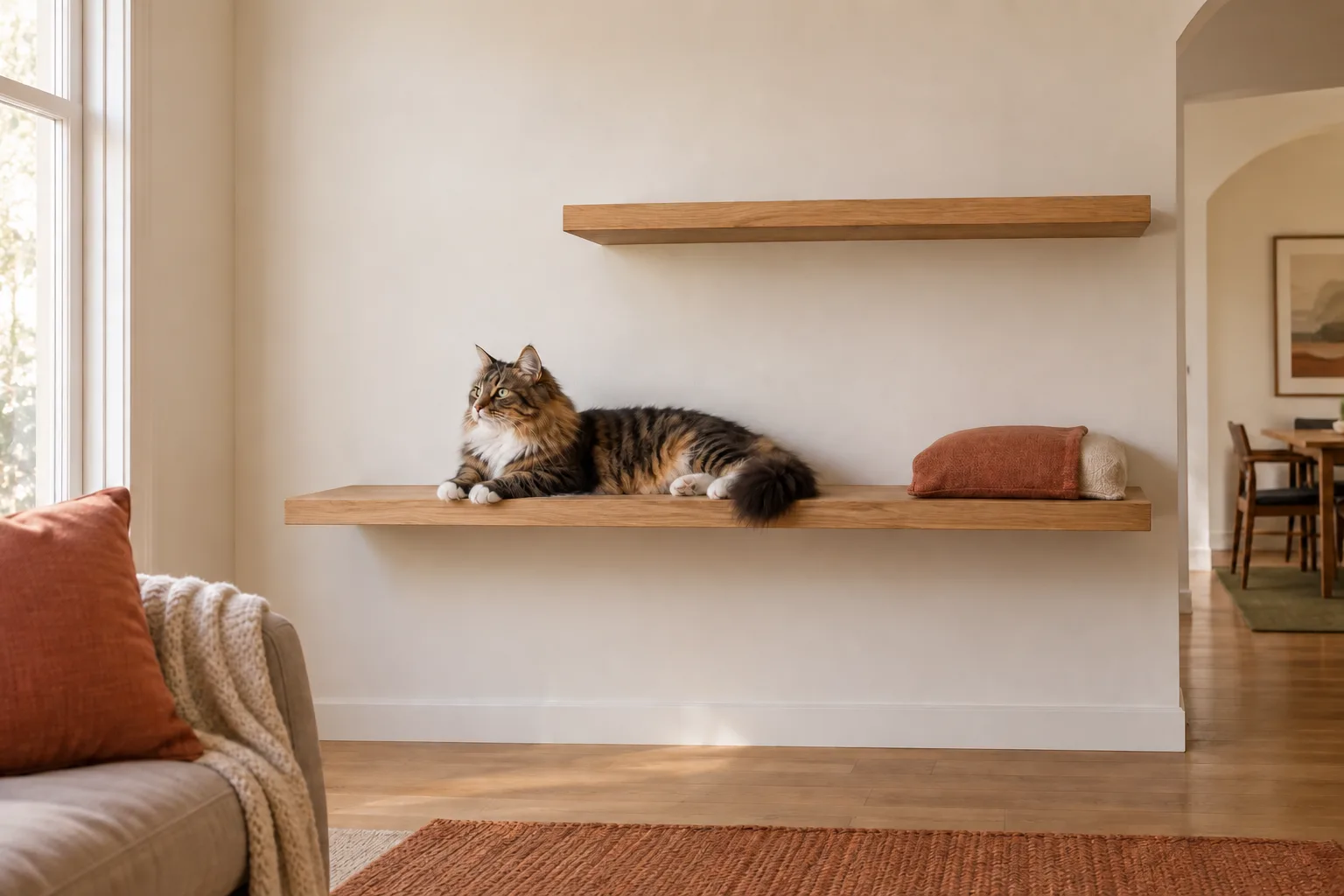
Think of a shelf route as circulation, not decoration. A cat should be able to approach and leave a platform without being cornered by another pet, a person, or furniture being moved beneath it. Avoid placing the only route directly above a door swing or where a person must repeatedly pass underneath. In homes with multiple cats, provide more than one usable resting option when possible.
FelineVMA guidance notes that key resources should be separated and distributed so cats can use them without being challenged. Shelves are not a substitute for food, water, litter, or resting resources elsewhere in the room. Treat them as one option in a larger layout.
Use this pre-purchase checklist
- I know where the shelf begins and where my cat can leave it.
- I have read the maker’s current installation and care information.
- I can identify the wall type or will ask a qualified installer to assess it.
- The chosen platform offers a usable place to rest, not only a narrow transition.
- I can clean the cover, surface, and surrounding wall without dismantling the room.
- The route does not interrupt a door, window, work surface, or essential household path.
- I have a first, limited phase in mind instead of buying a full wall at once.
Let use decide the next addition
Install only after the product instructions and wall conditions have been properly assessed. Then give the first perch time to become familiar. If the cat uses it voluntarily and the location remains practical for the household, the next addition can solve a real need: another resting spot, a clearer route, or a different view. If it sits empty, move back to observation rather than adding more pieces.
This approach keeps the plan reversible. It also prevents a common mistake: treating a larger cat as a reason to build a more elaborate course before confirming that the first location works.
Considering a view-focused resting place? Use our cat window perch safety checklist to compare the window, mount, route and maintenance plan before buying.