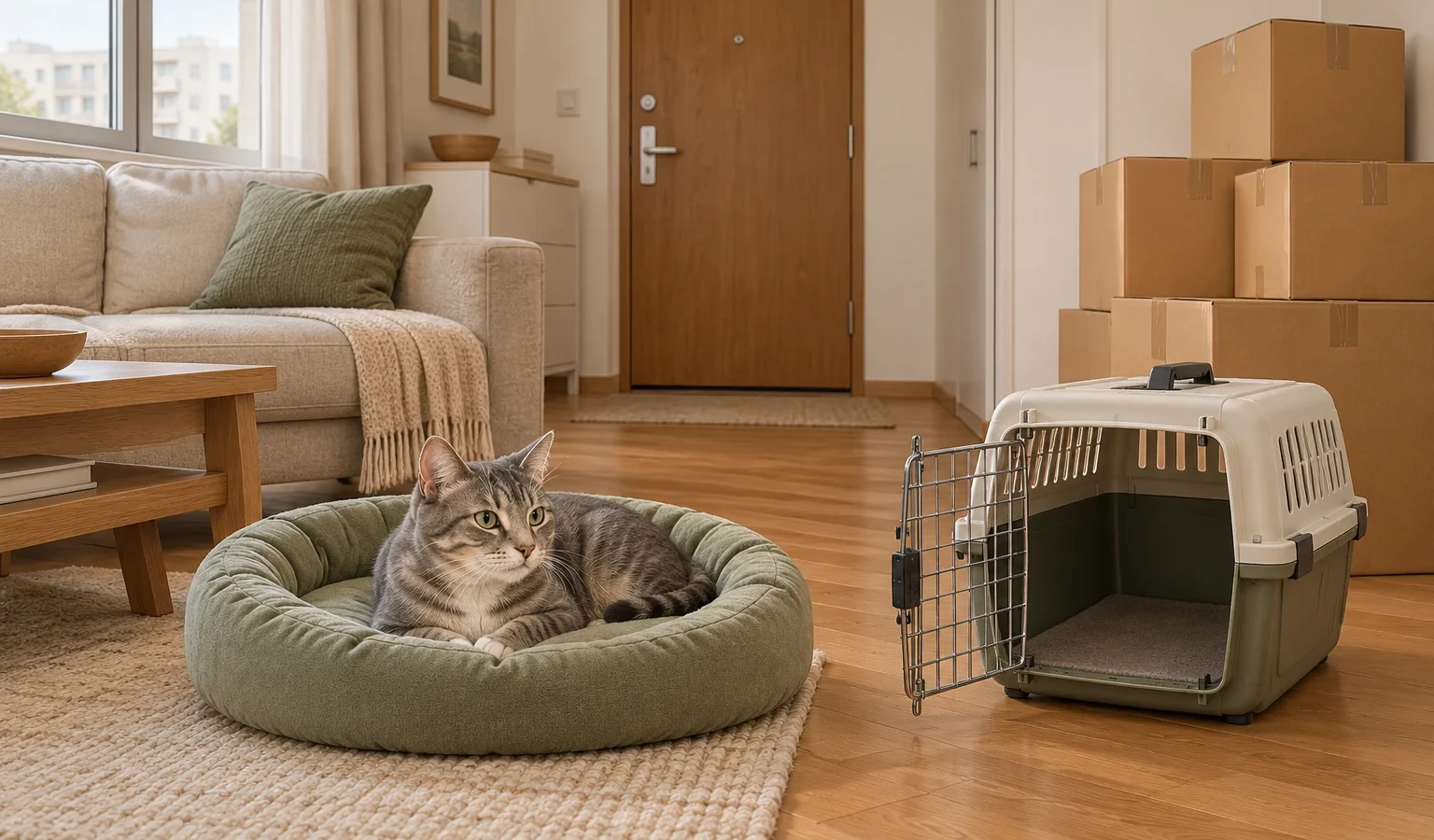
A studio apartment can make moving day look simple: one room, a few boxes and nowhere else to put the cat. The real question is whether any room can remain usable while people carry furniture, open the entry door and work around hazards. If a quiet on-site room cannot stay closed, accessible and supplied, arrange confirmed temporary care before loading starts.
The ASPCA moving guidance describes a quiet closed room or a trusted friend during the move, followed by a home base after arrival. Cats Protection’s moving advice discusses prearranged cattery or trusted care, quiet rooms at both homes, basic resources and telling helpers to keep the door closed. These are planning principles, not a promise that one arrangement suits every cat or provider.
Define usable before the first box moves
A usable on-site room is more than a door that closes. Before loading starts, confirm who owns the room check, whether the door can stay closed, whether movers need to enter it, whether the route to the entry door passes through it, and whether hazards or essential cat resources can be resolved. The room needs the cat’s familiar basic resources and a person who can keep the arrangement intact without improvising.
A bathroom may be the only closable space in a studio, but it is not automatically usable. If workers need it, removals pass through it, its hazards cannot be cleared, or water, litter and retreat cannot remain available, stop calling it the plan. Do not substitute a curtain, gate, balcony, cupboard or parked car, and do not leave a carrier as all-day housing. Choose a confirmed off-site arrangement or change the human moving schedule before doors open.
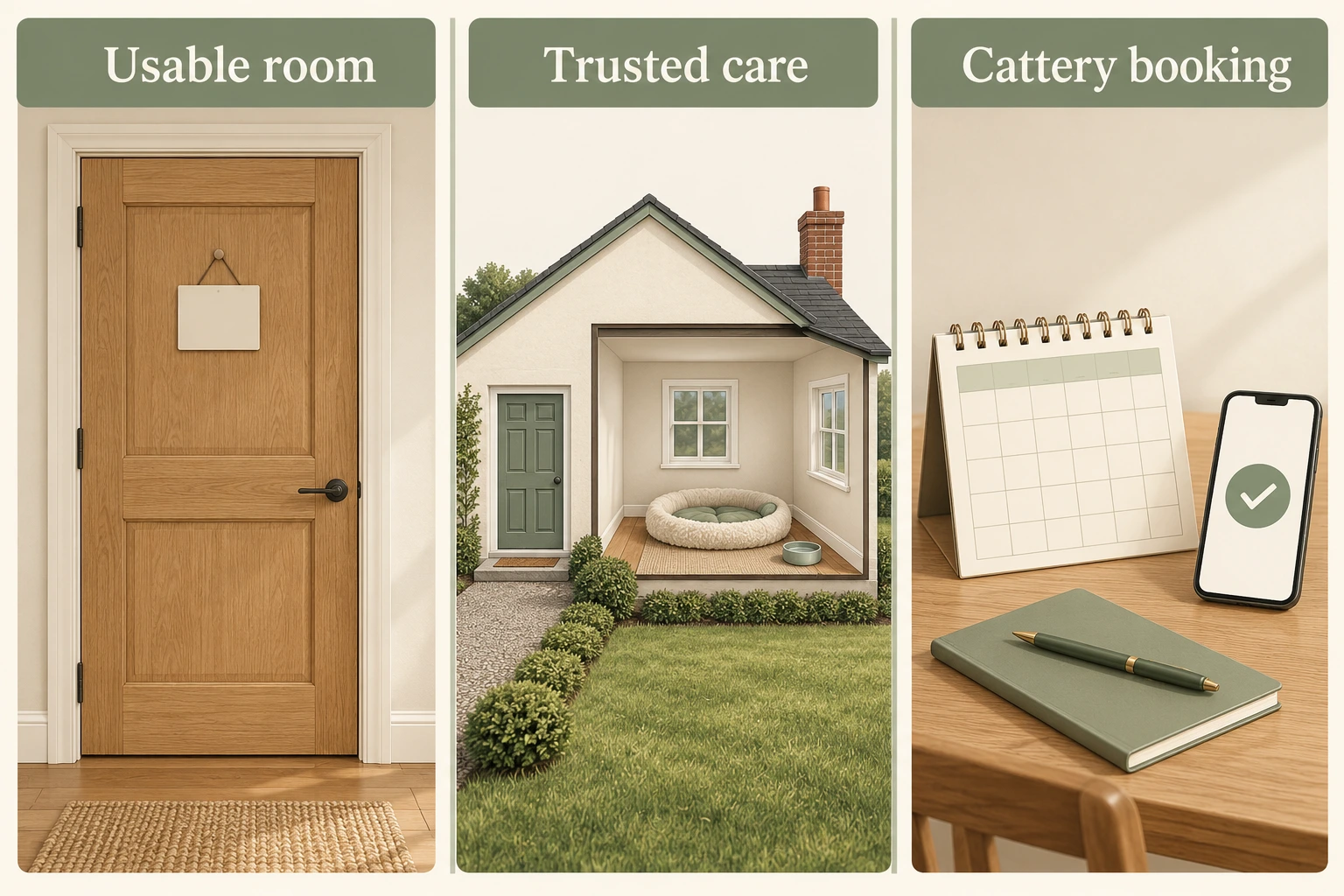
Compare the three arrangements before loading
Confirm the owner, room availability, access route, timing and backup before the first box moves. For temporary care, confirm the receiving person or provider directly and record the handoff plan privately. This article does not rank boarding, trusted care or staying home as universally best.
| Arrangement | Confirm before loading | Stop and choose again when |
|---|---|---|
| Usable on-site room | Door can remain closed; workers do not need it; resources and route are preserved; responsible adult is named. | Door must open, workers need the room, a hazard remains or resources cannot stay available. |
| Trusted temporary care | Trusted person, receiving room, access and backup are confirmed in advance. | The carer cancels, receiving room is not ready or the handoff cannot be completed before loading. |
| Prebooked cattery | Provider, booking, access instructions and required handoff details are confirmed. | Availability or requirements are uncertain; do not assume a place exists. |
Invented completed case: the bathroom is needed
This is an invented household example, not an actual test. The studio bathroom is the only closable room, but workers need it for the move. A trusted carer is confirmed, yet the receiving room is not ready. The arrangement is not ready: the owner reschedules loading or confirms another arrangement before moving the cat. The household does not improvise a curtain, gate, balcony, cupboard or parked car.
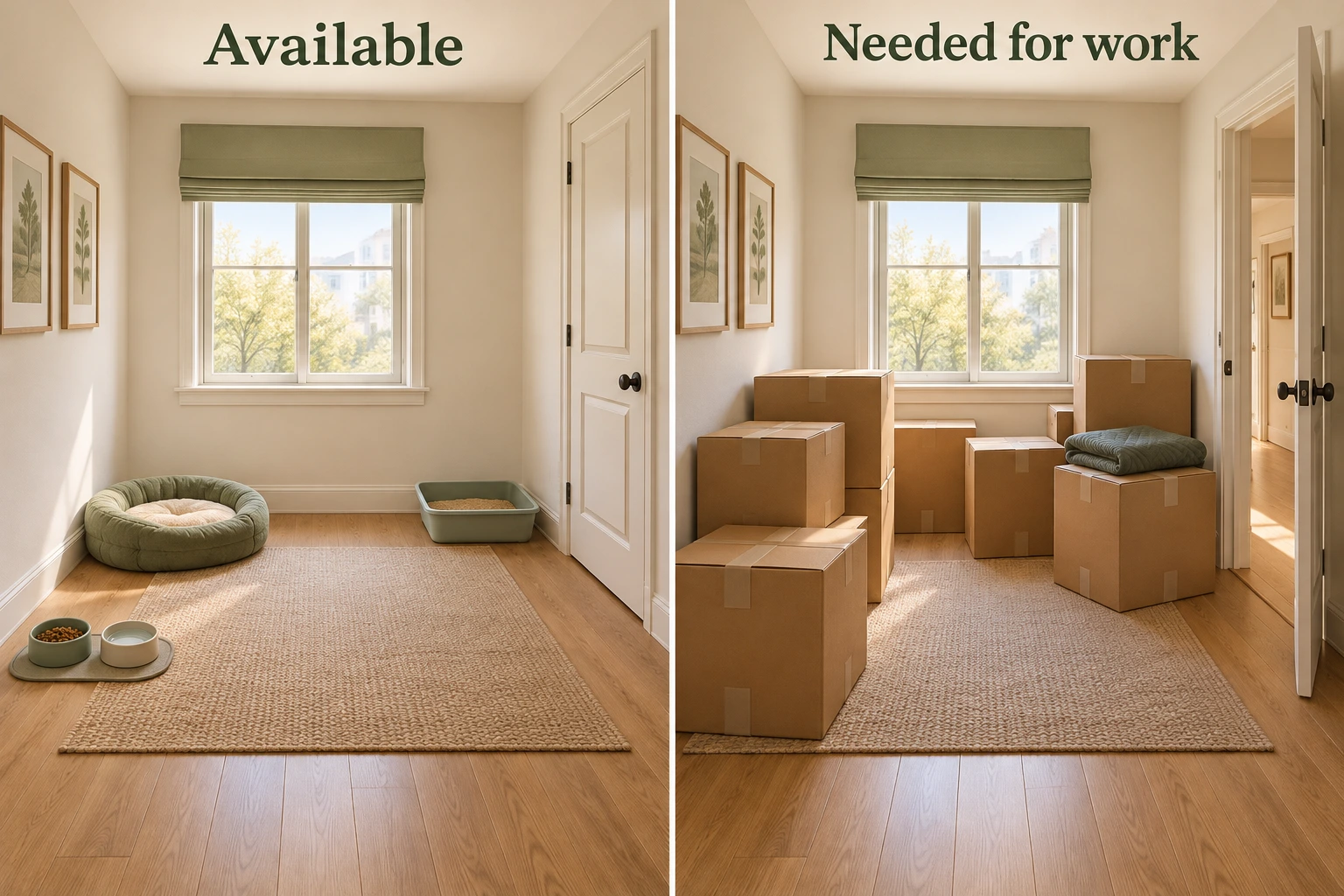
A ready on-site case would require a different concrete record: the chosen room remains closed, workers do not need it, basic resources are available, a responsible adult owns the check, and a backup arrangement is confirmed. Even then, allow the cat to use its familiar retreat and follow individual care or veterinary needs.
Write a short handoff before doors open
| Handoff item | Write the confirmed detail | Decision |
|---|---|---|
| Primary arrangement | Room or carer: __________ Owner: __________ | Confirmed / stop |
| Access and resources | Door, entry route, water, litter and retreat: __________ | Available / resolve first |
| Backup | Person or provider and cancellation plan: __________ | Confirmed / change schedule |
Keep the note with the private handoff details, not in a public post or image. If the only room becomes needed by workers or the confirmed care arrangement falls through, change the human schedule or care arrangement before opening the door. Do not make the cat absorb a last-minute room experiment.
Move and settle as separate decisions
Use the carrier according to its manual and the cat’s individual care plan; this guide is not a vehicle-restraint tutorial and does not set a holding duration. After arrival, choose the quiet home-base room and basic resources before widening access. Our transition-room map covers that settled-room question. The carrier storage guide covers fit and empty-carrier removal access, not transport proof.
Sources and further reading
- ASPCA: Moving With Your Pet — quiet closed-room or trusted-care planning and a home base after arrival.
- Cats Protection: Moving Home With Your Cat — prearranged care, quiet rooms, basic resources and helper door rules.
The matrix, invented case and handoff card are original editorial planning aids. Images are AI concept illustrations, not actual care arrangements, provider designs, transport instructions or guarantees.