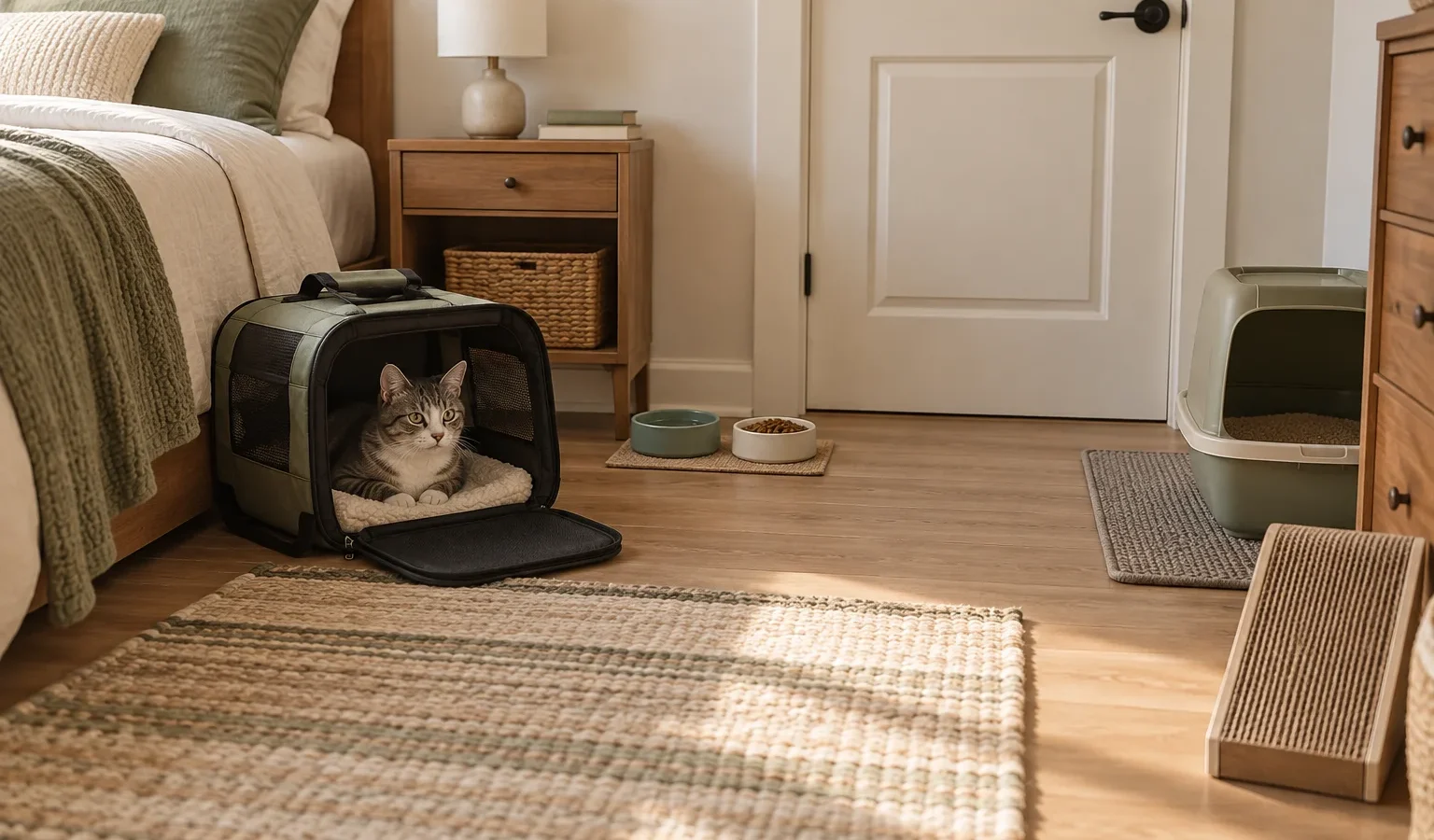
A new cat needs a predictable starting point, even when the apartment is small. A temporary transition room gives the cat a place to retreat while you learn how it uses food, water, litter and resting spots. It also gives you a door you can control when visitors arrive or, if another cat lives there, while introductions happen slowly.
This is a layout and observation guide, not a promise that every cat will settle in a set number of days. FelineVMA’s introduction guidance recommends a quiet transition room with separated resources and a pace set by the cats’ comfort. If the cat is ill, stops eating, or you are concerned about toileting or behavior, contact your veterinarian or adoption organization.
Choose the room before arranging the supplies
The strongest option is a room with a closable door, enough floor area for basic resources, safe ventilation and a quiet corner. A bedroom or spare room may work. A bathroom can work if cleaning products, cords, drains, open toilet lids and access to the door can be controlled. A kitchen, busy entryway or passage used by visitors is harder to keep predictable.
| Apartment option | Best use | Check before choosing |
|---|---|---|
| Small bedroom or spare room with a door | Temporary home base for one new cat | Can the cat reach all resources without crossing a crowded walkway? |
| Bathroom with a door | Short-term starting room when it is the quietest enclosed space | Can hazards be removed and can food, water and litter be placed apart as much as the room permits? |
| Open corner or lightweight divider | Supplementary quiet area for a single cat after supervised access | It is not secure separation from a resident cat or a substitute for a door. |
If a resident cat is already in the home, plan for a real closed-door separation before the newcomer arrives. A baby gate or curtain can be useful at a later introduction stage, but it does not provide the initial closed transition room described by FelineVMA. If your layout cannot support separation, discuss the plan with the rescue or veterinary team before bringing the cat home.
Make a simple four-zone map
You do not need matching furniture. You need four functions that the cat can reach without being cornered: a hide/rest zone, a food zone, a water zone and a litter zone. The FelineVMA environmental-needs sheet recommends safe places and separated key resources. In a small room, give each resource as much distance and visual separation as practical, especially keeping food and water away from the litter area.
- Hide and rest: Leave the carrier open with familiar bedding, plus another sheltered resting option if space allows. Do not pull the cat out to show it the room.
- Food: Use a stable bowl in a calm spot that a person can replenish without reaching into the hide.
- Water: Put a stable water bowl away from litter and cleaning supplies; leave a clear approach.
- Litter: Choose a box the cat can enter comfortably, with room for daily cleaning and no need to squeeze behind furniture.
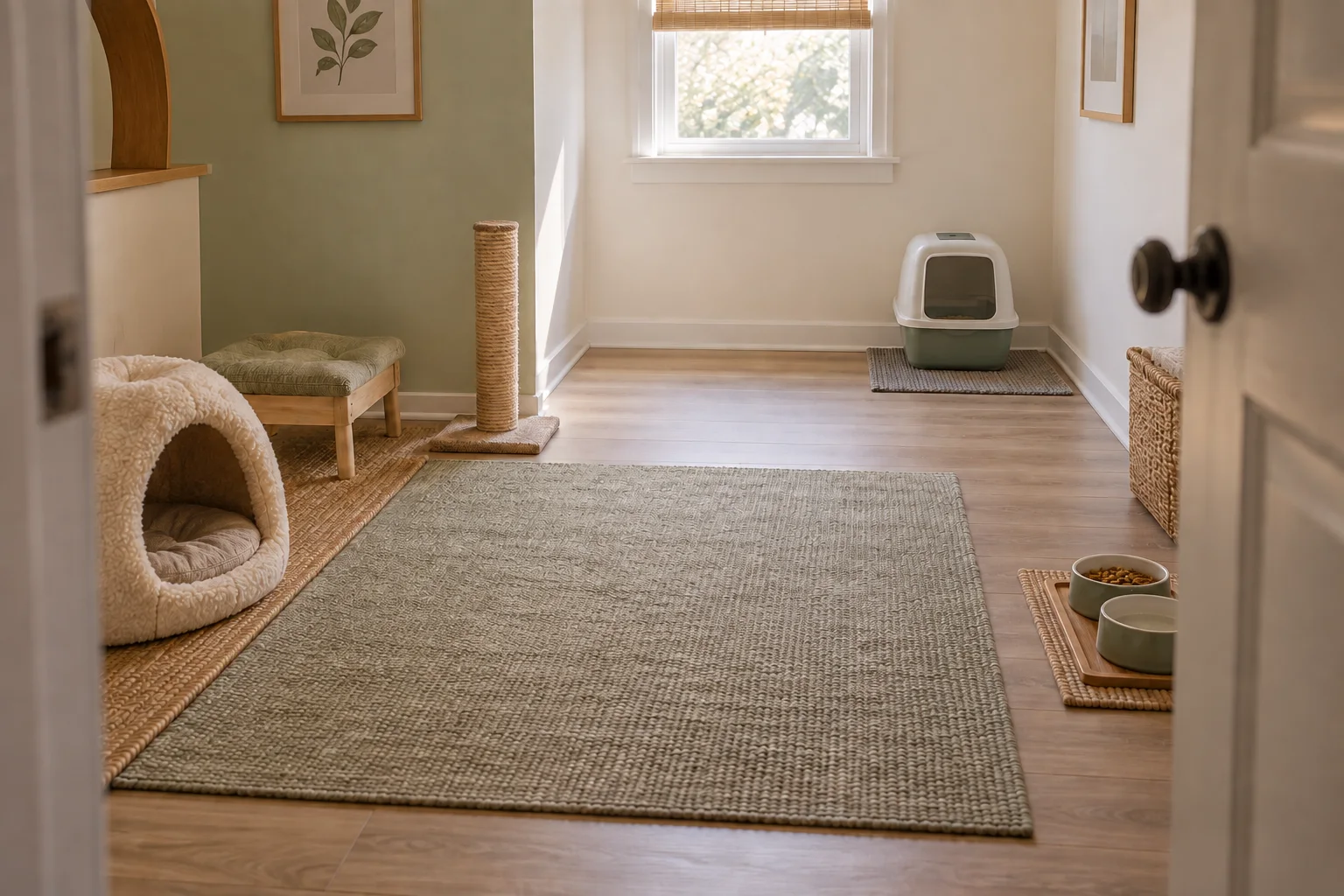
For a more permanent arrangement after the transition, use our cat room planning guide. If the litter area is tight, the small-space litter guide focuses on access and cleaning clearance. Those pages address ongoing room design; this guide covers the temporary arrival phase.
Set a doorway routine before the cat arrives
A useful room stops being useful when a door is opened without checking where the cat is. Agree on one routine for everyone in the household: check that the cat is clear of the swing, enter with supplies ready, close the door behind you, then place bowls or clean litter calmly. Tell visitors which door stays closed. Avoid leaving the transition room open during deliveries, cleaning or furniture moves.
Bring the covered carrier directly into the room and let the cat come out voluntarily. The ASPCA’s moving guidance describes establishing a home base before widening access. Keep the first interactions short and predictable; quiet observation often tells you more than repeated attempts to coax the cat out.
Use behavior, not a calendar, to widen access
There is no single release time that fits every cat. Look for a pattern of ordinary use of the room: the cat chooses to leave the hide, has access to food and water, uses the litter area, and can rest while you are nearby. Some cats explore quickly; others need more time. If the cat remains frightened, back up and make the room quieter rather than forcing a tour.
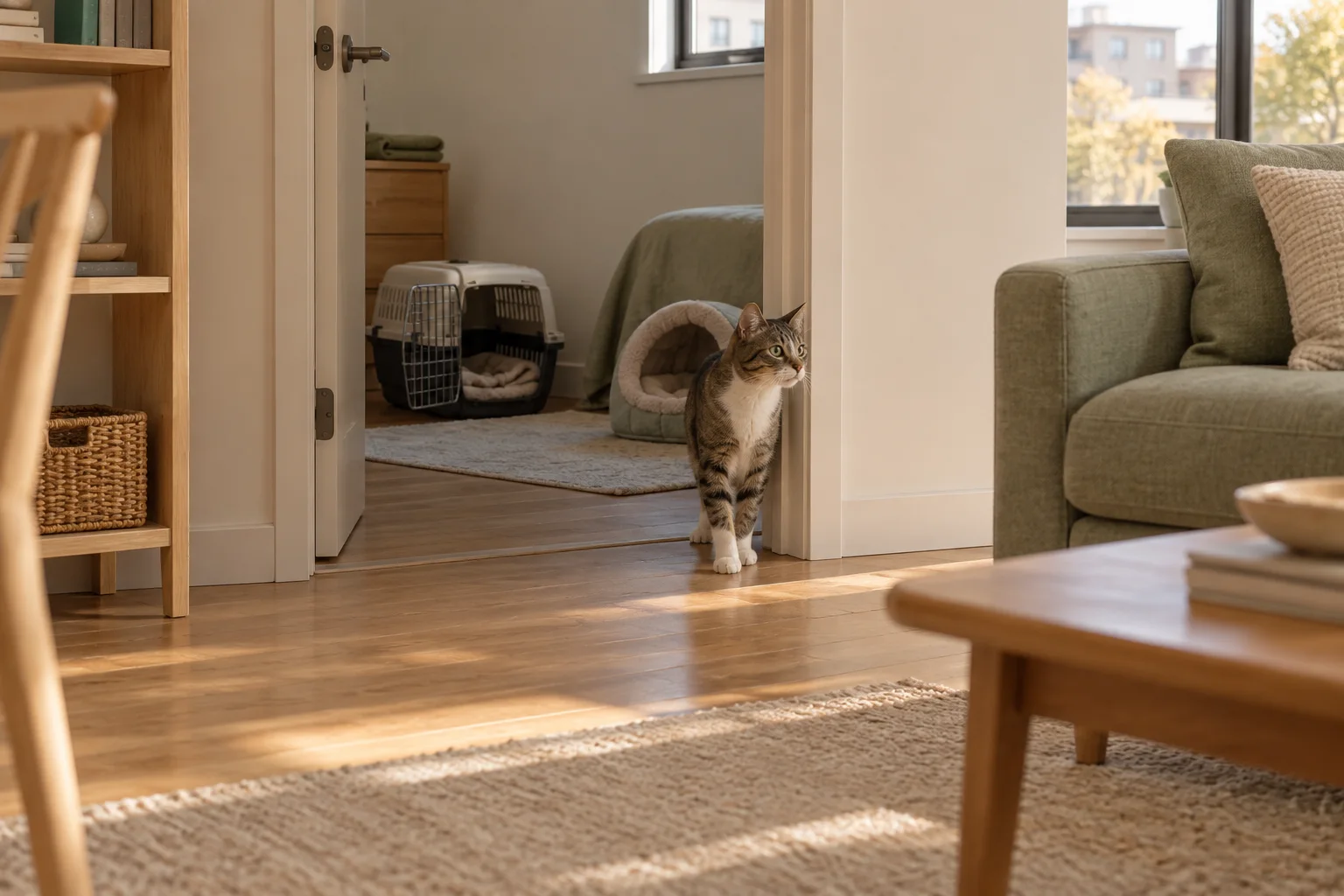
For a cat entering a home without resident cats, offer a short supervised look into one adjacent area while the retreat room stays available. Keep exits, windows and exterior doors secure. Return to the quiet room when the cat chooses to retreat or seems overwhelmed. Expand one area at a time as the cat settles.
If another cat lives here, use a separate introduction plan
A newcomer leaving its room is not the same as meeting the resident cat. FelineVMA describes a staged process: initial separation, scent sharing, play on opposite sides of a closed door, then controlled visual access and supervised proximity only when both cats are comfortable. If either cat shows tension, return to an earlier step. Do not put both cats in a small room and hope they will work it out.
When the newcomer first explores shared space, keep the resident cat comfortably in another closed room. Give each cat access to its own resources so that the doorway, litter box or food bowl does not become a contested point. FelineVMA notes that multi-cat homes need multiple, separated resources. If tension persists, seek veterinary or qualified behavior guidance.
Before the first night: a compact checklist
- A closable, quiet room is selected; everyone knows the door routine.
- Windows, screens, cords, chemicals, plants and narrow gaps have been checked.
- The carrier can stay open as a retreat; no one will force the cat out.
- Food, water, litter and resting areas have clear access and practical separation.
- The resident cat, if any, has its own space and resources behind a separate door.
- Expansion will follow the cat’s observed comfort, not a preset day count.
- The adoption organization or veterinarian is the contact for health, appetite or toileting concerns.
Once the temporary setup is working, you can adapt the wider home with the small-apartment cat room guide. Keep the transition room available until the cat is using the wider space comfortably; a reliable retreat is useful even after the first tour.
During a new-cat transition, use the houseplant checklist to pause on uncertain plant identities and keep the no-plant option available until the room plan is clear.
If you are moving an existing cat rather than introducing a newly adopted cat, first use the studio moving-day arrangement to check whether a room can stay available during loading or temporary care needs to be confirmed.