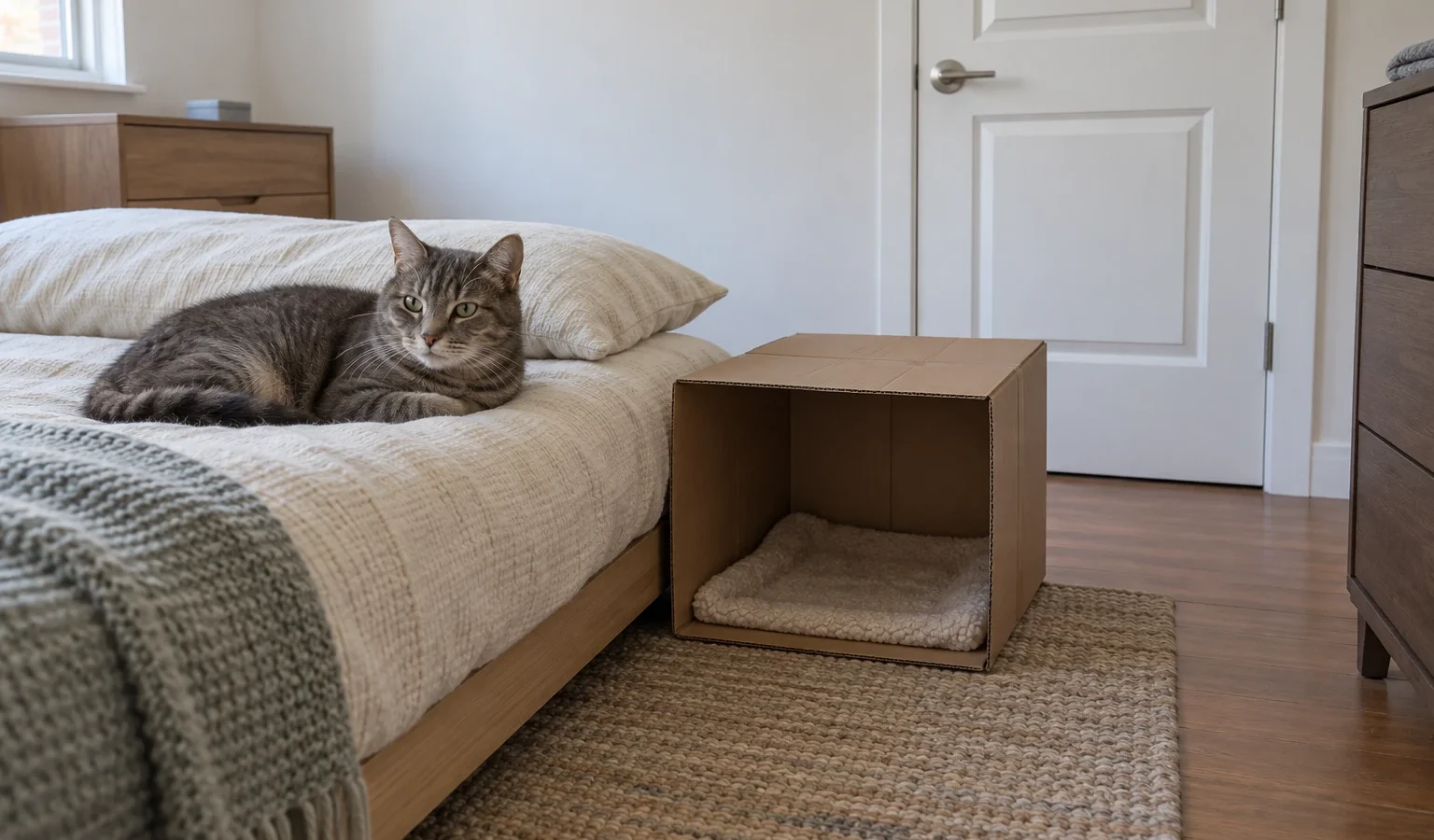
In a small apartment, vacuuming is a route problem before it is a cleaning problem. Decide where the cat can remain undisturbed, which room you will clean first and how food, water, litter and rest access remain available. If the cat is in the room, has hidden in the planned route or cannot reach a refuge, switch the vacuum off and pause. Do not chase a cat out of hiding or force the vacuum toward a refuge.
Cats Protection explains that the vacuum’s sudden noise, size and movement can feel threatening and suggests giving a frightened cat places to hide and keeping the appliance away from its resources when stored. Its guidance also says to stop when a cat appears terrified and seek qualified behavior support when the problem is severe. The broader Cats Protection home-safety guide flags wires and cables as household hazards and recommends supervision around dangers. This article turns those boundaries into an original room plan; it is not a therapy protocol or a veterinary assessment.
Choose the unvacuumed refuge first
Pick a closed room that will not be entered with the running vacuum. Write its door, the cat’s ordinary resources and the person responsible for checking it. The refuge should remain usable while another room is cleaned; do not move the cat’s food, water, litter or resting place into a corridor just to clear a floor. Use the hideaway placement guide to review the room before cleaning day.
Then look at the remaining rooms in the order you will actually use them. A one-bedroom apartment may allow the bedroom to remain closed while the hall and living room are done, then the bedroom can be considered only after the cat is moved to another ready space. In an open-plan studio without a separate appropriate quiet space, omit that room from the route or postpone cleaning and seek individual help; never invent a physical barrier. These are planning examples, not universal layouts.
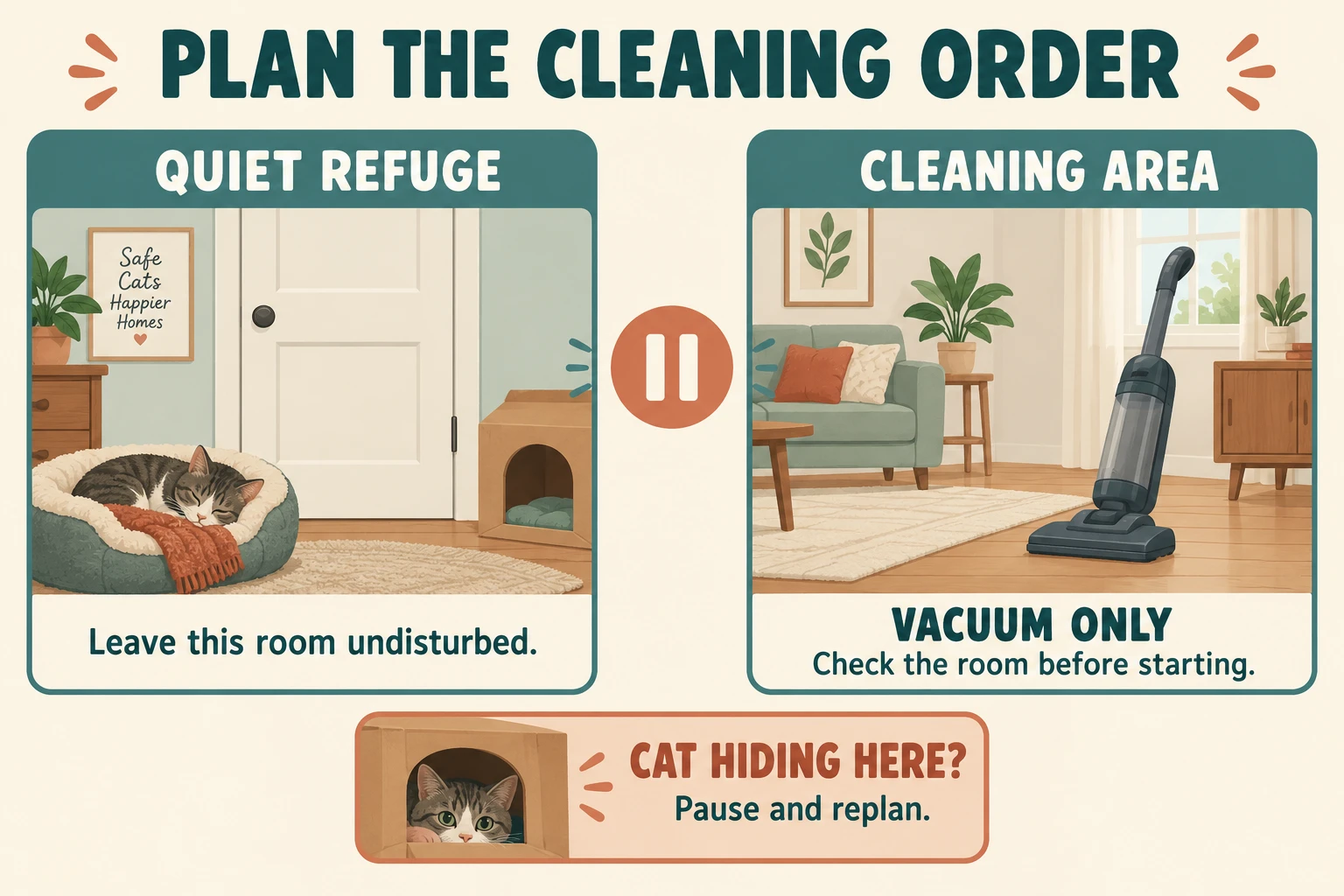
| Room stage | Record before starting | Pause and replan if |
|---|---|---|
| Refuge | Door, resources, hiding place and checker: ___ | The cat cannot remain undisturbed or the door will be opened |
| First room | Entry, exit and next room: ___ | The cat is in the route or the exit is blocked |
| Next room | Alternative route and resource access: ___ | The route crosses the refuge or the cat is hidden there |
| Return | Vacuum storage, cord state and room check: ___ | Loose cord, open appliance or unknown cat location remains |
Use a pause state instead of a chase
Before each room, stop the machine and locate the cat by sight if the route requires it. If the cat is already in that room, switch the vacuum off, leave the machine still and make another ready space available before choosing another room or postponing. If the cat is hidden under furniture or in a refuge, do not reach in, pull it out or vacuum around the hiding place to make it move. Mark that room “not ready,” revise the order and resume only after the cat is settled in the other ready space.
The plan is allowed to end with one room untouched. A clean floor is not a reason to remove a cat’s only safe place. If no room can remain quiet and available, stop the cleaning plan and ask your veterinary team for tailored help rather than inventing a forced exposure routine.
Protect access while rooms change
List the cat’s food, water, litter and rest locations before you move anything. Check whether a closed door, moved chair or stored vacuum interrupts a route to those resources. Keep the unplugged vacuum, cord and attachments away from the cat’s resources when not in use. Do not put the machine in the refuge “temporarily” while the cat is there, and do not treat a carrier, bathroom corner or high perch as a guaranteed substitute without checking the individual room and cat.
When a sitter or another household member will clean, write the room order and pause rule in the sitter handoff checklist. The instruction should be plain: if the cat is in the route or hidden in the next room, stop, switch the vacuum off and contact the named person. This is a household handoff, not a claim that another person can judge the cat’s behavior medically.
Finish with a human-only reset
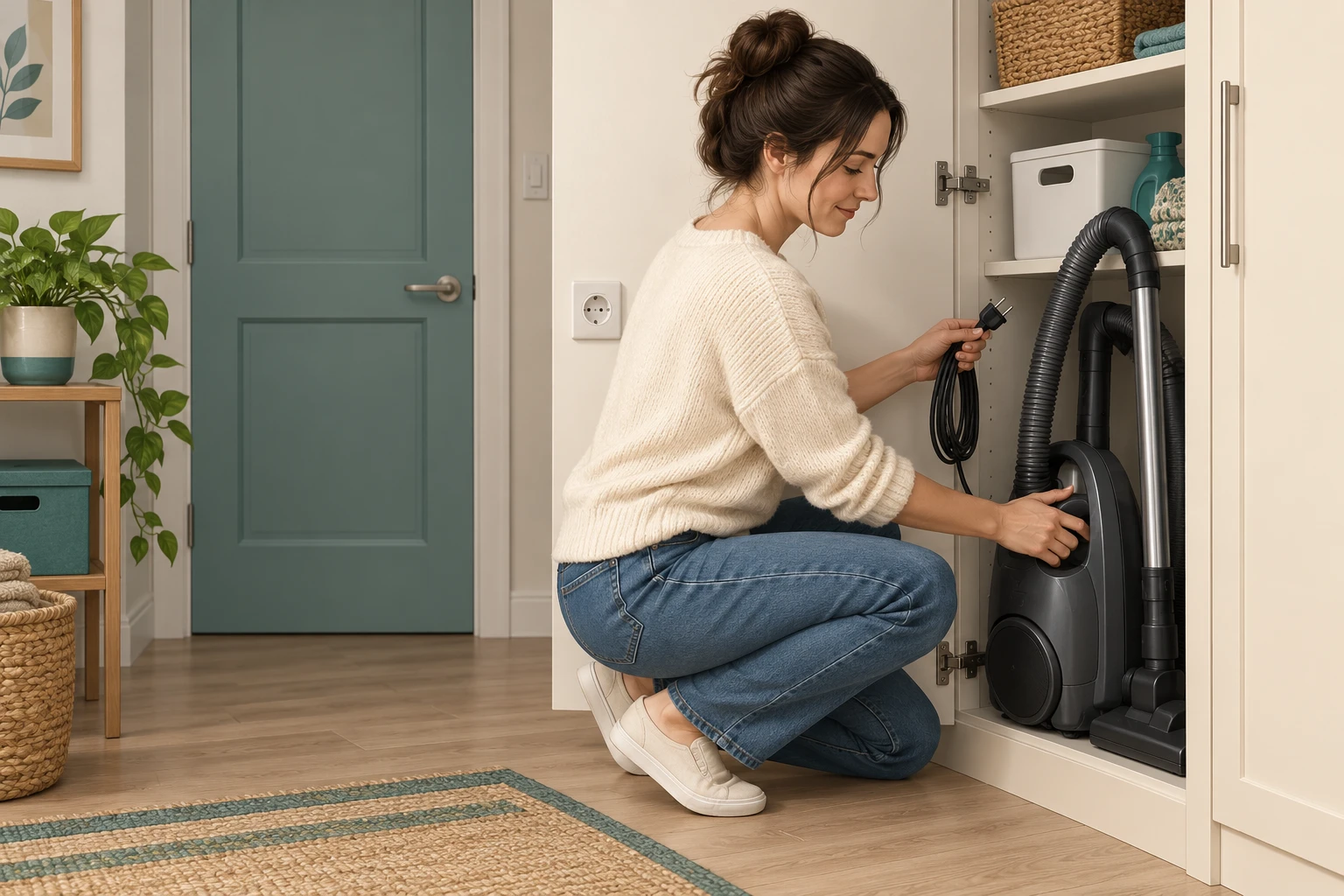
- Switch the vacuum off and unplug it before winding or storing the cord.
- Put the vacuum and attachments in their named storage place, away from food, water, litter and rest locations.
- Check the floor, doorways and furniture edges for loose cord, trapped items or an accidentally closed route.
- Confirm the cat’s refuge door and resources, then restore ordinary room access only when the cat’s location is known.
Use the laundry access checklist if the vacuum is stored near a washer or dryer, and use the cat room planner to mark the refuge and cleaning route. The window perch checklist can help review a separate observation location, but it is not a substitute for a quiet room during vacuuming.
After the vacuum route is complete, use the litter tracking reset plan to inspect the box exit and return the washable mat while the cat keeps a familiar option.
Sources and scope
- Cats Protection: Why are cats scared of vacuum cleaners? — noise, movement, refuge and storage context.
- Cats Protection: Keeping your cat safe in the home — wires, resources and supervision around household hazards.
The room order, pause worksheet and reset sequence are original editorial planning aids. Images are AI-generated illustrative concepts, not tested arrangements, behavior treatment or safety certifications.