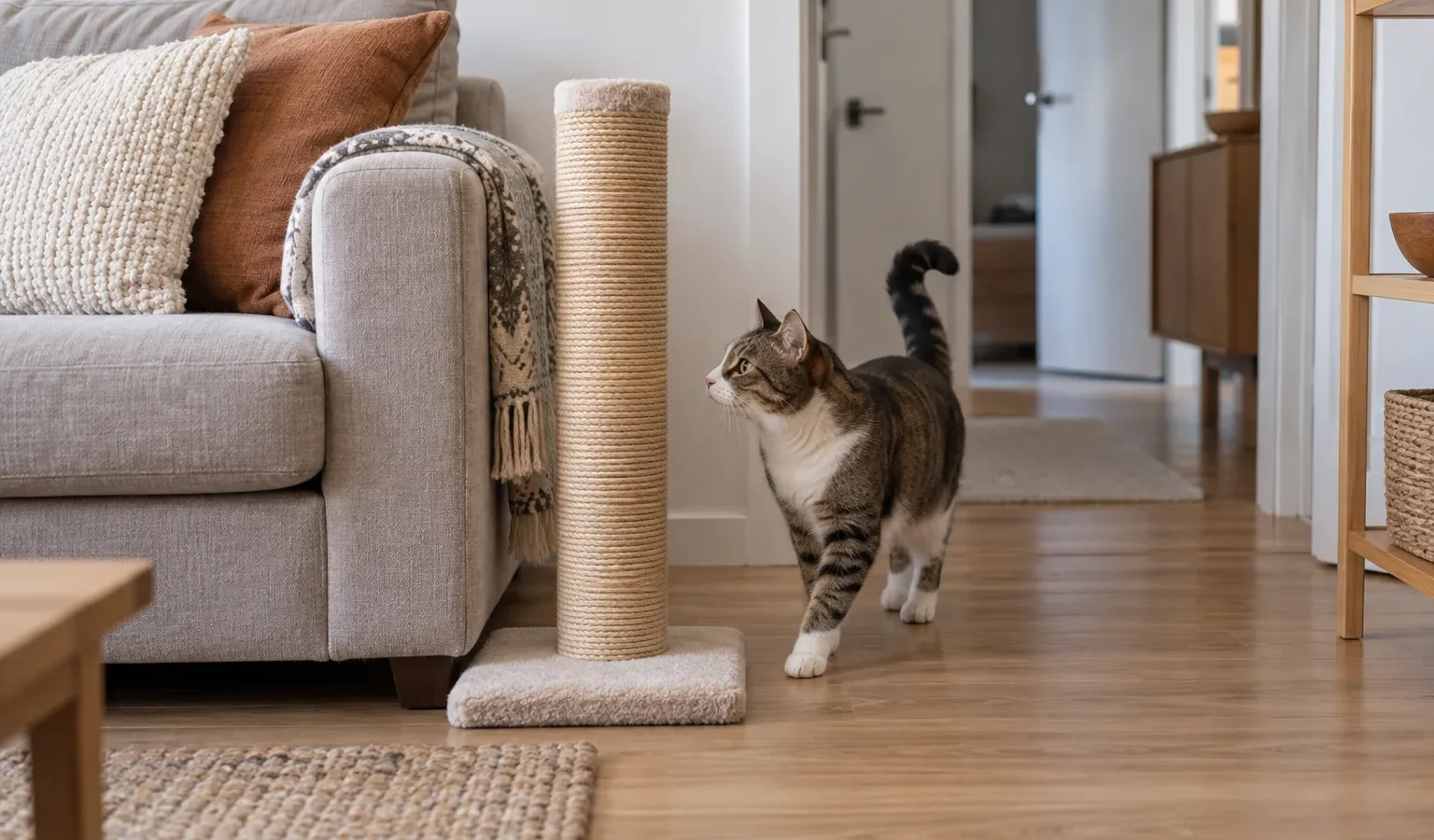
In a small apartment, the best place for a cat scratching post is usually found by watching the room rather than by choosing the emptiest corner. Start with the routes your cat already uses: where it wakes, stretches, rests, approaches a doorway and passes the furniture. Then place the post where it can be seen, reached and used without narrowing the human walkway.
This is a placement and observation guide, not a guarantee that one location will suit every cat. FelineVMA’s scratching resources describe scratching as natural behavior and collect guidance on suitable scratching surfaces and home setups. If scratching changes suddenly or you have a health or behavior concern, contact your veterinarian or a qualified behavior professional.
Begin with the cat’s existing routes
Before moving furniture, note four places for a day or two: the main sleeping spot, the first stretch after waking, the route through the room and the place where scratching already happens. You do not need a formal study or a perfect measurement. A simple floor sketch with arrows is enough to reveal whether the cat uses a doorway, sofa edge, hallway or window route.
| Observed place | What it tells you | First placement idea |
|---|---|---|
| Beside a sleep or nap area | The cat may want to stretch after resting. | Place a suitable post close to the exit from the rest area, with room to approach. |
| Along a daily passage | The route gives the post repeated visibility. | Use the edge of the route without reducing the clear walking width. |
| At a sofa or chair corner | The furniture may offer the texture, height or position the cat prefers. | Put the post beside the target edge and protect the walkway around both objects. |
| Near a doorway or threshold | The cat may scratch at a transition point. | Choose a stable, compact option that does not interfere with the door swing. |
For a broader room plan, see our cat room planning guide. It helps organize resting, feeding and litter functions; this article focuses on the active scratching route that can determine where one piece of furniture belongs.
Use the placement decision map
Work through the questions in order. A “no” does not mean the apartment cannot support a scratching post; it means the proposed spot needs a different form or a nearby alternative.
- Is there a real reason for the cat to pass this spot? Prefer a sleep exit, sofa edge, doorway route or another place the cat already visits.
- Can the cat approach and leave without being cornered? Leave a clear route on the sides the cat is likely to use, and do not press the post into a dead end behind a door or pile of furniture.
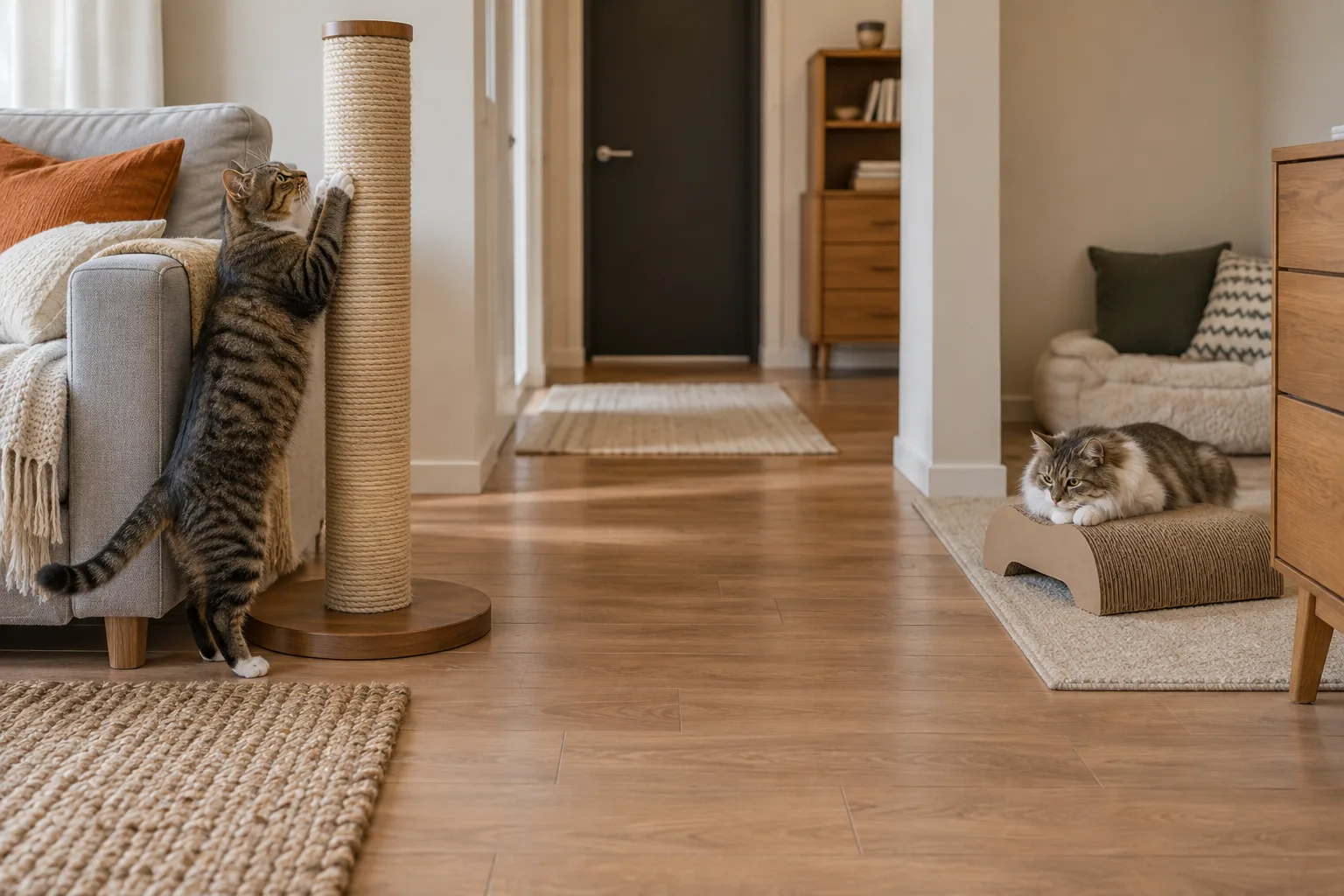
- Does the orientation match the observed action? A cat that reaches upward needs a secure vertical surface; a cat that scratches while crouched may prefer a horizontal or angled surface. Follow the cat’s observed movement rather than room symmetry.
- Will the post stay stable during a full stretch? Check the base, attachment and floor contact. A post that tips or slides is a poor placement even if the location is convenient.
- Can people still use the room normally? Check door swings, narrow passages, cleaning access and the route to essential furniture before keeping the spot.
FelineVMA’s environmental-needs guidance describes safe places, choice and separated resources as parts of a usable home environment. In a small apartment, that means fitting the post into the cat’s choices while preserving the room’s basic circulation.
Match the post to the available surface
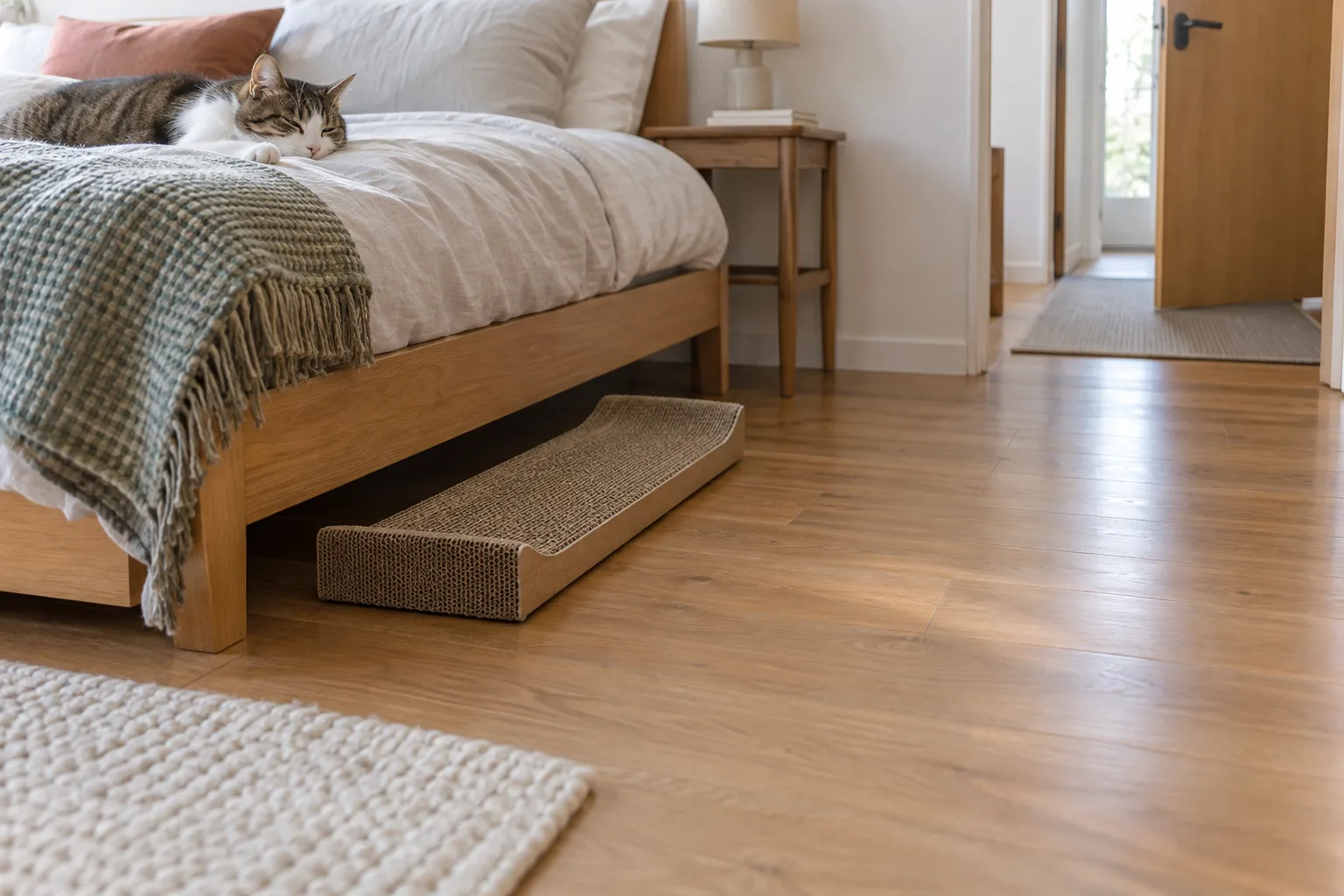
Placement and format should be decided together. A tall post needs a base and overhead clearance that allow a full stretch. A horizontal scratcher needs a floor position where it will not slide into a doorway. An angled scratcher may suit a narrow wall edge, but only if it can be secured and cleaned as directed by its maker.
Keep the proposed post near the place that makes sense, then check the surface itself. Cats Protection’s behavior guide discusses giving cats appropriate scratching options and protecting household furnishings. Use the product’s own instructions for assembly, attachment and maintenance; do not improvise a mounting method because a photograph makes it look simple.
Where a small-apartment post commonly works
Beside, rather than in front of, a sofa corner
A sofa corner can be a useful reference point when the cat already scratches there. Put the post beside the target edge so the cat can choose it without losing the route around the sofa. Keep enough space for a person to pass and for the post to be inspected. Do not block the sofa’s only exit or wedge the post where it can be knocked over.
Near a sleep-to-room transition
A short distance from a bed, blanket or quiet resting place can work when scratching follows a rest period. Keep food, water and litter decisions separate from this active zone. The goal is a reachable stretch point, not a crowded resource cluster.
Along a hallway edge with a clear threshold
A hallway edge can give a compact post repeated visibility. Measure the route with the post in place, including the door swing and the way people carry laundry or supplies. If the remaining passage is tight, move the post to the room side of the threshold or choose a flatter approved format.
When to move it, add another or change the format
Give the location a fair observation period while keeping the household route clear. Look for practical evidence: the cat approaches the post, stretches on it, returns to it, or ignores it while continuing to use a different surface. If the cat uses the sofa edge but ignores a post across the room, first move the post closer to that edge or add a suitable option there. Do not punish scratching or force the cat’s paws onto a surface.
If two cats use different rooms or routes, one post may not serve both. A second, appropriately placed option can reduce the need to cross a contested area. In a shared apartment, coordinate any added furniture with door access, resident-cat separation and cleaning space. Our small cat room guide can help you reserve clear zones before adding another object.
Small-apartment placement checklist
- The post is close to a route, rest exit, doorway or existing target surface.
- The cat can approach, stretch and leave without being trapped or crowded.
- The orientation matches the cat’s observed scratching movement.
- The base or attachment stays stable on the exact floor or wall surface.
- Door swings, walkways, cleaning access and essential furniture remain usable.
- The post is visible enough to be found without placing it in a hazard zone.
- There is a plan to move or supplement it if the cat keeps choosing another surface.
Choose the spot you can keep usable
The most useful scratching-post location is a compromise you can maintain: close to the cat’s real route, matched to the scratching direction, stable under use and easy for everyone to pass. Start with one clear placement, observe what the cat actually chooses, and adjust the location or format without turning the post into a blockage.