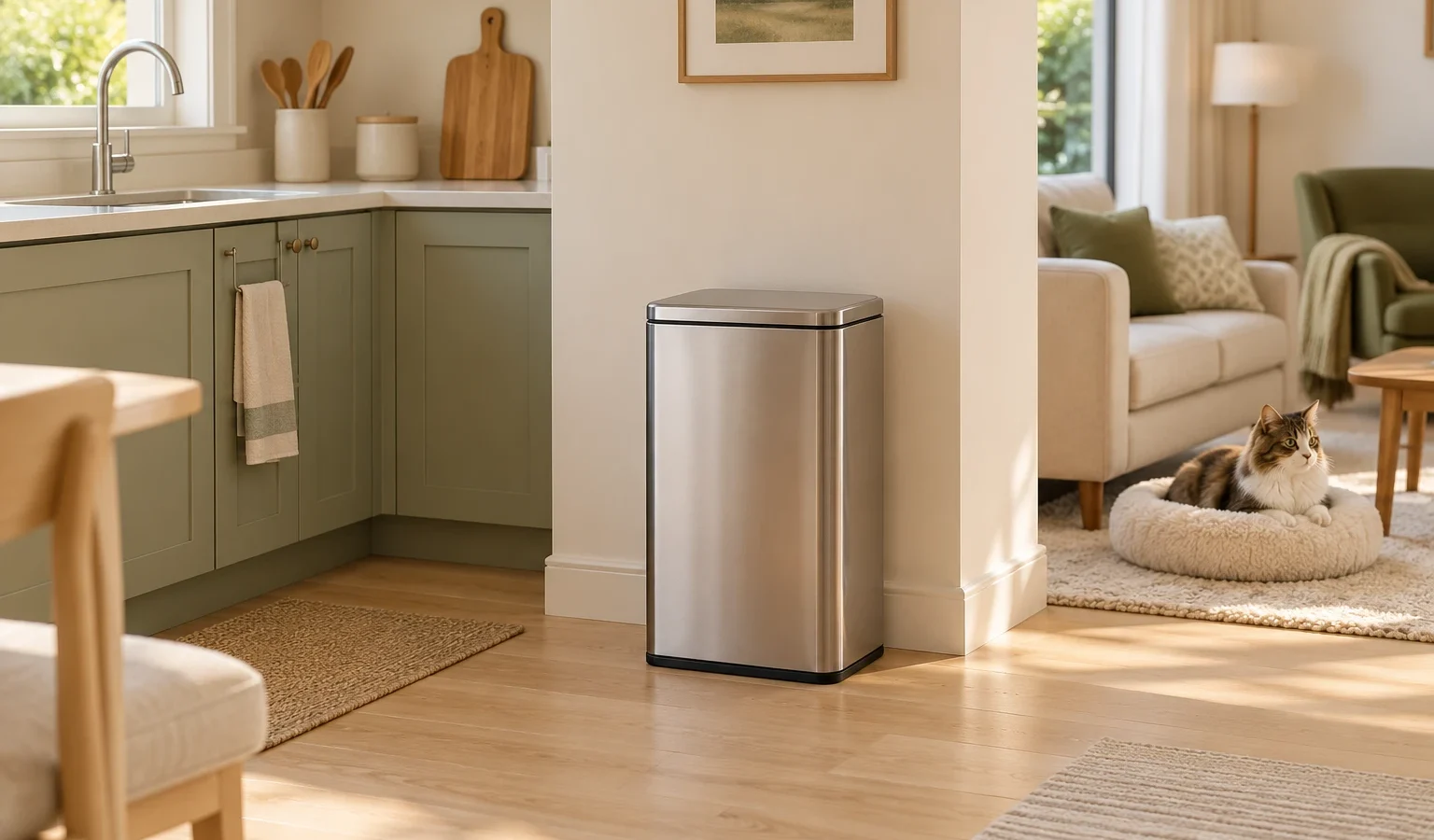
A cat-proof trash-can plan is a route check, not a promise from a lid or product label. Confirm that the bin closes normally, the cat stays separated while a liner is handled, and a full bag can reach its secured destination without leaving food or waste accessible.
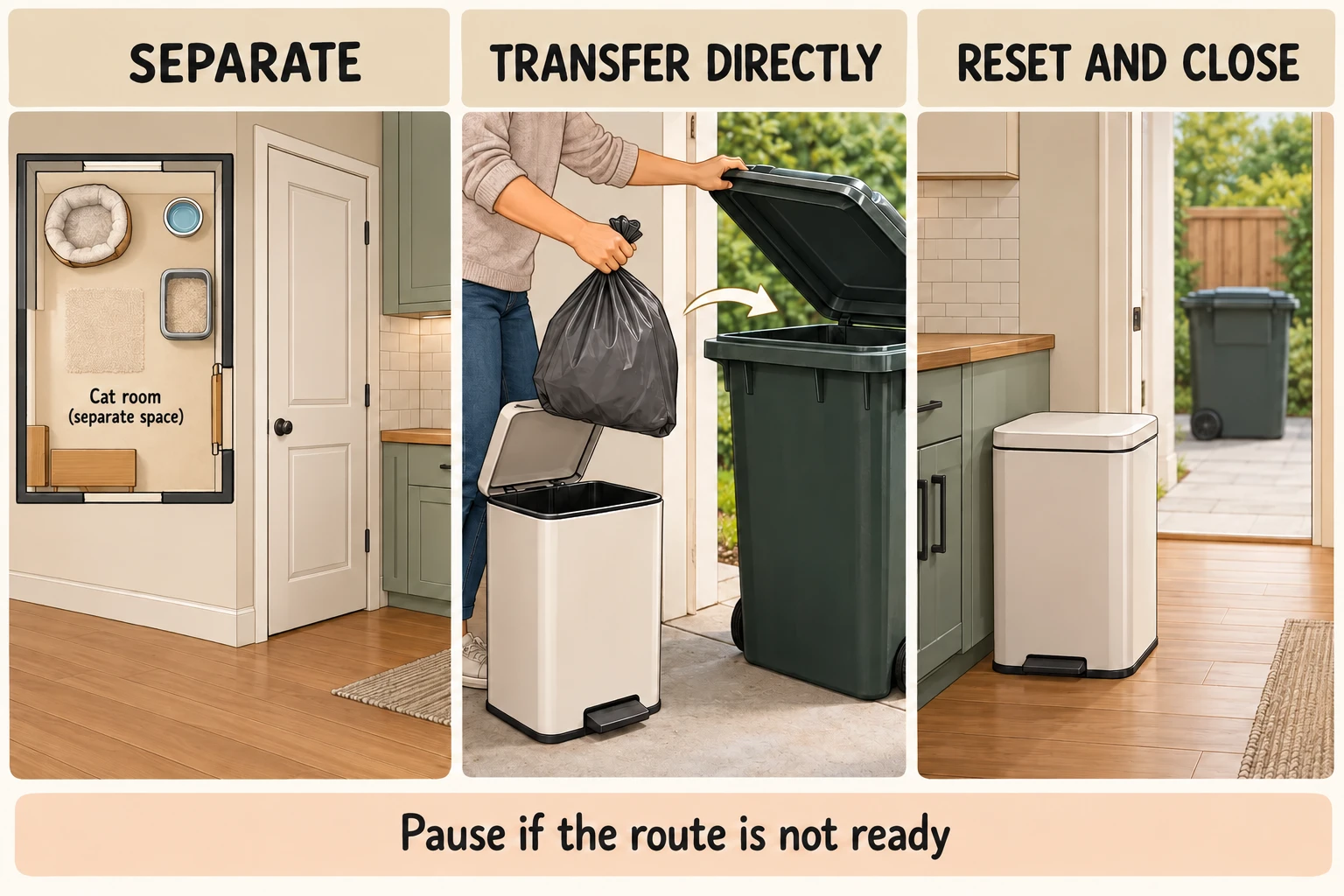
Keep the cat comfortably separated while the bin is open, a liner is handled or cleaning products are out. Leave familiar water, litter and a retreat available. If that arrangement is unworkable, do not begin the bag change; choose a workable alternative instead of arbitrarily confining the cat. The American Humane pet-proofing guidance says to keep trash cans covered or inside a latched cabinet, and keep food and wrappers out of reach. Apply that advice narrowly here; the worksheet below is editorial planning, not a product or cat-safety certification.
Check the closed-use route first
Stand where the bin will actually sit. Can the lid close through its normal operation without touching a cabinet door, wall or nearby item? Is the floor route clear enough to approach, close and leave without stepping around loose waste? Is the destination for a full bag already identified? Do not assume an under-sink cabinet fits a bin or remains clean around a cat. Follow the actual bin and cabinet instructions, and do not force a lid or improvise a repair. Normal lid operation is not a pet-proof claim.
| Route question | Accept only if | Stop or reject when |
|---|---|---|
| Closed use | The lid closes normally and the floor route stays clear. | A door catches, the lid needs force or waste remains exposed. |
| Cleaning | Cleaning products stay in separate secured storage. | A cleaner would be open or reachable in the cat’s area. |
| Cat separation | The cat has familiar water, litter and retreat elsewhere. | Separation is not comfortable or cannot be maintained. |
Make bag change a human-only task
Before opening the bin, confirm the liner is the kind and fit allowed by the bin instructions. A liner that bunches, catches or prevents the lid from closing is a reject for this location. Handle the open bin and any cleaning product while the cat remains separated; never encourage a cat to challenge the lid as a test.
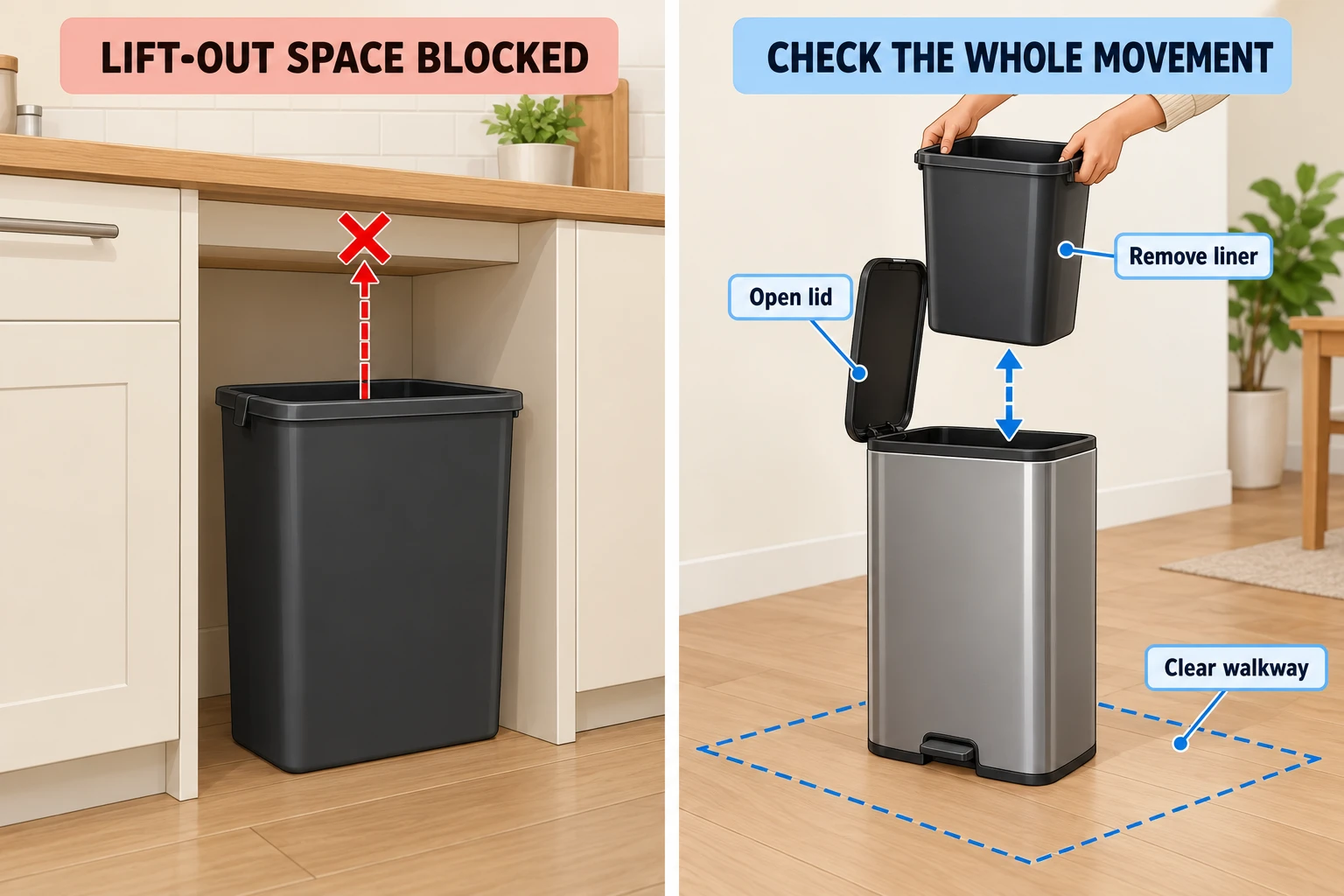
Here is a clearly invented failed-fit example: a full liner cannot lift out of an under-counter bin without catching on the opening. The decision is reject the candidate or relocate it before use. Do not force the bag, improvise a cabinet change or treat the cat as a reason to test the obstruction. The route must work during normal human operation.
Transfer a closed bag directly
Tying a bag does not by itself secure storage. Once it is closed, take it directly to another closed, secured waste point and follow local disposal rules. Do not put the bag on the floor while answering a phone, carrying another item or looking for a destination. If the destination is not ready, stop the transfer and keep the cat separated until a workable route exists.
Keep wrappers and other waste away from the cat, and keep cleaners in separate secured storage. The Cats Protection home-safety guidance is used here only for its household hazard and safe-storage context; follow cleaning-product label guidance.
Use a simple stop decision
| Stage | Record the real answer |
|---|---|
| Closed bin | Lid closes normally; floor and cabinet-door route is clear: __________________ |
| Bag change | Approved liner lifts out without catching; cat has a comfortable retreat elsewhere: __________________ |
| Transfer | Another closed, secured waste point is ready and reachable directly: __________________ |
| Return | Return only when the bin is closed, floor is clear and the cat cannot approach open trash: __________________ |
If any answer is no, do not start or continue the task. Choose a different location or workable alternative after checking its normal instructions. Never add bricks, weights, straps, tape, glue or improvised locks. If you suspect ingestion, call a veterinarian promptly; this worksheet does not provide treatment advice.
For food packaging and dates, see the cat food storage plan. For a holiday clearing route, see the Thanksgiving serving and clearing plan. Those pages address their own scope; neither turns a bin into a pet-proof guarantee.
Sources and further reading
- American Humane: Pet-proofing your home — narrow context for covered or latched cans and keeping food and wrappers out of reach.
- Cats Protection: Keeping your cat safe — narrow household hazard and safe-storage context.
The route table and failed-fit example are original editorial planning aids. Images are AI concepts, not tested layouts, product reviews, measurements or safety certification.