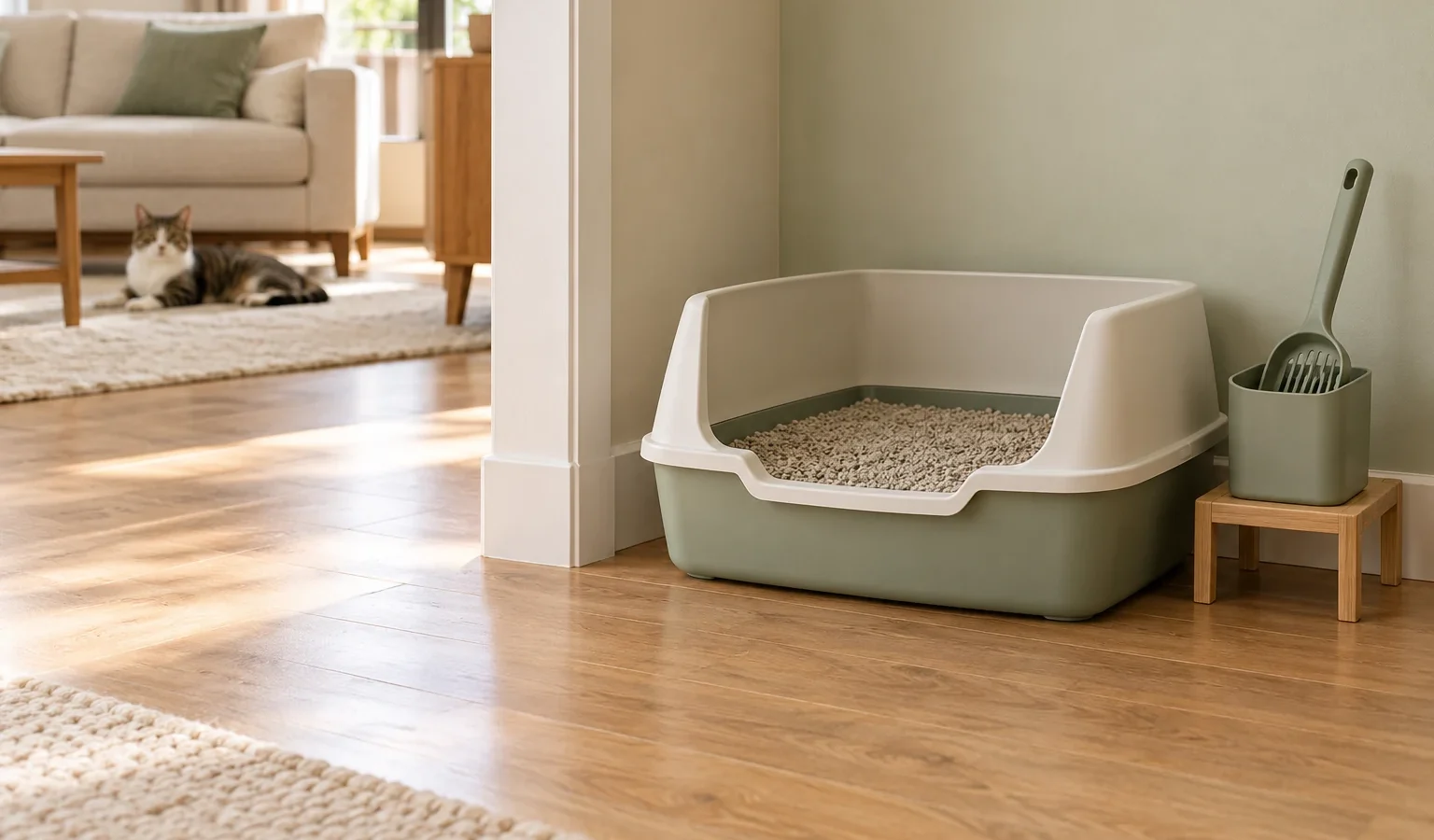
Store a used cat litter scoop in a dedicated, washable holder that stays separate from fresh litter and leaves the cat’s tray route open. Before keeping a spot, check that an adult can lift the full scoop out, inspect the holder and complete its normal care without moving the tray.
The ASPCA general cat-care guidance supports a quiet, accessible litter-box location and scooping solid waste at least daily. The Cats Protection toileting guidance describes removing deposits twice daily or more as needed, quiet accessible trays and regular tray washing. Those sources support the care routine, not a universal scoop-holder design: storage, fit and drying details below are editorial layout guidance. Follow each scoop and holder’s care labels, and do not transfer tray-cleaning chemistry to a scoop unless its own instructions say so.
Separate the used scoop from clean supplies
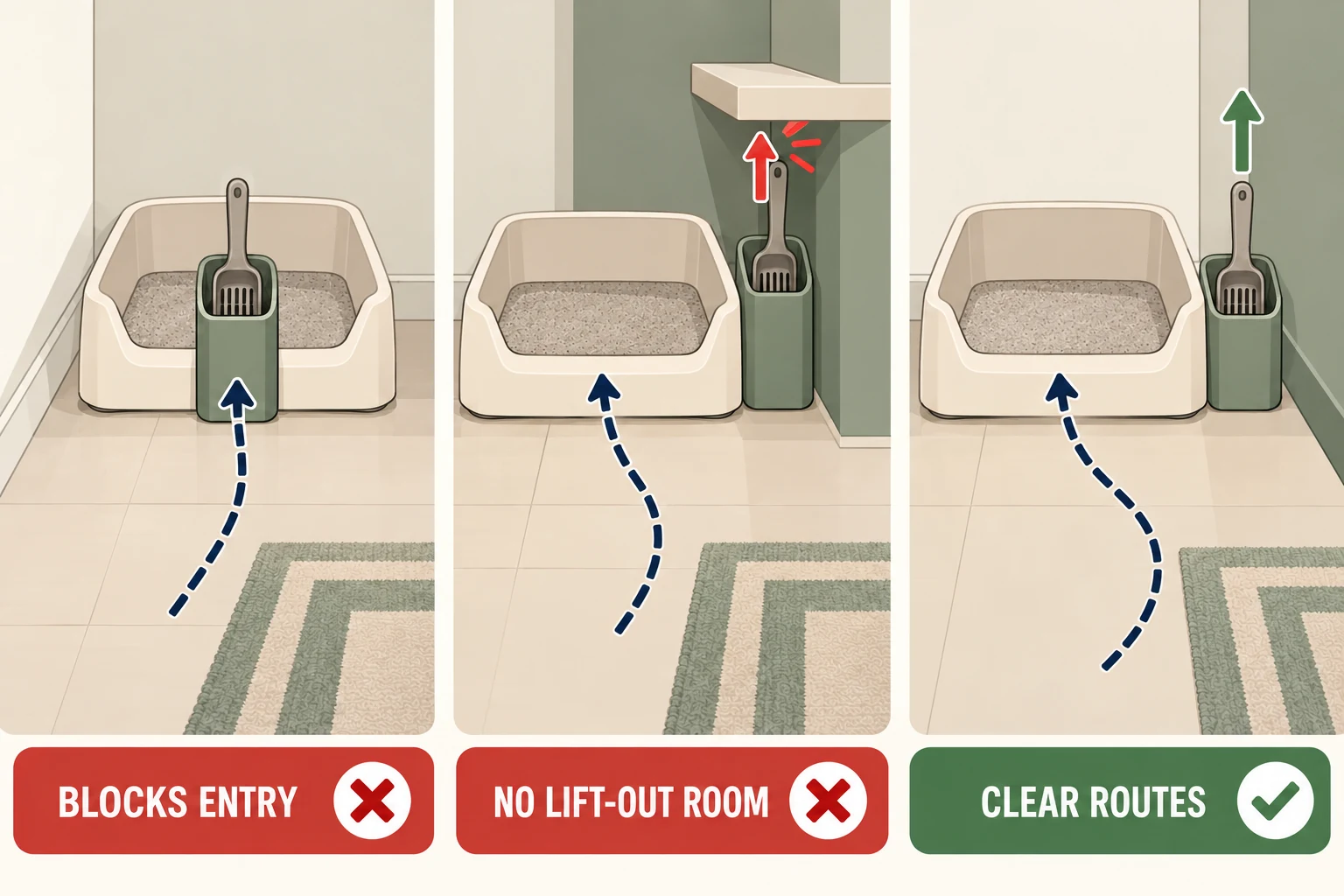
Start by separating the used scoop from fresh litter, refill tools and unused bags. A dedicated holder may be beside the tray or in another suitable location, but the choice must leave the tray route and the adult working reach clear. Do not store a used scoop in a container also used for fresh litter or clean refill tools. A holder can contain contact and drips, but no holder is automatically antimicrobial, disinfecting or sterilizing.
| Option | Keep it only if | Reject or change it when |
|---|---|---|
| Beside the tray | The holder is dedicated, removable and does not narrow entry, exit or routine scooping. | The cat path or the adult’s working reach is blocked. |
| Separate wall or nook | The scoop rests securely, remains inspectable and does not contact clean supplies. | A fall, drip or unreachable corner is likely. |
| Closed waste station | The used tool is contained and the station can be opened, washed and dried normally. | The holder cannot be removed or retrieval is awkward. |
Check full removal and the working route
Test the holder as an adult task, without involving the cat: can the full scoop and handle come out without catching on a wall, cabinet, tray edge or low shelf? Can you return it without moving the tray? Can you inspect the holder’s inside and reach its cleaning surface? These are normal-use checks, not engineering measurements or an invitation to modify a cabinet. Follow the product’s normal operation and do not force a handle, lid or mount.
Plan washing, drying and a dedicated temporary place
A holder must be removable or otherwise inspectable enough for its stated care instructions. While the holder is being handled, use a second dedicated washable catch tray reserved for this used tool, away from food, clean refills and the cat’s path. Do not leave the used scoop on a household counter. Check the care label, let the holder and scoop dry according to their labels, then return them to the dedicated holder. If no suitable second catch tray or dedicated holder is available, pause and choose a compatible dedicated holder rather than using a vague or improvised surface.
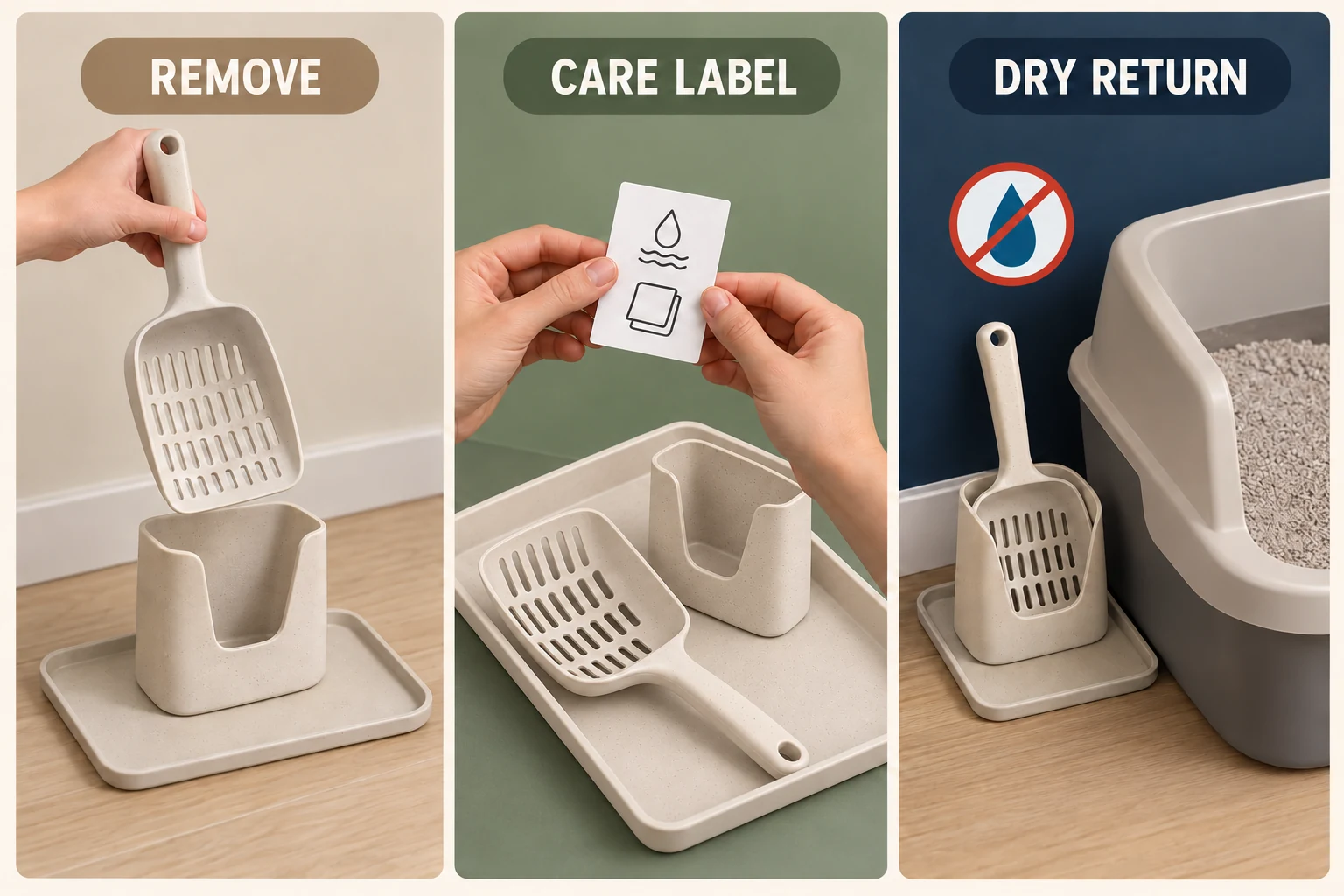
Here is a hypothetical small-room example, not a test: a tray sits in a quiet corner, but the only nearby shelf also holds fresh litter and the holder cannot be lifted out without scraping the wall. Reject that shelf. A separate washable holder just outside the working route is acceptable only if the cat’s tray entry and exit stay clear, the adult can reach it during routine scooping and the used tool remains contained. During any reset, use the second dedicated washable catch tray reserved for this used tool, away from food, clean refills and the cat’s path. If no suitable second catch tray or holder exists, pause and choose a compatible dedicated holder rather than putting the scoop on a household surface.
Return decision
| Question | Record the real answer |
|---|---|
| Dedicated | Used scoop has a separate washable holder, apart from fresh-litter tools: __________________ |
| Clearance | Full scoop and handle lift out and return through normal operation: __________________ |
| Access | Cat entry, exit and adult working reach remain clear: __________________ |
| Reset | Holder is removable or inspectable and has a label-compatible wash/dry route; second catch tray is ready if needed: __________________ |
If any answer is no, do not settle on that location. Choose a compatible alternative without improvising installation or care chemistry. If a cat’s toileting behavior changes or the tray becomes difficult to use, contact a veterinarian rather than diagnosing the cause from this storage guide.
Use small-space litter-box layout ideas for the tray’s wider access plan, hidden-tray access and ventilation checks for enclosure decisions, and the tracking exit-to-cleanup plan for the separate floor-reset question.
Sources and further reading
- ASPCA: General Cat Care — quiet accessible tray placement, daily scooping and tray-care context.
- Cats Protection: Toileting — deposit-removal frequency, quiet accessible trays and regular tray washing.
The placement table and small-room example are original editorial planning aids. Images are AI concepts, not tested layouts, hygiene findings, installation instructions or product guarantees.