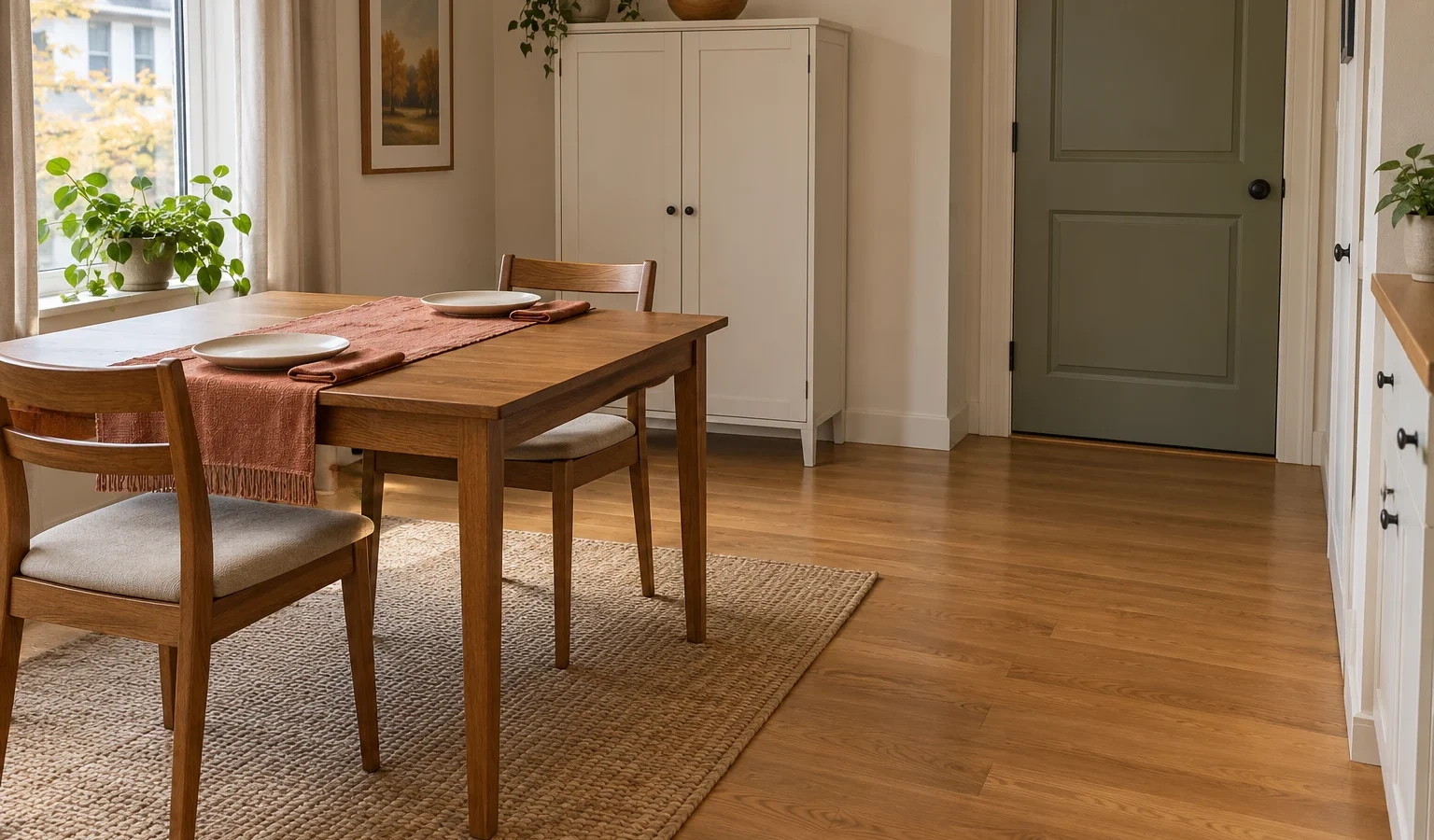
Thanksgiving changes a small apartment for a few hours: a table becomes a serving surface, chairs narrow the walking route, guest bags arrive, and plates or hot dishes move through the same room where a cat normally rests or drinks. A useful plan records those changes as room states so one person knows when to pause, secure an item or keep the cat’s normal resources available.
This is an apartment planning worksheet, not nutrition or veterinary advice. Keep the cat’s usual care routine and ask a veterinary professional for help when illness, suspected ingestion or a cat’s comfort is a concern. The ASPCA Thanksgiving guidance describes the holiday as hectic and warns about unsafe ingredients, bones and raw dough. The Cats Protection home guidance supports accessible essential resources and places where a cat can retreat. Use those principles while checking the real room.
Map the shared room before serving begins
Before preparation, serving or clearing starts, keep the cat physically separated from the meal and the clearing route while its familiar water, litter and retreat remain accessible in the agreed arrangement. Watching the cat, moving food to a high surface or covering a table does not replace physical separation or secured storage. If that arrangement cannot keep the cat comfortable and its essential resources reachable, make an alternative plan before visitors arrive and seek veterinary guidance when needed.
Draw the room as it will actually be used, with the table extended, chairs pulled out and the normal cat route visible. Mark four separate jobs: the cat’s resource area, the serving surface, the clearing route and the secured storage or waste point. The point is separation in the real home. A plate on a high surface, a table cover or a bag placed off the floor is not a containment plan by itself.
Keep fresh water and the cat’s familiar retreat available. If the meal makes that impossible, arrange an alternative beforehand rather than forcing the cat into a crowded room or an unfamiliar confinement. The cat room planning guide can help map the ordinary zones, while the hideaway placement guide can help identify a retreat.
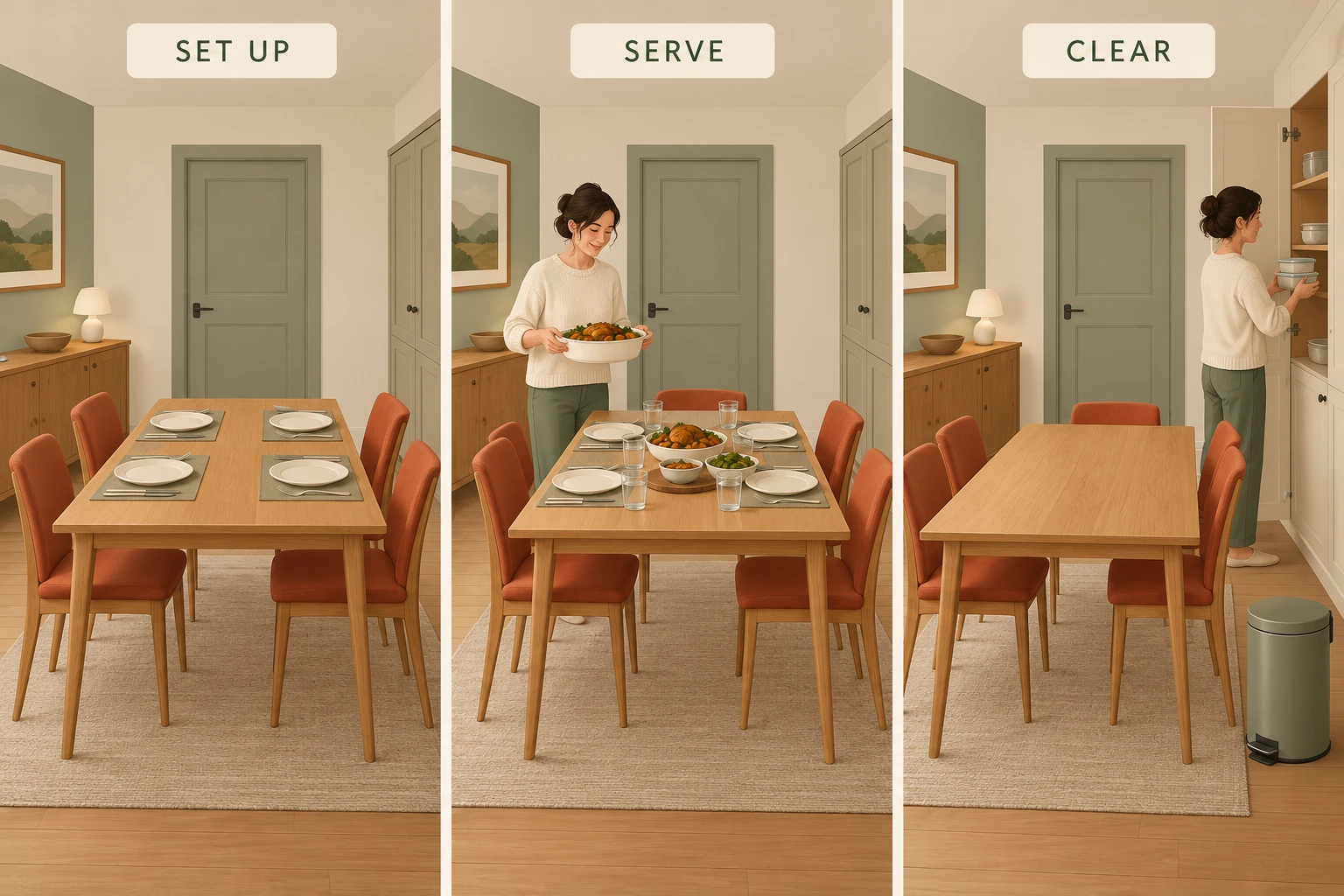
Give the meal one responsible pause point
Name one adult who can pause the operation when hands are full or attention shifts. This person does not need to supervise every guest; they need authority to stop serving, move an item into secured storage or keep the cat’s access unchanged while another task is finished. Tell guests where bags, coats and personal items belong before plates leave the kitchen.
| State | Person and action | Pause when |
|---|---|---|
| Before serving | Responsible adult checks cat resources, table route, guest-bag storage and closed storage: ________ | A resource is blocked or an item has no secured destination. |
| Serving | Server keeps hot food and human meal items within the agreed serving area; adult watches the pause point: ________ | Food, a plate, wrapper or guest bag is unattended in an accessible area. |
| Clearing | Clearing person carries dishes and scraps along the planned route to secured storage or waste: ________ | Hands are full, a bag is open or the destination is not ready. |
The table is a handoff record, not a claim that a named person can make an accessible item safe by watching it. If the responsible adult leaves, assign another adult before the next dish moves. If no one can take that role, pause the meal operation and secure the items first.
Keep guest bags and meal waste in a real storage state
Set a closed room, closed cupboard or other physically secured destination for guest bags and coats before visitors arrive. A bag beside a chair can contain medication, wrappers or small belongings that the cat should not investigate. Keep it away from the cat by an agreed closed boundary, and tell guests not to leave it in the serving or clearing route. Before opening the shared room, put every guest bag and meal item into its secured destination; keep the serving and clearing route free of accessible food and belongings.
Use the same discipline for leftovers, bones, wrappers, cooking string and the waste container. Secure each item in the actual home before restoring access. The cat food storage plan covers the cat’s own food labels and containers; it does not replace a Thanksgiving leftover and guest-bag check. Follow the ASPCA’s default of keeping the cat on its normal diet, and do not offer human food unless a veterinary professional who knows the cat has advised it.
Run the clearing route while the room is still changed
Clearing is a separate state from serving. Keep the cat’s normal area separated while one person gathers plates and another checks the floor, chair edges and guest-bag point. Carry waste to a secured container before moving on to the next task. If the container is full, open or inaccessible, stop and choose a secure temporary destination. Do not leave a tied bag in a route the cat can reach simply because the kitchen needs to be used.
| Check | Record | Return condition |
|---|---|---|
| Serving surface | Plates, hot dishes, wrappers and utensils removed: ________ | No meal item remains in an accessible cat route. |
| Guest belongings | Bags, coats and small personal items returned to secured place: ________ | No open bag or loose item remains in the shared room. |
| Waste and leftovers | Food scraps, bones, string and trash secured or removed: ________ | Waste destination is closed and the floor route is checked. |
If the household must keep cooking or serving, leave the cat’s access arrangement unchanged until the clearing state is complete. The feeding-station layout plan can help you preserve the ordinary water and feeding route around moved chairs; it does not turn a holiday dining area into a feeding station.
Check the room before normal cat access returns
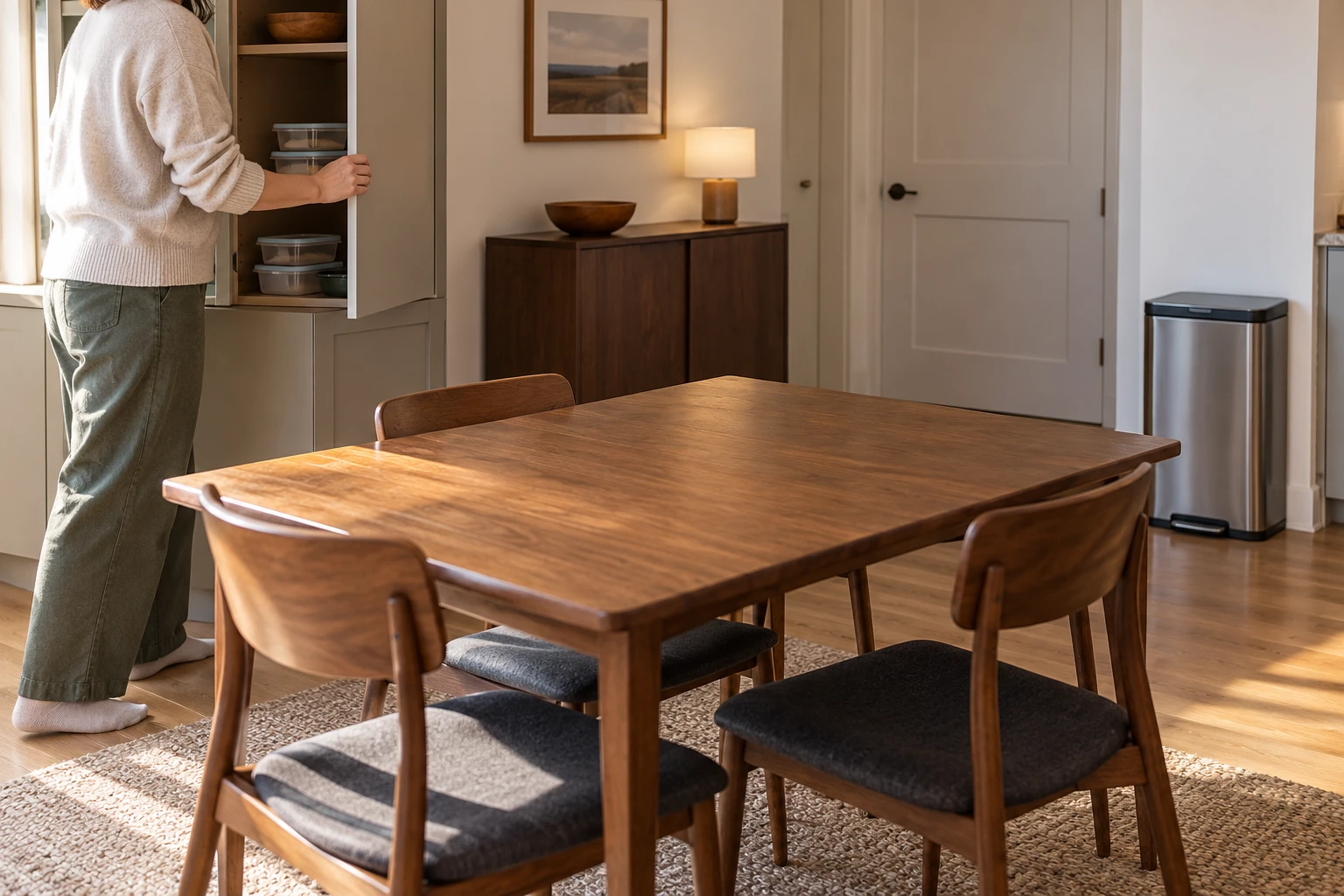
Before opening the boundary that kept the cat away from the meal, complete one final walk-through. Confirm that the table and counters are cleared, guest bags are secured, leftovers and waste are closed or removed, and the cat’s water, food and retreat are reachable. If an item is missing, a door was opened unexpectedly or a resource cannot be restored, keep the arrangement paused and resolve the unknown. Do not force the cat into a room that still has active meal work.
For another person’s handoff, the cat-sitter checklist can hold the responsible adult, resource locations and return condition. A normal holiday meal can be recorded without changing the cat’s feeding plan; the goal is to make the temporary human activity visible and reversible.
Sources and further reading
- ASPCA: Thanksgiving Safety Tips — holiday activity and food-hazard context; this guide adds no portions or treatment advice.
- Cats Protection: How to create a cat-friendly home — accessible essential resources and cat choice in the home.
The tables and room-state records are original editorial planning aids. Images are AI-generated concepts, not tested layouts, containment systems, food-safety assessments or veterinary advice.