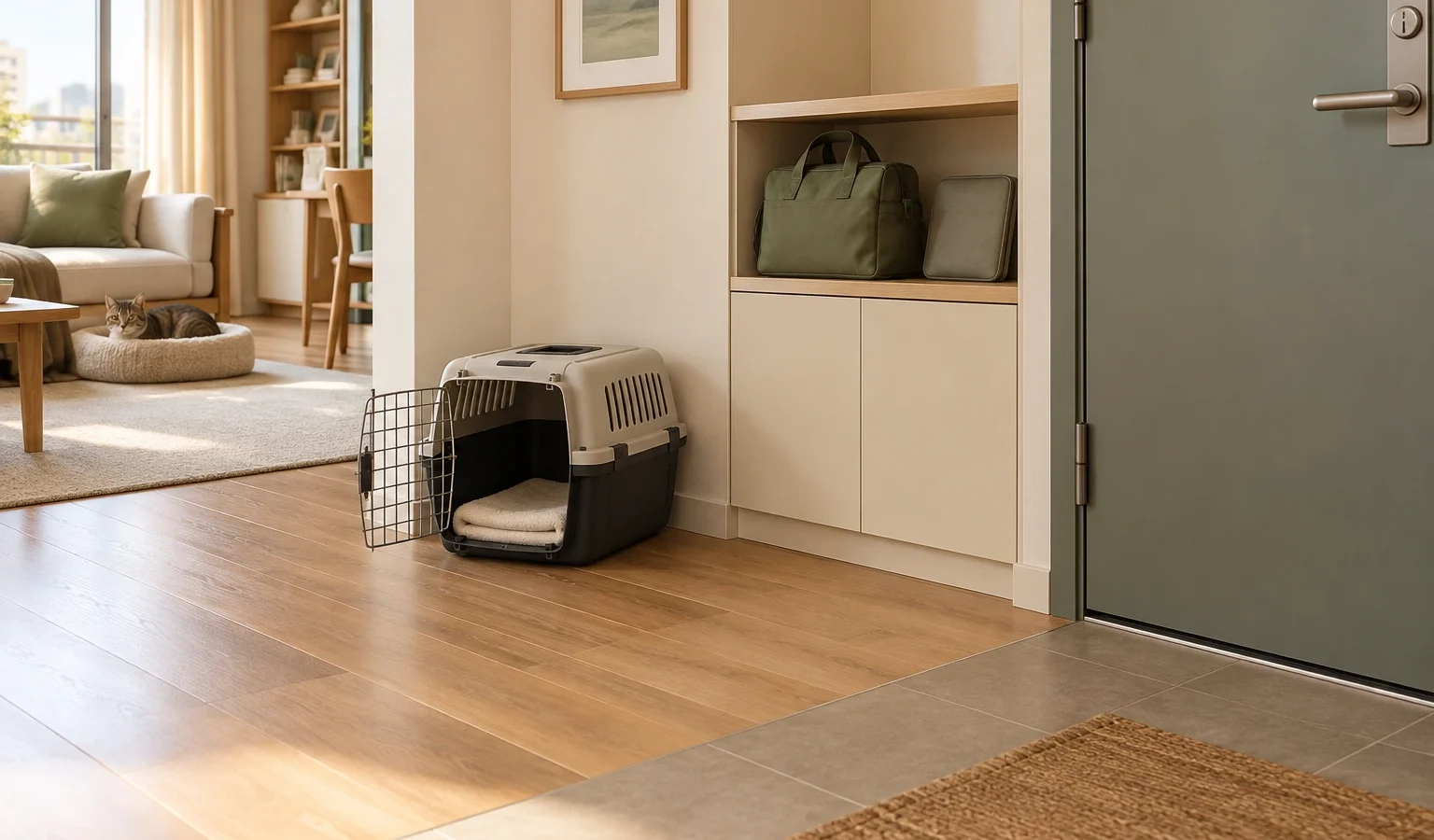
A small apartment does not need a larger floor plan to make a cat emergency kit easier to find. It needs a clear readiness map: where the packed container lives, where the carrier lives, which items cannot share that location, and what each item’s current status is. The map should show what can be picked up and what still needs attention without pretending that an incomplete kit has been tested.
This is preparation planning, not an emergency procedure or veterinary guidance. The ASPCA disaster-preparedness guidance supports clearly identified, easy-to-carry supplies, household awareness, useful categories, rotation and following local official directions. The Cats Protection first-aid guidance says to contact a vet promptly and seek qualified advice before treatment. A checklist must never delay evacuation or justify re-entering an unsafe building.
Start with one accessible storage cluster
Choose one ordinary place inside the apartment where the main kit can stay closed, labelled and easy to carry. An entry cupboard may work; a low shelf near the normal departure route may work; the right answer depends on the real room. Keep the carrier in the same general cluster when feasible, while preserving its fit, access and ventilation. Our carrier storage guide covers that everyday placement question.
Do not intentionally scatter the kit across drawers just to make it fit. A single accessible cluster reduces the places to remember. It must not block the apartment door or exits, crowd the cat’s water, litter or retreat, or create an obstruction. Follow each label and storage direction. Do not reduce professionally required full supplies to fit a smaller bag. Decide the full supply set with local official guidance and your veterinary professional before choosing storage. Missing, borrowed or unavailable separate items mean the kit is not fully ready.
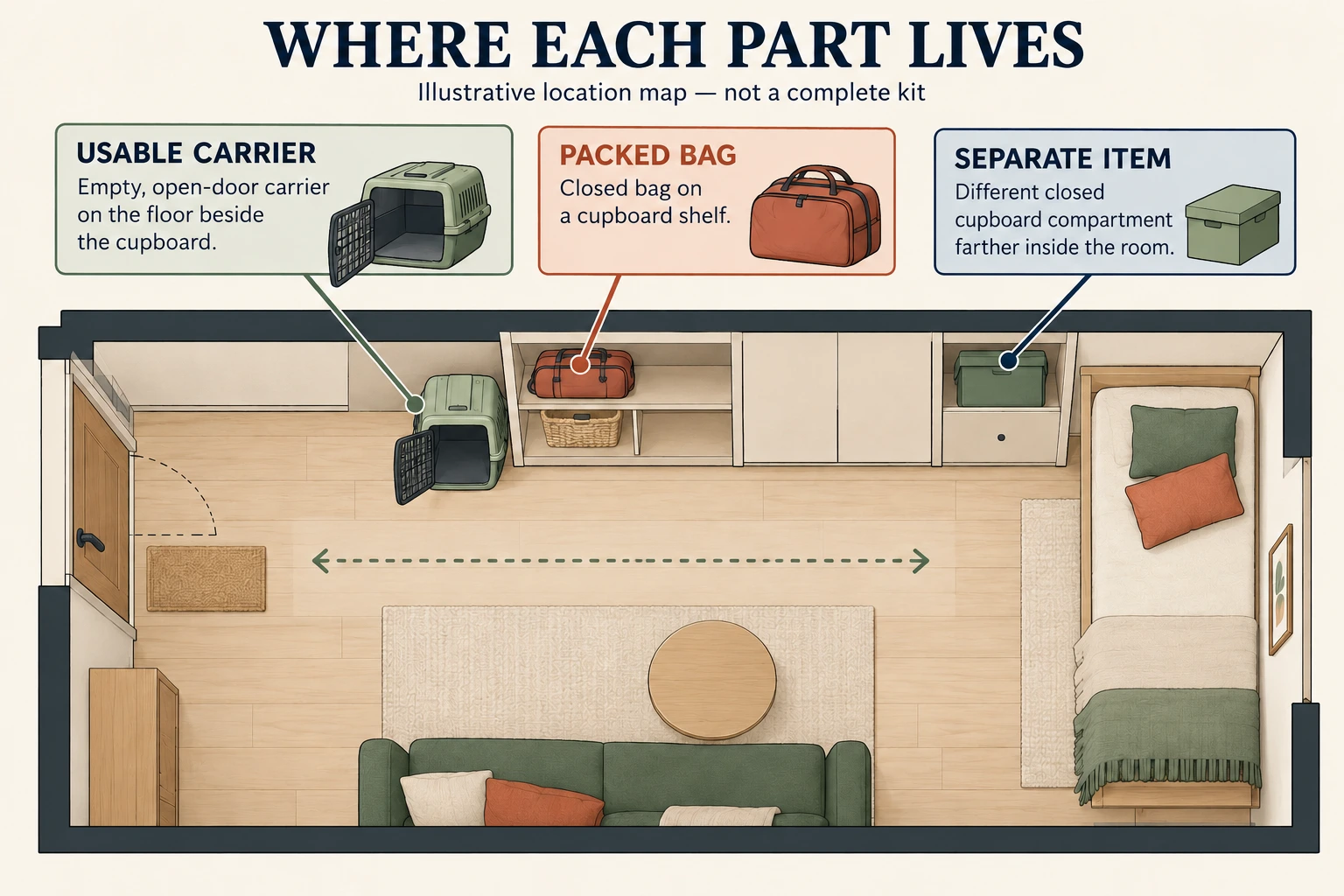
| Map entry | Write the actual location | Status question |
|---|---|---|
| Packed container | Closed labelled bag or box: ________ | Can one person identify and lift it without opening several drawers? |
| Carrier | Carrier and any separate part: ________ | Is it accessible for ordinary use according to its instructions? |
| Separate item | Item that must stay elsewhere: ________ | Is its exact location written down and checked? |
Give every separate item an honest status
Some items may need separate storage because of their label, temperature, size, prescription status, transport requirements or power needs. Record the reason without inventing a workaround. A prescription item may need veterinary coordination; a temperature-sensitive item may need its own storage instructions. This map records the dependency. It does not replace a vet’s advice or the manufacturer’s directions.
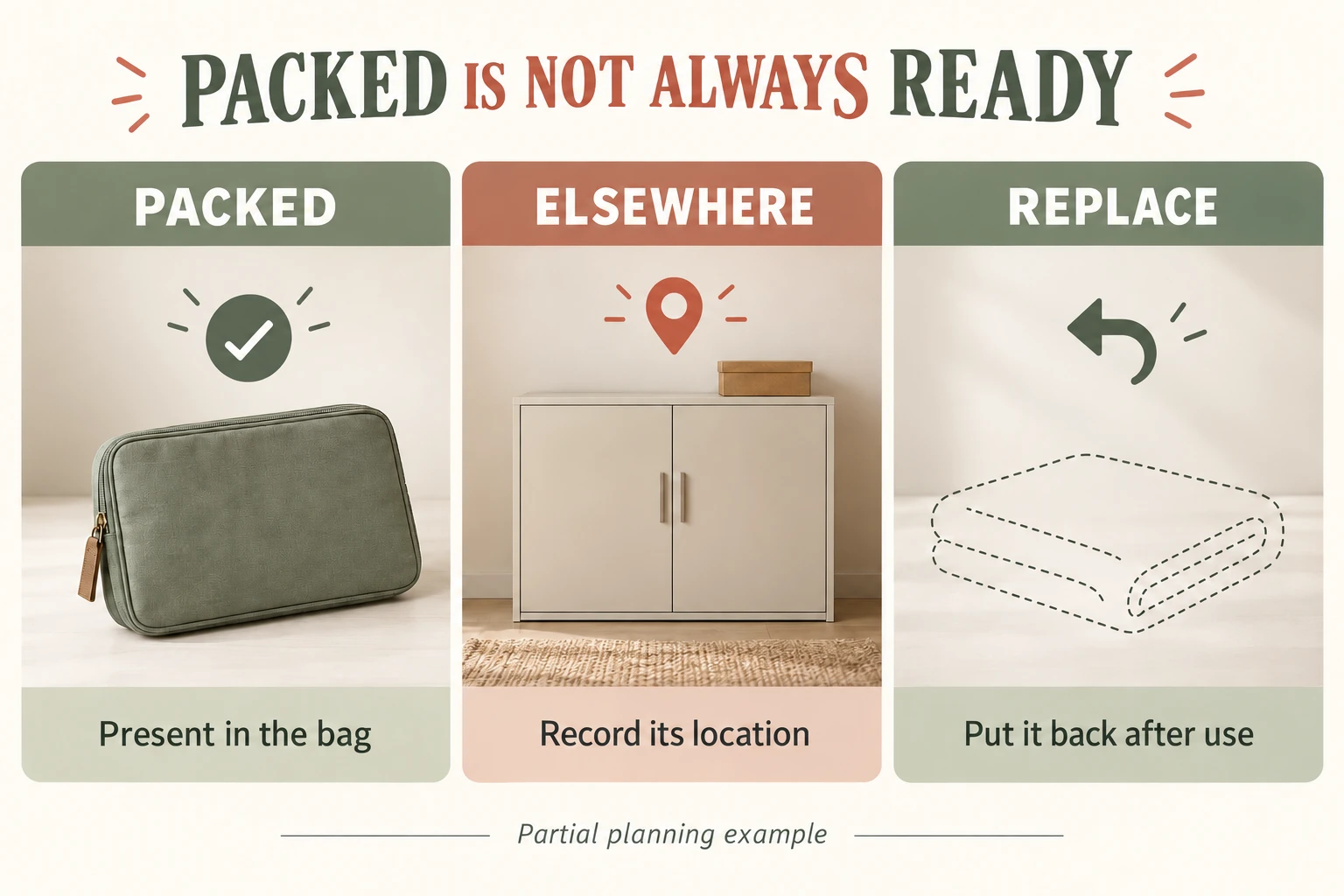
Use three plain states: packed means the item is in the named container; elsewhere means it exists at a different named location; replace means it is missing, borrowed or awaiting a suitable replacement. A blank warns that the map is unfinished.
Use a partial example without calling it ready
Imagine a one-bedroom apartment whose main bag is in the entry cupboard. The carrier is beside it. Cat food is under the kitchen counter, a prescription item remains in its veterinary-directed storage, and a neighbour borrowed the spare absorbent pads.
| Item or dependency | Location | Status |
|---|---|---|
| Main labelled bag | Entry cupboard, left shelf | Packed |
| Carrier | Entry cupboard, beside bag | Accessible location |
| Cat food | Kitchen counter cabinet | Elsewhere; check label and storage |
| Prescription item | Named veterinary-directed storage | Elsewhere; confirm with vet when needed |
| Absorbent pads | Borrowed by neighbour | Replace; no readiness claim |
This example is incomplete. It does not prove a full kit, working supplies or safe evacuation. Replace the borrowed stock, confirm the separate storage instructions and update the map. Never delay leaving to complete the worksheet or return to an unsafe building for a missing item.
Run one calm retrieval check before an emergency
When the household is calm, ask another authorized adult to find the named container, carrier and written record. They should do so without moving furniture or disturbing the cat. Record any unresolved location, label or carrying question, then adjust the storage map before an emergency. This is a retrieval check, not a simulated evacuation or a handling procedure.
Reset borrowed stock and review the map
After using or lending an item, update its status when the household is calm. Check the packed container against its labels and storage directions, rotate items where appropriate, and write the exact location of anything that stays elsewhere. Replace borrowed or missing stock before treating the map as current. The cat food storage guide covers the ordinary food-storage part of the room; it does not decide prescription, temperature, transport or power requirements.
Keep the kit inside the apartment in its agreed place without narrowing the door or exit route. Keep the cat’s water, litter and retreat available. The cat room planning guide can help draw the ordinary zones, while the sitter handoff checklist can help another authorized caregiver understand the written locations.
Keep preparation separate from the actual emergency
During an actual emergency, follow local official instructions and leave when told. Do not stop to complete a table, delay evacuation for a replacement, or re-enter an unsafe building. If a cat is injured or ill, contact a veterinary professional promptly and seek qualified advice before treatment. The kit supports care planning; it is not a substitute for professional care.
Sources and further reading
- ASPCA: Disaster Preparedness — accessible labelled supplies, household awareness, categories, rotation and local official directions.
- Cats Protection: Cat First Aid — contacting a vet promptly and seeking qualified advice before treatment.
The location map, status table and partial example are original editorial planning aids. Images are AI concepts, not tested layouts, medical guidance, fire-safety guidance, evacuation instructions or guarantees of readiness.