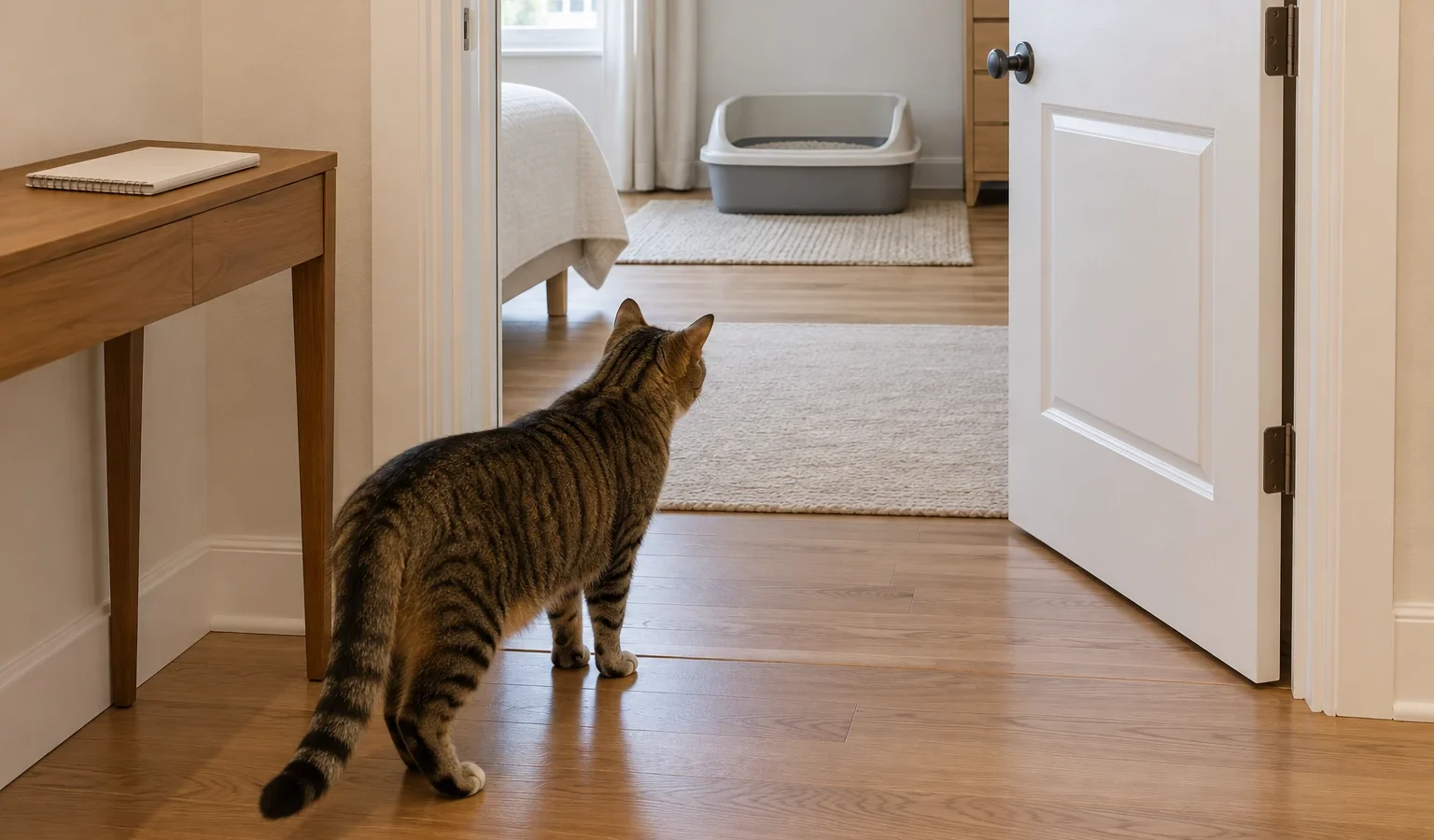
An interior cat door can make a litter room easier to reach, but it also changes the room’s boundary. Before choosing a product or altering a door, record who may approve the change, how the door behaves when closed, how the cat reaches the tray voluntarily and how a person can clean it without blocking that route.
This is a planning checklist for an apartment. It does not give cutting or fitting instructions, promise that a particular product will fit, or interpret a lease. If permission, door compatibility, cat comfort or a usable route remains unknown, pause and keep the current litter arrangement available while you resolve it.
Start with permission and the actual door
Write down the exact door and proposed change before you shop. In a rental, ask the property owner or manager for written permission through the normal channel; do not treat a removable panel, replacement slab or “renter-friendly” product description as approval. Identify whether this is an ordinary interior door and whether any building rule excludes the proposed change. If the door’s function or approval path is unclear, stop at the planning stage.
The PetSafe product page and installation article are manufacturer documentation for one product. They show why the exact manual and door conditions matter, but they do not establish that another door, apartment or cat is compatible. Do not transfer a template, dimension or installation sequence to a different setup. Never turn this article into instructions for changing a fire, security or structural door.
Keep the litter route available before and after the change
Cats Protection advises placing a tray where the cat can reach it quietly and consistently, away from food and water and away from busy or disturbing activity. Use that principle before you think about privacy. A door should not leave the cat with a single route that can be shut while the household is using the room.
Keep the familiar route open while a new route is being considered. Do not force a cat through an opening, close the only existing litter route to make a new door work, or assume that a cat will accept a new boundary on your timetable. If the cat avoids the room, cannot turn or retreat comfortably, or shows toileting changes, pause the layout decision and seek appropriate veterinary advice.
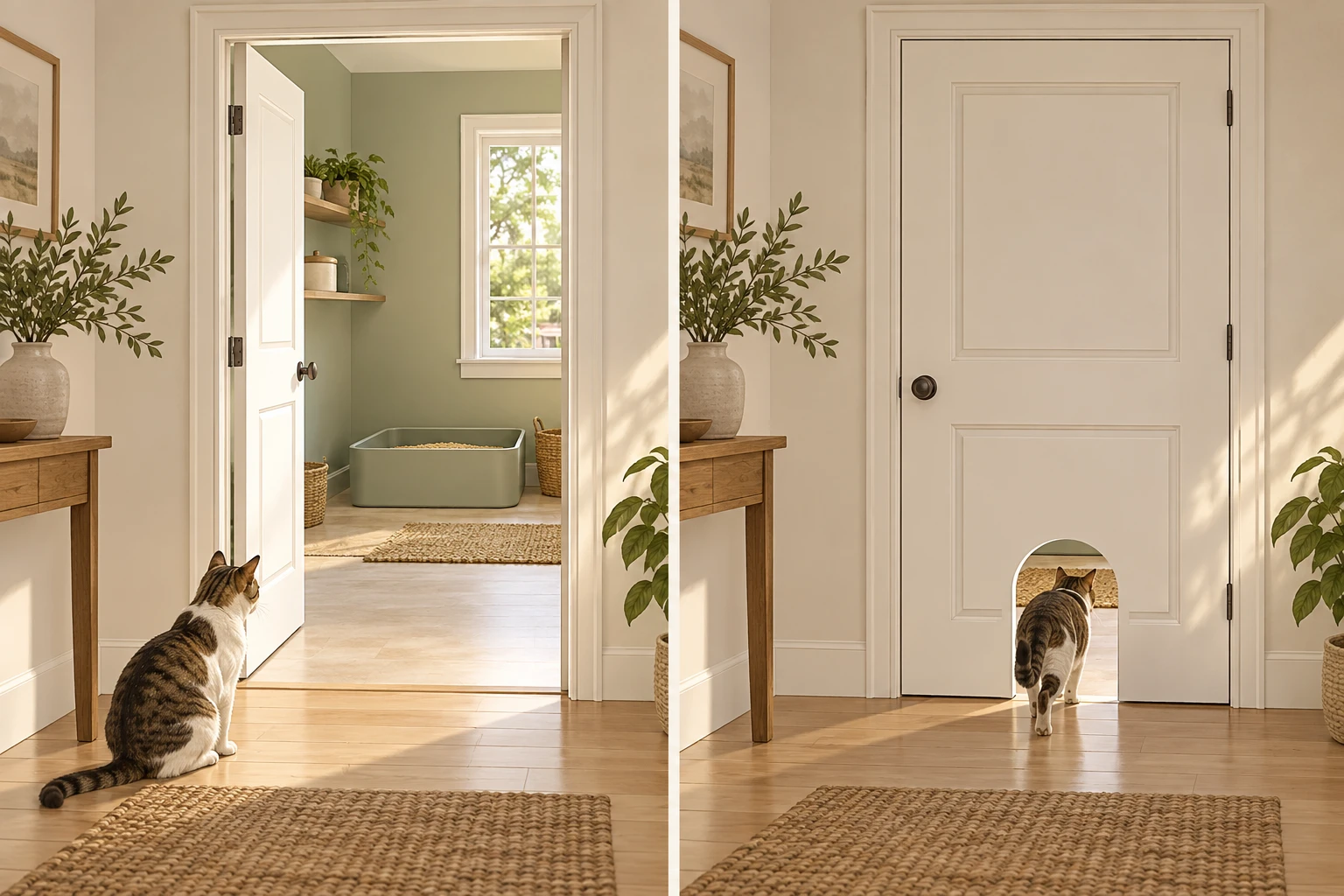
Use one decision table for every household state
| State | Keep usable | Stop when |
|---|---|---|
| Door closed | An agreed door state, a voluntary litter route and full-door access for the person who services the tray. | Closing the door removes familiar litter access or leaves approval/compatibility unresolved. |
| Normal use | Clear door swing, approach and retreat; ordinary household movement remains possible. | Use depends on a propped door, improvised pin or constant supervision. |
| Cleaning | A voluntary alternative for the cat and a full doorway for scooping, removing waste and returning the tray. | The task blocks the cat, requires dismantling the door or leaves footing unclear. |
The table separates a cat passage from a cleaning route. A cat door is not ventilation, odor control or a substitute for inspecting and cleaning the tray. A person still needs a practical way to see the tray, reach it and restore the room.
Check the door in normal household use
Observe the existing door without altering it. Note its swing, latch, lock, threshold, nearby furniture and the space a person needs to stand and turn. Then write the intended state for ordinary daytime use, when someone is cleaning and when guests or maintenance workers may need the room. A product that looks tidy in a photo may still make the cat route compete with a human route.
Compatibility is unresolved when the door type is unknown, the proposed opening would interfere with its normal closing or latching, the opening is too close to a collision point, or the cat cannot choose to use it. Do not solve an uncertain route with a doorstop, pinching device or improvised latch. Return to the current arrangement until the owner, product documentation and household route agree.
Keep cleaning access separate from cat access
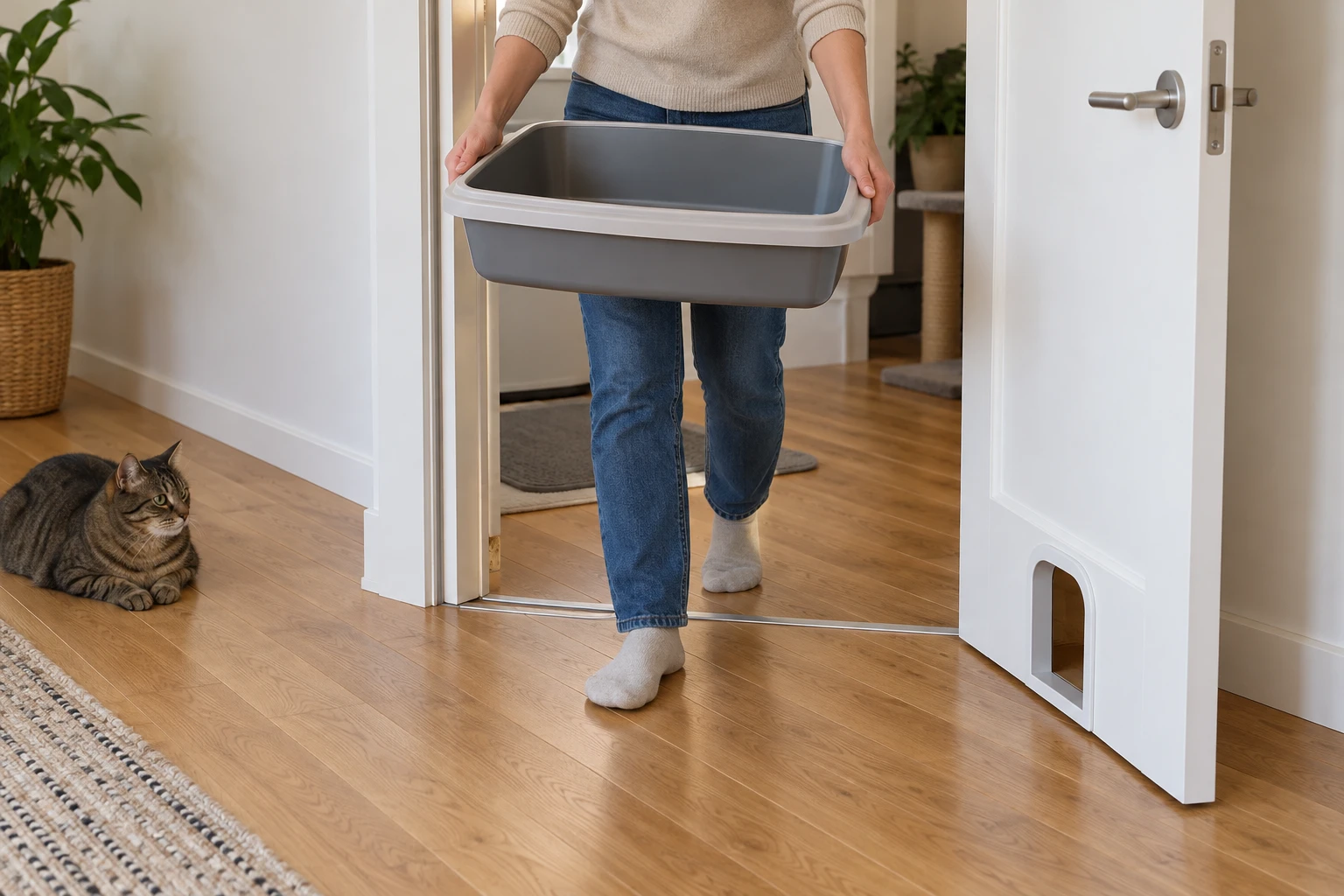
Stand where a person would clean the tray and trace the task: enter, reach the tray, remove waste, carry it out and leave the room ready for the cat. Keep the route practical without stepping over the cat, blocking the opening or moving a resting resource. If the room contains a hidden enclosure, the hidden litter-box access and cleaning guide can help check inspection clearance alongside this door decision.
Use the small-space litter access guide to check the tray’s surrounding space before a doorway is changed. The cat room planning guide can help separate litter, rest and human-service zones. These links extend the room plan; they do not replace the exact door manual or property approval.
Fill in the worksheet before buying anything
| Question | Example record | Your answer |
|---|---|---|
| Permission | Written approval requested for the ordinary bedroom door on 21 Oct | ________ |
| Door compatibility | Door type and normal latch still need confirmation | ________ |
| Cat route | Current open-door route remains available during any transition | ________ |
| Human route | Person can stand beside tray and carry waste out without blocking passage | ________ |
| Cleaning state | Cat has a voluntary alternative while the tray is serviced | ________ |
| Stop condition | Pause if permission, comfort or access becomes unknown | ________ |
For room-wide planning, the cat hideaway placement guide helps keep a retreat available when people enter. If another person may care for the cat, the cat sitter home setup checklist can turn the agreed door state and cleaning route into a handoff note.
Choose the setup you can verify
A sensible outcome may be waiting. If permission is denied, the door’s construction is unclear, the cat will not choose the route or cleaning access is awkward, leave the existing arrangement in place and revisit the question with better information. When the permission record, door behavior, voluntary cat route and human service route are all clear, use the exact manufacturer’s documentation for any later installation decision.
Sources and scope
- PetSafe Cat Corridor Interior Pet Door and PetSafe installation article — manufacturer documentation only; no generic fit or installation claim is inferred.
- Cats Protection: How to create a cat-friendly home — quiet, consistently accessible resources.
- Cats Protection: Toileting — litter access and placement context.
- Cats Protection: Cats and building works — preserve essential resources and avoid forced confinement during changes.
The decision table and worksheet are original editorial planning aids. The images are AI illustrations, not installation directions, product tests or certifications.