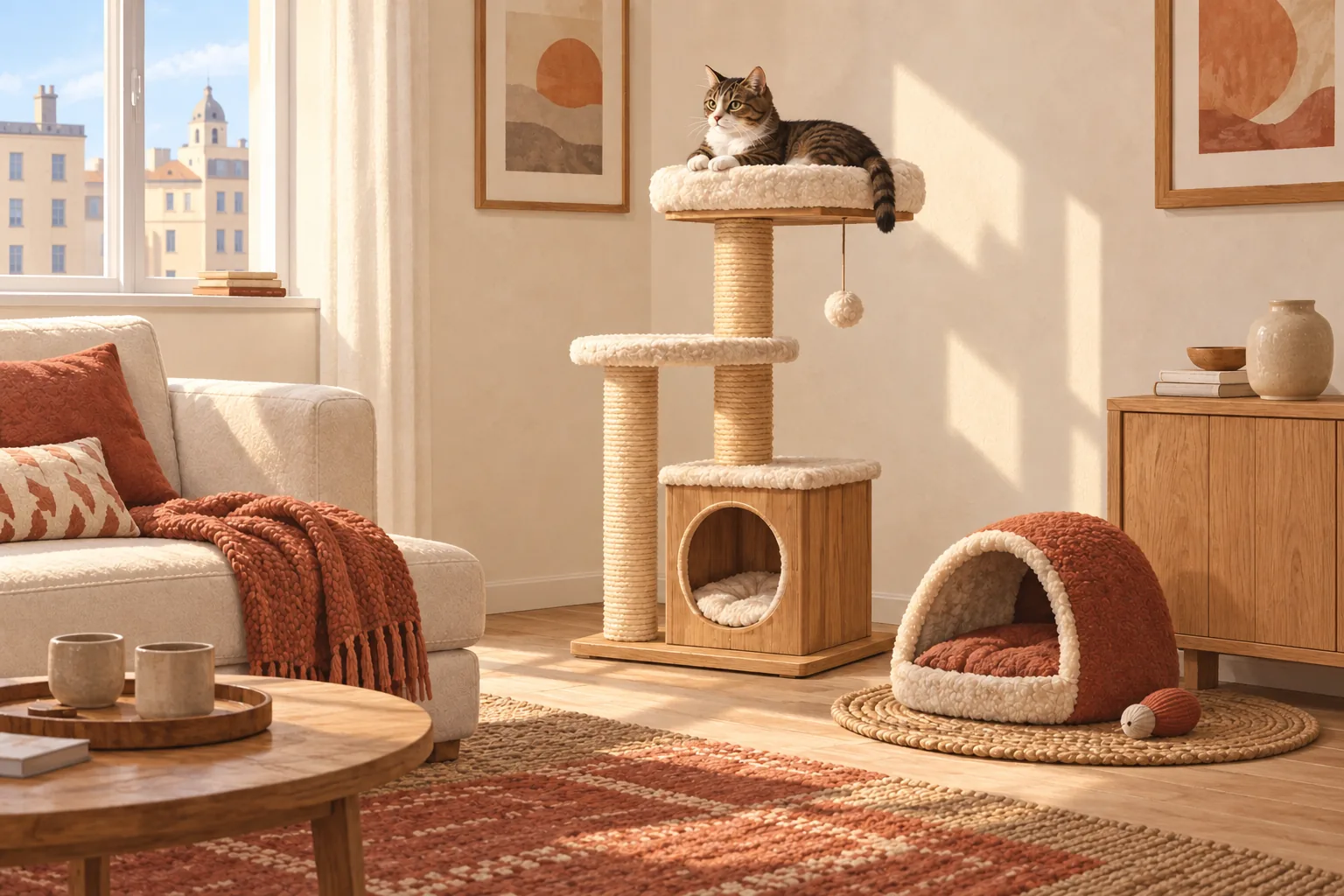
A small cat room can be a dedicated corner rather than a whole room. In an apartment, the goal is to give your cat predictable places to rest, scratch, play, and reach essential resources while keeping the human part of the room functional. Start by measuring the space you can actually spare, then plan around doors, furniture, and daily traffic.
Choose the right footprint
| Apartment constraint | Prefer | Reject when |
|---|---|---|
| Renter | Stable freestanding furniture | It tips or blocks a door |
| Shared office | One wall plus open floor | Chair movement closes the route |
| Studio | Vertical rest and compact storage | The litter tray cannot be removed |
Choose the row that matches your room before buying furniture. The decision is about the route that remains after normal human use, not the empty-room photograph.
Look for an underused corner with a stable wall, a quiet view, and enough floor space to clean. A home office corner may work better than a narrow entryway because an entryway has constant traffic and doors. A bedroom corner may work well if the litter area can stay accessible and away from food and water.
Draw the footprint on paper before buying anything. Include the open door swing, the chair pulled out from a desk, and the space needed to remove a litter tray. If the cat area only works when every other object is perfectly placed, it is too crowded. Leave one clear path through the area.
Use one wall for height
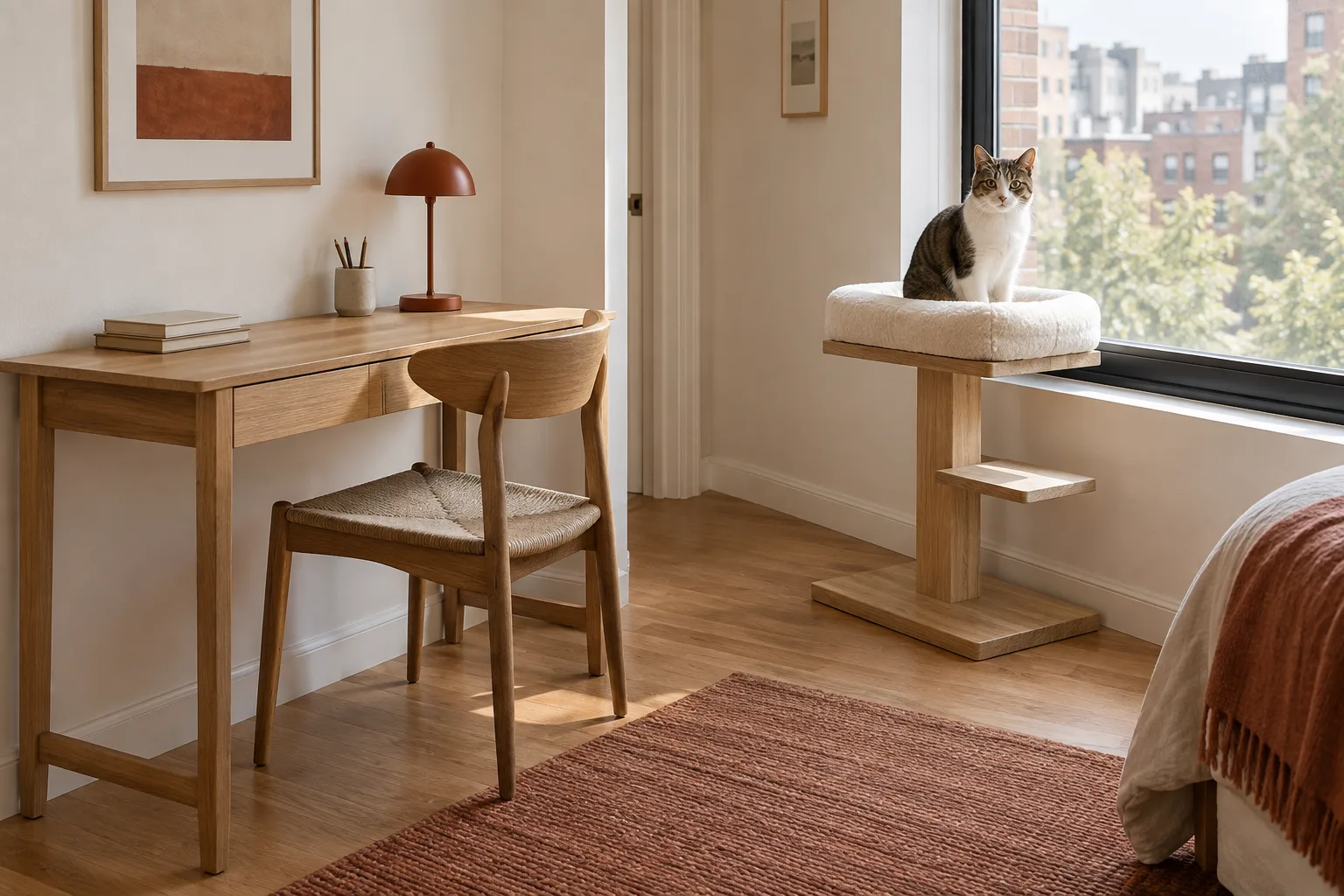
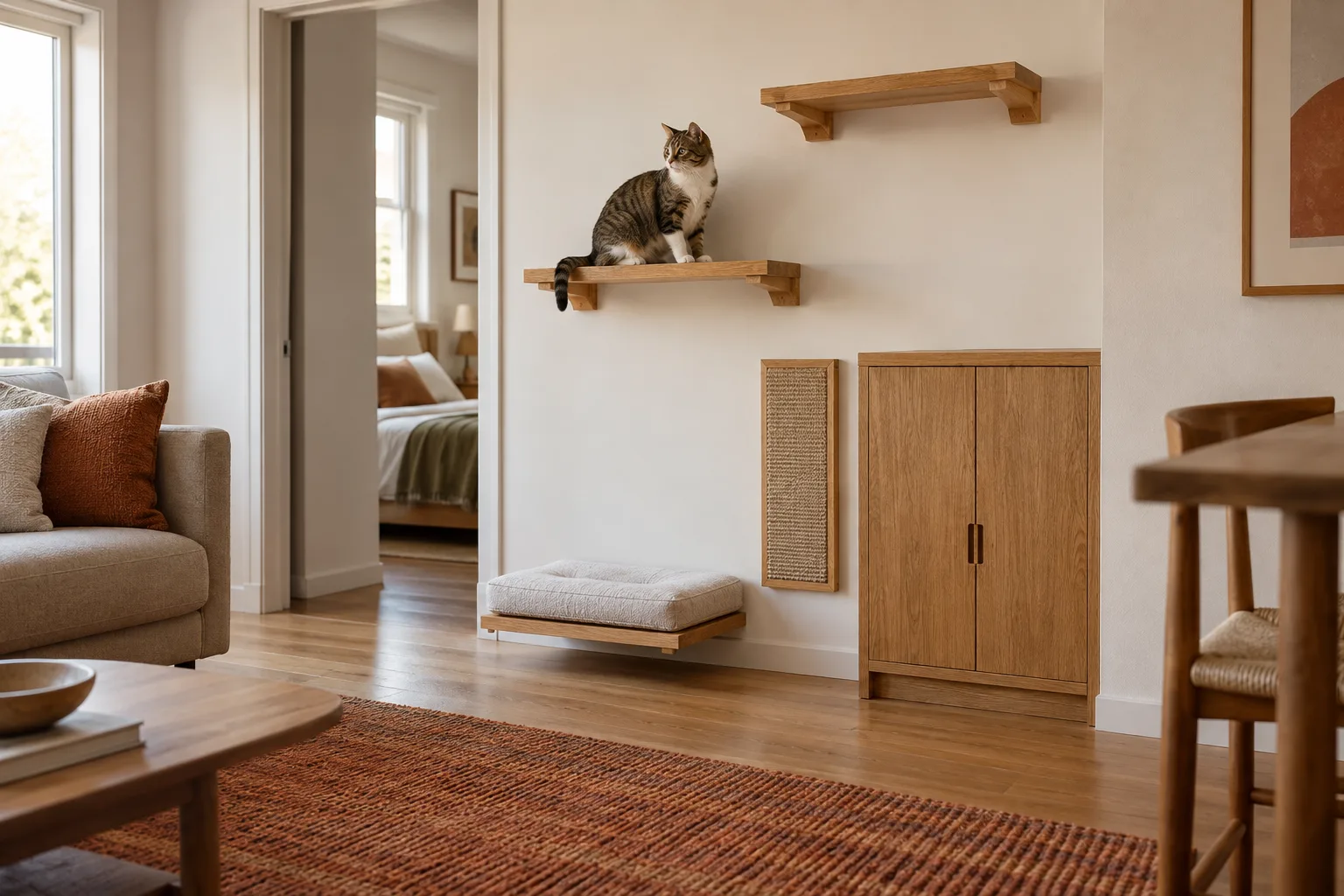
FelineVMA guidance identifies safe places and separated resources as core environmental needs. Vertical space can provide a lookout without taking the whole floor. A simple arrangement might include a low scratcher, one intermediate platform, and a higher resting place. The sequence should be stable and easy to exit. Avoid creating a dead-end shelf above a cabinet if the only way down is a jump onto a fragile object.
Before mounting anything, identify the wall material and choose suitable fixings. Check shelves after installation and again after the first few uses. Keep cords, blind loops, and breakable objects away from the route. Windows should have secure screens; a view is useful only when the opening is safe.
For a rental, use freestanding furniture or a stable cat tree when drilling is not allowed. Do not rely on adhesive strips for a load-bearing perch unless the manufacturer specifically rates the complete setup for that use. The safety of a wall system depends on the wall, hardware, platform, and installation together.
Make a shared room feel intentional
In a shared bedroom or office, use a visual boundary. A washable mat, a narrow bookcase, or matching storage baskets can make the cat area feel like part of the room rather than clutter. Keep the cat’s toys in one open basket and use a lidded container for spare litter and cleaning supplies.
Place a scratcher close to a location your cat already uses. If the cat sleeps near a desk, put a stable scratch surface nearby rather than at the far end of the room. Keep play space open in the middle and move fragile décor to a closed shelf. Store interactive toys after use, especially toys with string or small attachments.
Plan litter access before hiding anything
A covered cabinet can look tidy, but access and ventilation matter more than appearance. The opening must be easy for the cat to enter and leave, and easy for you to inspect and clean. Avoid a setup that traps the cat in a corner or places the box next to a loud washer, dryer, or busy doorway.
AAHA’s litter-box guidance recommends one box per cat plus one extra and advises quiet, accessible locations. Homes with more than one floor may need a box on each level. Treat that guidance as a planning baseline and adjust for your household, space, and veterinary advice.
If a box must move, move it gradually rather than relocating it across the apartment in one day. The ASPCA suggests moving a box only a few inches per day when a gradual move is possible. Keep the route clear during the transition.
Keep the small room easy to reset
Use washable textiles and furniture that can be moved without a struggle. Keep a narrow gap behind furniture so you can retrieve toys and check for dust, but do not leave a gap where a cat can become stuck. Place a small mat outside a litter area to catch loose litter, and leave enough space to sweep around it.
Do a weekly room check: test the stability of shelves and scratchers, inspect cords, clear the floor, and check that doors and windows still close securely. A compact setup becomes unsafe when storage slowly expands into the walking route.
Start with one corner
You do not need to furnish the entire apartment at once. Begin with a resting option, a stable scratcher, an accessible litter plan, and a clear route. Observe which surfaces and heights your cat chooses. Add the next item only when it solves a visible problem, such as a missing lookout or a scratcher placed too far from the cat’s normal path.
If your cat stops using a litter box, starts eliminating outside it, or seems painful or distressed, speak with a veterinarian. A small-space layout can remove obstacles, but it cannot identify a medical cause.